HDPE Supplement Bottle Labels: Check the Plastic Before Choosing Adhesive
Consider a hypothetical order: the artwork has passed review on a smooth clear bottle. The purchasing team then switches to an opaque HDPE vitamin jar and expects the same film and adhesive to behave identically. That is where I would stop the quote and ask for the actual plastic container. The bottle may look similar in photos, but adhesive contact depends on the material and finish beneath the label.
A lifting edge is one possible observation after application. It can be easy to blame the die-line or an operator. Both may matter, yet the adhesive and surface combination must be checked first. The goal is not to declare HDPE unusable; many labels work on it. The goal is to prevent a material substitution from being invisible in the order specification.
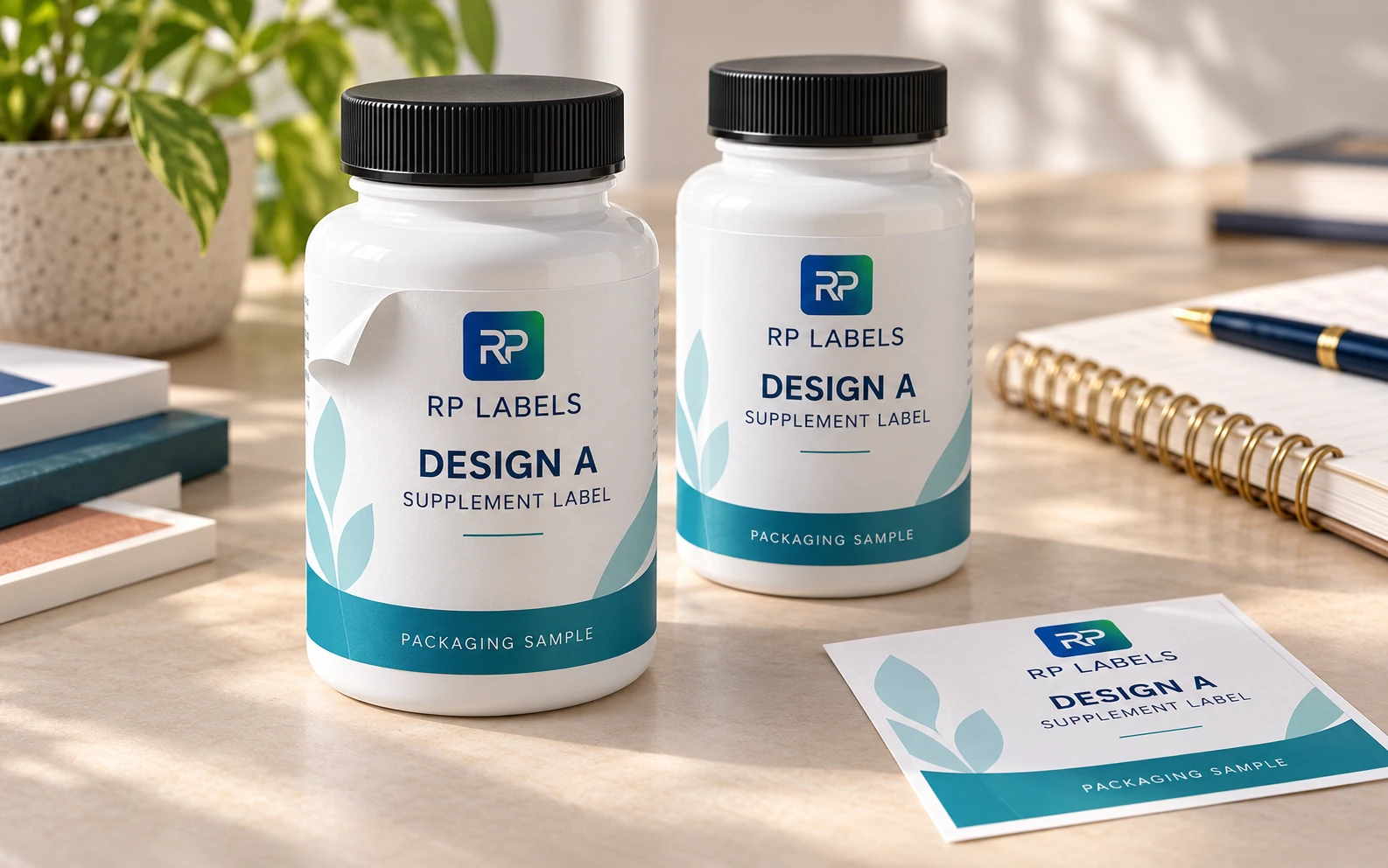
AI-generated packaging illustration. Fictional RP samples show a proposed comparison, not an actual adhesion or shipping test, customer order or approved result.
Why HDPE deserves its own sample
3M's low-surface-energy overview includes polyethylene and HDPE among plastics that need appropriate bonding choices. These are material-selection principles, not performance data for an RP construction.
Texture complicates the picture. A pebbled bottle panel can leave less effective contact area than a smooth one. A recessed or slightly tapered label area can push a stiff film toward edge lift. Ask the bottle supplier for the exact resin and surface finish, and send physical bottles from the same source as production. A smooth sample jar from another vendor is not a substitute for a textured production jar.
Separate adhesive failure from geometry failure
A leading-corner lift is a reason to inspect the application direction, pressure, seam placement and any hand contact with the adhesive. Lifting along both vertical edges is a reason to revisit bottle curvature, label width and facestock stiffness. Irregular release is a reason to inspect the surface for contamination, oils or moisture. This is a troubleshooting order, not a diagnosis without seeing the pack. The application-problems guide explains more of those mechanical checks.
I would avoid changing three variables at once. Make one trial with the proposed stock on the actual bottle under the actual line conditions, then compare a candidate adhesive or more conformable film while holding the dieline and application process steady. Record when the sample was applied and inspect after the appropriate dwell and after normal handling. Avoid promising a particular peel value unless the project has a defined test method, substrate and acceptance threshold.
What belongs in the quote request
State bottle resin, texture, diameter, shape and label panel dimensions. Include fill conditions, application temperature, room humidity, handling after labeling, storage, expected shelf display and whether any oils or cleaners contact the container. Say whether a machine feeds rolls or a worker applies sheets. Include the artwork's number of colors and whether a clear area or metallic finish is desired; facestock and finishing can affect conformability as well as appearance.
For multiple SKUs, ask whether the same bottle and surface treatment are used across all of them. A shared dieline should not conceal different substrate requirements. If the manufacturer changes the bottle supplier later, reapprove the label on the new bottle rather than assuming the old sample covers the change. An approved print color is not an approved adhesive bond.
Compare one identified change against the baseline
The worked HDPE comparison plan, blank plan and field guide begin with a baseline construction on the buyer's actual bottle. The second row proposes an alternate adhesive construction while keeping artwork, dimensions and bottle identity explicit. Neither row contains a measured result.
Obtain the bottle supplier item reference before arranging the trial. Resin name alone does not identify its texture, treatment or production source. Ask the label supplier for the exact proposed construction and relevant application guidance. The application owner then records actual conditions and the agreed observation timing. Do not borrow a pressure, temperature or dwell value from an unrelated product sheet.
If changing adhesive necessarily changes another layer, disclose that difference. A comparison can still be useful, but it no longer isolates adhesive alone. Likewise, do not compare a freshly applied candidate with a baseline that has already had a different handling history and call the difference an adhesive result.
The purchasing choice depends on what the observations establish. If the existing construction meets the relevant agreed requirements on the identified new bottle, retaining it can avoid unnecessary specification changes. If evidence points to a geometry or application problem, obtain a focused correction rather than assuming more aggressive adhesive is the answer. An alternate construction deserves the order when applicable evidence supports it, not because its description sounds stronger.
Keep the evidence reference and responsible release owner with the selected construction. If the bottle source changes again, review whether that evidence still covers it. A previous approval can be useful without becoming permission to treat every white bottle as the same surface.
The purchasing decision
Approve the construction only after the agreed relevant applied-sample requirements are met, and keep that sample with the production specification. If the label repeatedly lifts on one textured area, investigate whether a revised footprint or panel location is appropriate alongside the adhesive and application review. Ask for side-by-side material options in the custom label inquiry, with the bottle supplied for testing. That makes the quote comparable and the acceptance decision visible.
Send RP Labels the completed comparison brief, actual bottle item, artwork, quantity and application details. Ask for identified proposed constructions and sample scope, with unresolved physical release points stated.