How to Compare Gloss Readings on Matte Supplement Labels
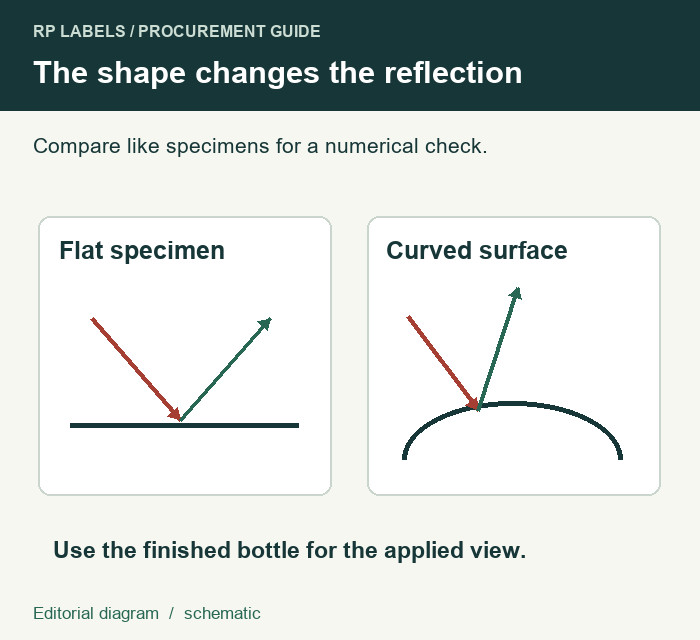
If two supplement label samples are both described as matte, compare gloss readings only after confirming that they were taken with the same measurement geometry on comparable specimens. Use the actual labeled bottle for a separate visual approval. A reading from flat finished stock and the appearance of a curved bottle answer different questions.
Decide what the buyer needs to control
For a launch where the concern is the appearance of the shelf pack, review finished bottles under the agreed lighting and viewing positions. A flat reference can help identify the finish but cannot reproduce the way highlights move on the bottle. If repeat runs also need a numerical check, agree the measured area, the specimen, the method and the instrument geometry in advance.
ISO 2813:2014 describes three geometries for measuring gloss of coatings and states its scope for non-textured coatings on plane, opaque substrates. It is a useful reference for defining the method's boundary. Ask the supplier or test owner to confirm whether the method fits your label surface. For textured, metallic or clear effects, agree whether a physical reference or another appropriate evaluation better represents the acceptance decision.
Compare records with a common basis
| Ask the supplier to identify | Why it changes the comparison |
|---|---|
| Measurement geometry and method | Numbers at different angles describe different measurement conditions. |
| Sample and backing | A coated film, a flat finished label and an applied bottle differ in geometry or construction. |
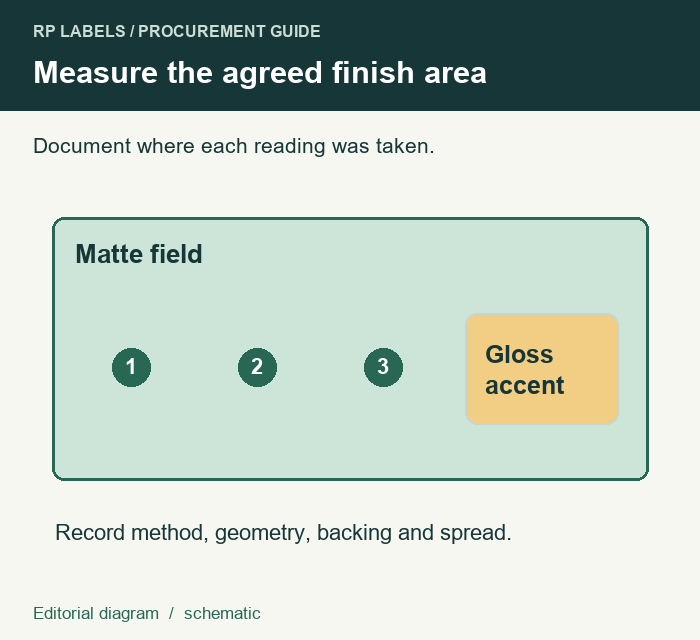
| Print and finish in the measured zone | A matte field and a selectively glossed logo can produce different readings on one label. |
| Reading positions and spread | An average can hide differences across the approved area. |
| Physical reference and applied view | The buyer needs a stable visual basis for deciding whether the pack is acceptable. |
BYK's guide to reliable gloss data explains why geometry and repeated readings matter. Its gloss measurement paper discusses how curvature can redirect reflection. Keep the evidence tied to the recorded fixture and specimen. If one supplier measures a curved bottle and the other measures a flat card, ask for a common basis before comparing the values.
Resolve a disagreement on the intended pack
If the matte field measures consistently but the wrap looks brighter around a seam, photograph and describe the location under agreed lighting. Ask whether the difference follows the shape, the printed zone or the finish. If readings vary across equivalent flat specimens, ask the converter to identify the lot and check conditions before treating the average as a pass. Define an acceptance range only after the buyer and supplier agree the reference and method. For a tactile requirement, review standard matte versus soft-touch and keep feel in the approval brief.
Put the reference into the quote
Send RP Labels the container, artwork, quantities, desired finish and accepted appearance reference. Indicate which area needs gloss comparison and whether a flat finished sample, applied bottle or measurement report is required. RP lists matte, gloss and soft-touch lamination among its published finish options. Ask what sample scope and measurements can be quoted for the actual construction.