Soft-Touch or Standard Matte Labels? Decide Whether the Pack Needs a Tactile Finish
If the brand wants less reflection, specify the viewing requirement. If it wants a distinctive feel in the hand, specify that separately. “Matte” and “soft-touch” are not interchangeable purchase instructions, and neither phrase establishes the finished label’s resistance to marking or its compatibility with later coding.
We offer glossy, matte, and soft-touch (sometimes described as velvet-touch) lamination. These finishes change sheen and hand feel; they are not the same as a change in face material. The finish used on an order is named on the written quote. The lamination page is where that finish list is published. This page still asks whether the pack needs the tactile finish.
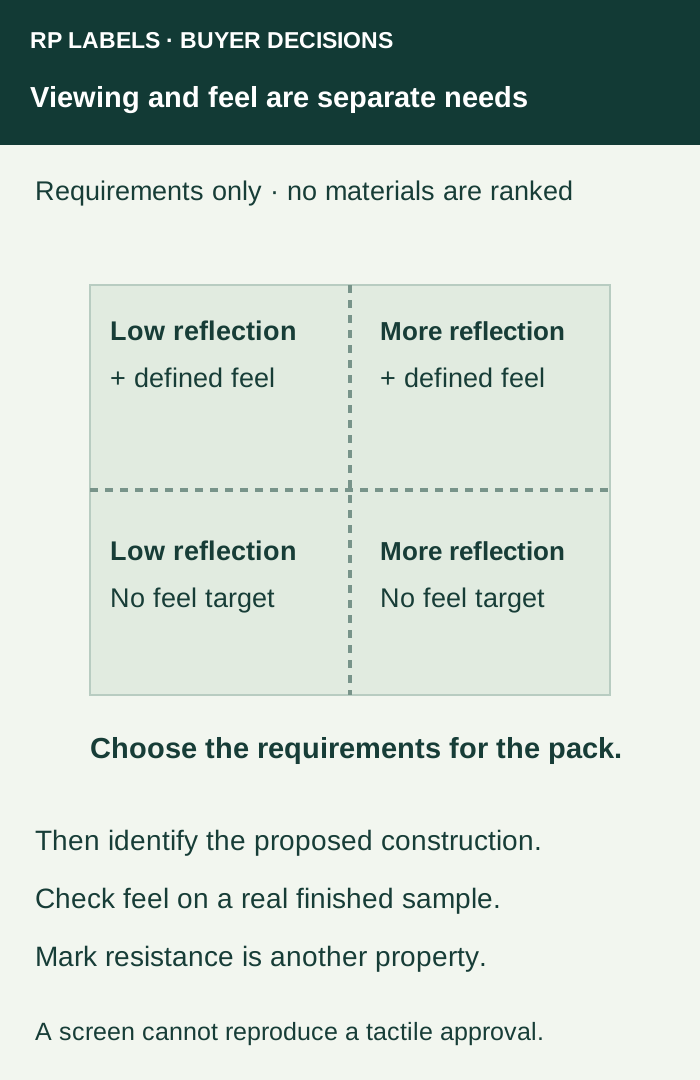
Choose the requirement before choosing the adjective
A supplement bottle sold from a shelf may need a low-reflection product name. That requirement can be satisfied without asking for an additional tactile effect, if an identified standard matte construction meets the brief. A pack designed around physical handling may justify evaluating a particular tactile finish. The reason to buy it is the accepted feel of the actual pack, not the word premium on a sample card.
The matte-versus-gloss guide owns the viewing decision. The laminate-versus-varnish guide owns the protective construction. This comparison asks whether a tactile requirement adds useful value and which evidence should establish it.
Ask what construction produces the proposed feel
Request the proposed finish identity, how it is incorporated into the label and what further operations follow it. A supplier’s named soft-touch product is not a universal surface specification. Keep its reference connected to the face stock, adhesive, print and other finishing layers quoted for the bottle.
Derprosa’s film catalog lists optical, tactile, resistance and post-lamination properties as separate selection fields, with different named products. That is useful evidence that a tactile description does not automatically settle every other surface property. The catalog is not an RP stock list or proof that one of its films suits a proposed pressure-sensitive bottle label.
Ask RP Labels which, if any, identified construction can be proposed for the requested feel. If a suitable tactile option is unavailable or unqualified for the job, retain a simpler accepted finish or revise the requirement. Do not substitute an unrelated book-cover sample for the finished label on the actual bottle.
Judge the sample in the areas people actually use
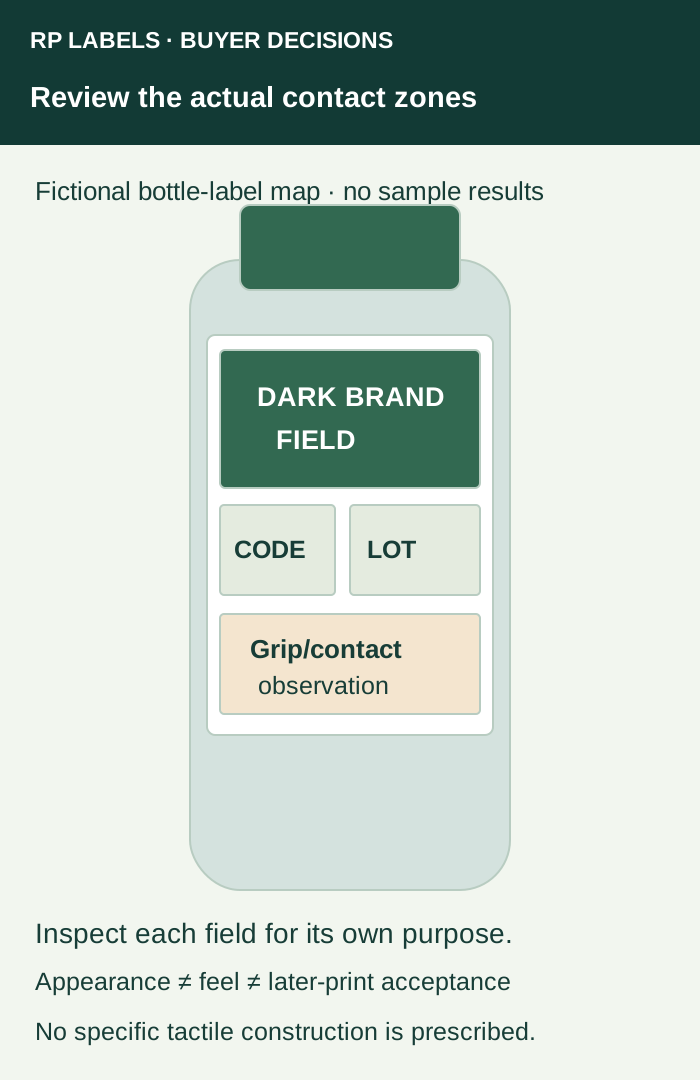
Use the same approved artwork and bottle for the initial comparison. Include the dark brand field, the area fingers grip, any metallic detail, the code and any panel marked later. Hold a separate untouched reference for each construction so that subsequent observations are not confused with its original appearance.
The brand owner assesses whether the proposed feel is worth specifying. The operations owner identifies real contact and handling. The later-print owner checks the actual panel, equipment and consumables. A finish that feels right can still leave an unresolved variable-data surface; a good code sample does not approve the tactile preference.
Compare handling on a stated basis. If fingerprints, scuffs or contact with product residue are genuine concerns, agree the relevant observation with the supplier and responsible reviewer. Do not assume that every soft-touch surface marks easily or that every specially described surface resists marking. Formulation and the finished construction matter. This guide prescribes no rub count, chemical exposure or universal passing limit.
Use a decision table that allows the simpler option to win
| Buyer’s actual priority | Reasonable next decision |
|---|---|
| Low reflection; no defined feel requirement | Compare identified matte options against the viewing brief. Do not add a tactile requirement without a purpose. |
| A particular feel is central to the pack | Obtain a representative finished sample and keep an identified physical reference for approval. |
| Dark areas show unacceptable handling marks | Compare the actual candidate constructions under the same relevant handling conditions before changing the specification. |
| Lot or code printing follows finishing | Keep that surface and output approval separate from the brand’s feel preference. |
A photograph can document the appearance but cannot convey the accepted feel. A physical reference without its construction identity cannot reliably define the next order either. Retain both the sample and the order reference, and reopen the affected decision when the finish, artwork or bottle changes.
Request a finish scope that can actually be quoted
For supplement labels, prepare an RP inquiry with the actual bottle, artwork, quantity per design, priority viewing conditions, tactile reference if available and later-print method. Ask for the proposed construction, sample coverage, any unresolved compatibility question and the actual quote. Do not assume an additional feel is available, costs a fixed premium or improves all aspects of the label.