Paper or PET Label Liner: Record the Line Change Before Approving It
We can supply glassine or PET liners, including clear PET liner when that is required for the applicator. Liner choice affects stiffness and break risk at speed. The liner for an order is confirmed for your machine, and a line trial is recommended when you change liner type.
The printed label looks unchanged, so a proposed liner change seems easy to approve. The packer may have another view. A clear backing, a different release behavior or a new waste-rewind load can change the work at the line. Ask what will change operationally before accepting a saving that exists only on the label quotation.
The consumer never sees the liner, which makes it an easy place to look for a saving. The line operator sees almost nothing else while the roll is running. I would give that operator the proposed change before accepting it. If the current construction runs cleanly and the job is short, keeping it can be a better purchase than chasing a theoretical improvement.
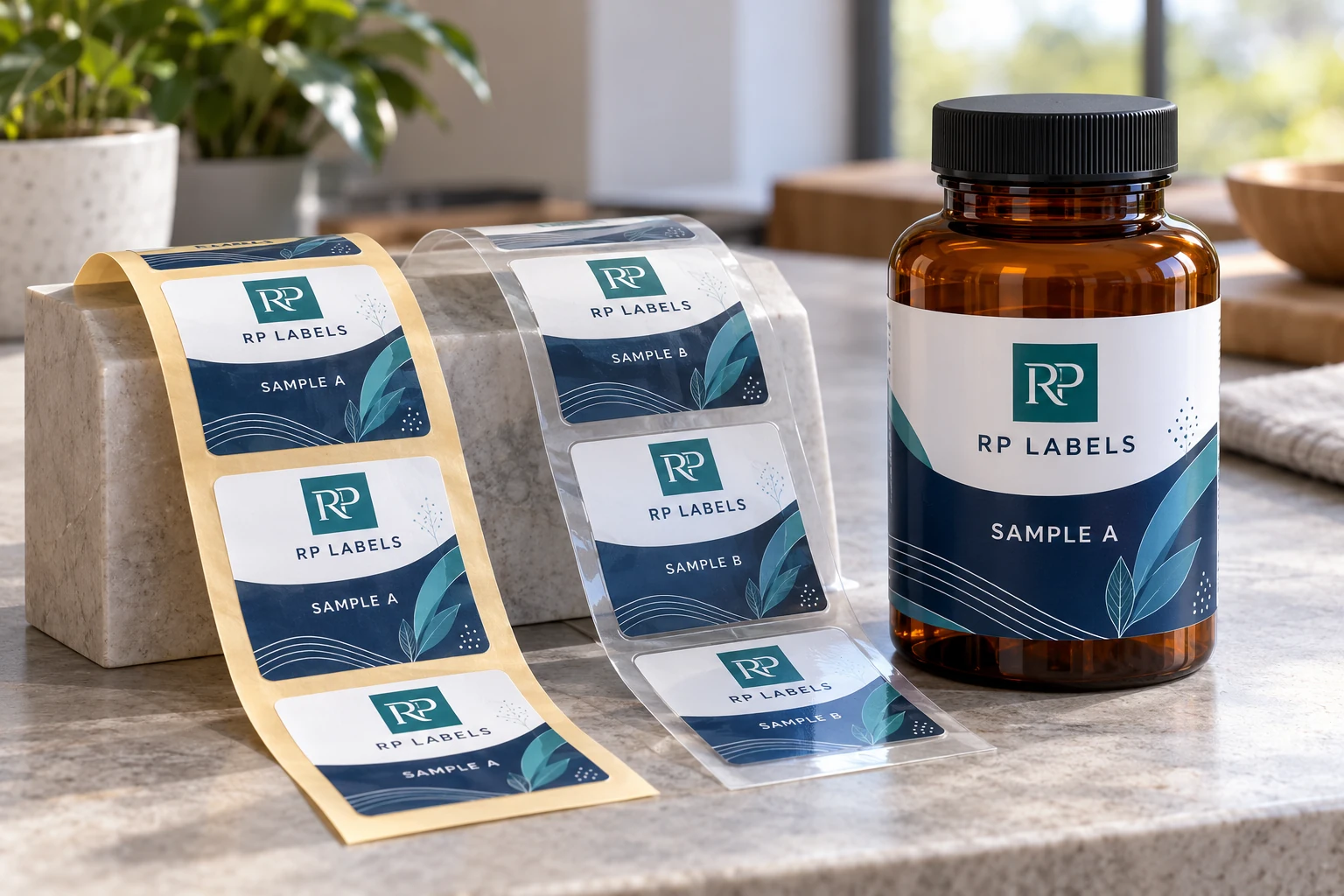
AI-generated packaging illustration. Fictional RP samples show the proposed decision; no physical test or customer order is documented.
Compare against the currently accepted roll
Start the worksheet with the accepted construction and the proposed substitute. Do not write paper or PET as the entire specification. Ask the supplier for the applicable liner reference and the finished-roll details that change with it. Keep the face material, adhesive and finish identified so the comparison does not accidentally become a completely new label.
The packer fills the line portion: sensor method, web path, tension guidance and waste handling. The converter records the converting and dispensing considerations. Neither party should be asked to sign for the other's equipment. Where a trial is needed, use a production-representative width and construction and record what was actually run.
The worked example has one row for a sensor check and one for a roll-capacity claim. A thinner liner may change the achievable labels per roll, but the count also depends on the rest of the construction and the allowed core, diameter and weight. Ask for the proposed finished-roll calculation or build specification instead of applying a percentage saving from liner thickness alone.
If the current paper-backed roll runs reliably and the job is modest, retaining it can be a rational purchase. If roll changes constrain a large program, a qualified alternative may have worthwhile operational value. Count that value only after the line owner can describe the relevant improvement and the trial supports the change.
Send the old and proposed references, equipment details and unresolved trial fields to RP Labels. The decision is then a controlled material change with a named owner, rather than an unnoticed substitution underneath familiar artwork.
What the release liner actually does
The liner protects the adhesive and provides the carrier for printing, die cutting, matrix stripping, rewinding and dispensing. Its caliper, strength, release level, flatness and transparency affect the process.
The facestock is what the customer sees. The liner is what the machine trusts.
Glassine paper liner
Glassine is a smooth, dense paper release liner used across roll labels. It is familiar to many converters, can be visually easy to handle and works with common label sensing and application setups.
Paper has thickness and can absorb environmental moisture. Depending on construction and conditions, it may have lower tear strength than PET. That does not make it obsolete; it makes the line specification important.
PET film liner
PET liner can be made thin while maintaining strong web properties. A thinner liner allows more labels in the same maximum roll diameter, reducing roll changes. Its consistency can support fast die cutting and dispensing with fewer breaks.
Clear film may require sensor confirmation. Waste handling and recycling routes may also differ from paper. Performance on one machine does not guarantee a drop-in change on every line.
Buying rule: do not choose liner from price per thousand labels. Compare labels per roll, roll changes, web-break risk, sensor compatibility and waste handling across the complete packing run.
The small batch and the high-speed line
A hypothetical contract packer applying a few thousand labels at moderate speed on familiar equipment may prefer its approved glassine construction. Changing liner adds no useful value if the line already runs cleanly.
A hypothetical high-volume operation limited by roll diameter and downtime may gain from a thinner PET liner. More labels per roll and a robust web can matter. The saving belongs to the line, not to the appearance of the finished bottle.
Compare liner release force on the same test basis
When a candidate PET liner changes how the label leaves the roll, ask the supplier to identify the force that separates the label from the liner. Keep that result separate from the force measured when removing an applied label from a bottle. FINAT identifies FTM 3 and FTM 4 as low- and high-speed release-force methods and lists peel adhesion separately. FINAT technical handbook index.
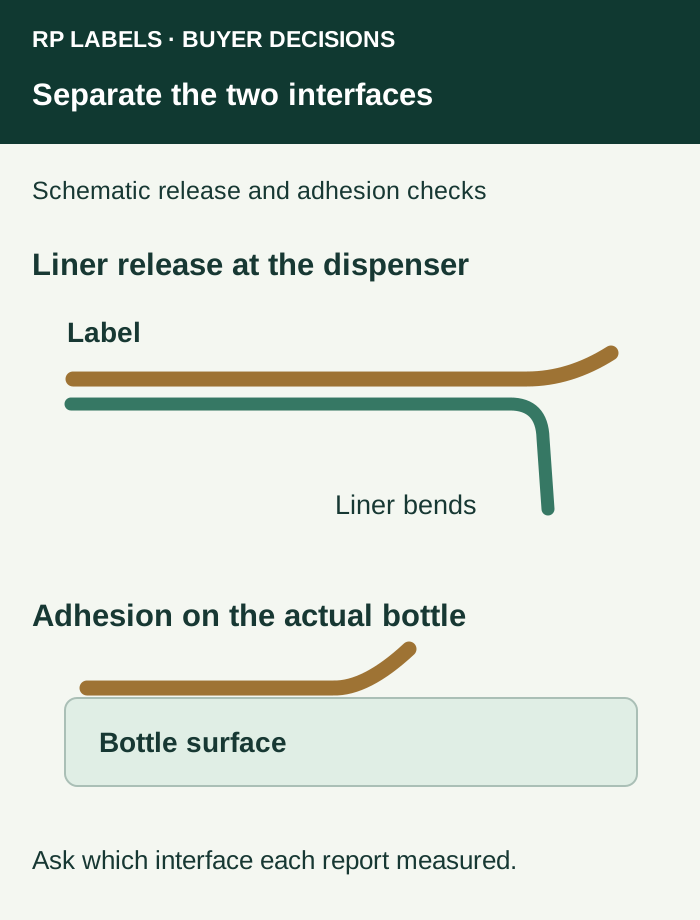
Put the approved roll and proposed roll side by side. Ask for the method and revision, test speed, geometry, conditioning, specimen width, units and exact tested combination of face, adhesive and liner. If the two reports use different methods or speeds, ask for results on a shared basis before comparing their magnitudes. Where one value is a typical value and another is a guaranteed limit, record the distinction in the material brief.
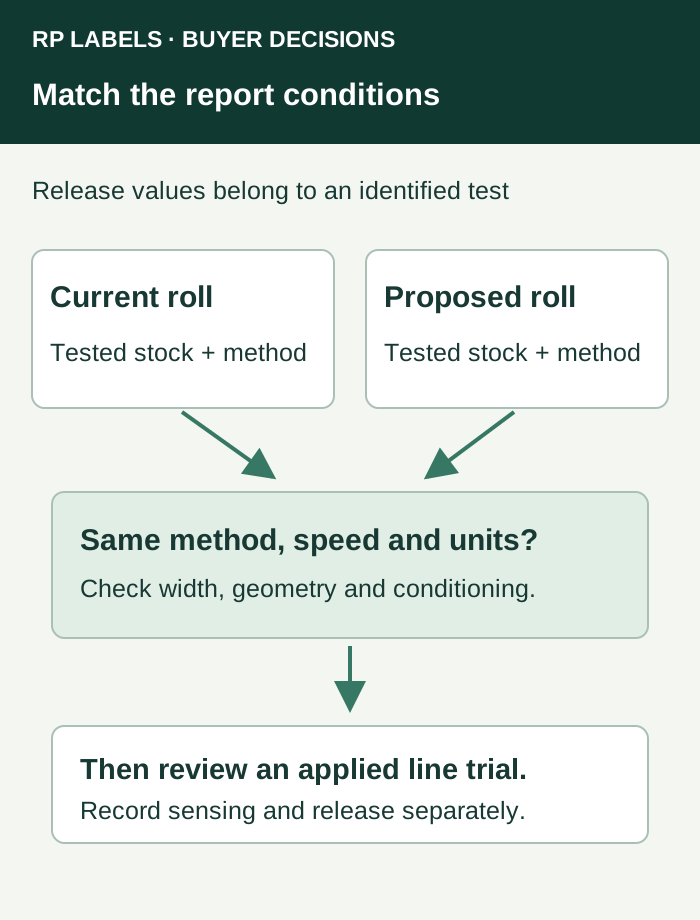
Give the packer a production-representative trial roll with the proposed die cut, web width and label gap. At the packer’s authorized settings, observe whether the label separates at the intended point, feeds consistently and transfers to the real bottle. Keep sensing, web tracking and release observations separate. If the candidate dispenses poorly, have the equipment and material owners identify the cause before changing the roll specification. If both rolls meet the agreed line requirements, compare the remaining purchase differences, such as capacity, supply format and cost. Include the matched release evidence and trial status when requesting the candidate roll from RP.
Sensor and gap detection
Applicators may use gap, opacity or other sensing methods. Transparent liner and clear labels can challenge some settings. Send the machine model and sensor specification, then run a production-width trial.
Do not solve a sensing problem by adding random printed marks without coordinating the artwork, liner and applicator. Registration marks, if required, should be controlled in the production specification.
Die cutting and adhesive bleed
The liner provides the base against which labels are die cut. Tooling, pressure and liner characteristics influence clean cutting without damaging the carrier. Poorly controlled cuts can weaken the web or leave labels difficult to dispense.
Adhesive bleed at the cut edge can create sticking, contamination and thermal-transfer problems. Storage temperature, roll tension and construction all deserve attention.
Roll capacity is a system calculation
A thinner liner may fit more labels into the permitted outer diameter, but label facestock, adhesive, laminate, gap and core also affect the roll. Ask the converter for a realistic label count per roll, not a theoretical promise based only on liner thickness.
Confirm maximum roll weight as well as diameter. Operators still need to load the roll safely.
Waste does not disappear after dispensing
Both paper and PET release liners require an appropriate collection and recycling route where available. The best environmental statement depends on actual local recovery, not the material name alone.
Discuss how the packer collects spent liner, whether it is contaminated and which recycler accepts it. A thinner liner may reduce material per label, while a familiar paper stream may be easier to manage in another location.
Worked liner feed trial record
The rows below are hypothetical planning examples. Empty observation or commercial fields must be completed from the actual project; no sample has been tested for this article. Use the worked CSV and blank worksheet with the field guide. Keep the example references separate from production records.
| change reference | check | accepted baseline | proposed liner | evidence needed | trial result | owner | decision |
|---|---|---|---|---|---|---|---|
| DEMO-CHANGE | Sensor behavior | Current roll reference required | Exact PET candidate required | Production-width sensing trial | Packer | PENDING | |
| DEMO-CHANGE | Labels per roll | Current actual roll build | Proposed full construction | Core OD weight and calculated count | Converter and packer | PENDING |
Bring this decision into the print inquiry
Contact RP Labels with the completed liner feed trial record, the actual packaging reference, approved artwork and quantity per design. State which fields remain unresolved so the print specification and any relevant sample scope can be discussed against the same decision.
Related buying guidance: Custom supplement labels; Automatic roll specifications; Batch and expiry printing; Custom label process.