Registered or Repeating Hologram Patterns? Define the Finished View
If a specific optical logo or emblem must appear fully inside every hologram label, specify its position and viewing orientation on the finished label drawing. If the optical effect is a decorative background and partial motifs at the edges are acceptable, compare a continuous repeat pattern. Ask what happens across several consecutive finished pieces before you approve either option.
Choose how the optical image meets the cut
A continuous repeating pattern can cross the cut in a different place from piece to piece when the pattern is not positioned relative to that cut. A registered image has a controlled location relative to a defined reference. A stock pattern can be used in some registered proposals, and a custom motif can also be designed as a repeat. Decide what has to stay in place separately from whether the optical artwork is stock or custom. NovaVision's stock image and foil options describe both registered stock images and random stock patterns. The custom versus stock guide covers what changes when a new optical master is needed.
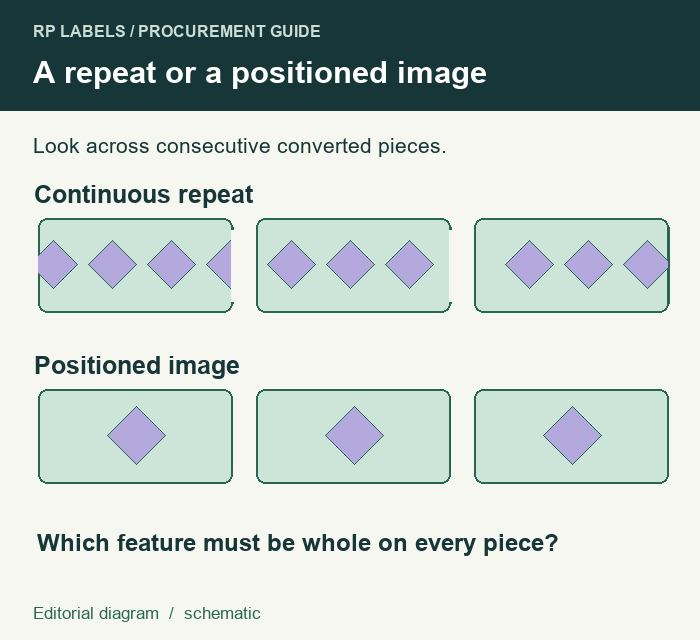
For a decorative band under printed branding, identify how much partial pattern is acceptable. For a seal the receiving team must inspect for a whole optical emblem, draw the minimum visible feature and the region in which it must appear. Identify any ink, cut or code area that must not obscure it.
Ask what is positioned to what
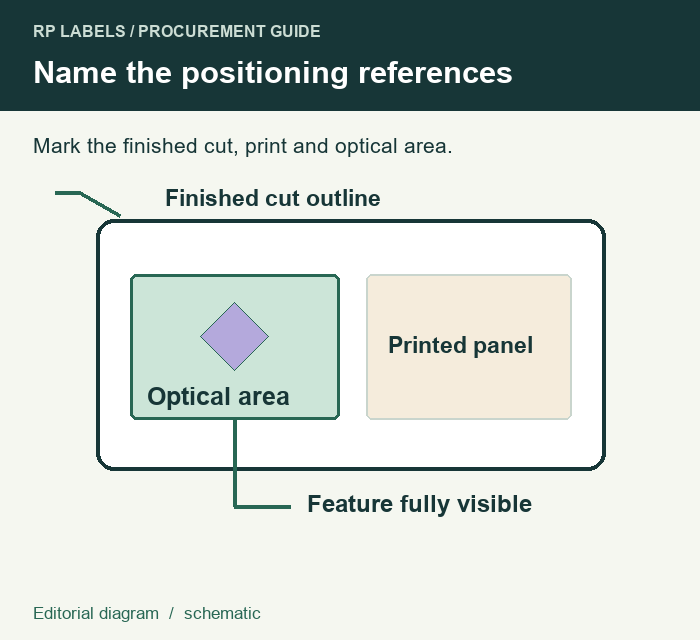
On a marked drawing, name the cut outline, printed artwork, optical feature and inspection orientation. Ask the supplier which of those are aligned in the quoted construction and what reference the buyer will see on the delivered labels. In a foil-transfer proposal, the foil and artwork may have to be synchronized. NovaVision's foil guidance gives an example involving a timing mark and compatible foil registration equipment. A full-face holographic material and a transferred optical patch can involve different production routes. Have the converter describe the proposed route and relevant limits for this job.
Inspect a sequence of finished pieces
Request representative samples that include the smallest version, final cut outline and actual print or white mask if those affect the decision. Review several consecutive pieces or identified positions from the proposed format. For a repeat, compare partial motifs and their relationship to the print. For a positioned image, check its complete feature, orientation, clearance from the cut and visibility through the intended inspection movement. Write which features require a hold if clipped, rotated or masked.
A loose optical sample can answer questions about the effect and viewing movement. A converted sequence can also show how the effect relates to the cut and print. Record which sample was approved. If the pattern must be positioned and the quote only identifies a stock film code, ask for the missing alignment scope before committing.
Ask for quotes against the same inspection drawing
Give RP the intended effect, artwork, dimensions and quantity per design. Prepare the hologram inquiry with the optical feature boundary and mark which relationships must be held. Request separate lines for any origination, setup, proof and repeat-order conditions that apply. If a background repeat satisfies the inspection brief, have the supplier show which partial views you can expect to see.