Self-Adhesive or Glue-Applied Labels? Confirm the Application Route
Two quotations can both say “paper roll labels” and describe stock for different labeling systems. Before comparing them, establish whether the label arrives with pressure-sensitive adhesive on a release liner or whether the application line adds glue. The required stock, feed arrangement and approval evidence follow that decision.
The words “hot glue” are not enough to classify the route. They may describe an adhesive technology or a gluing operation. Ask for the supplied construction and the packer's actual application method instead of inferring one from a short material description.
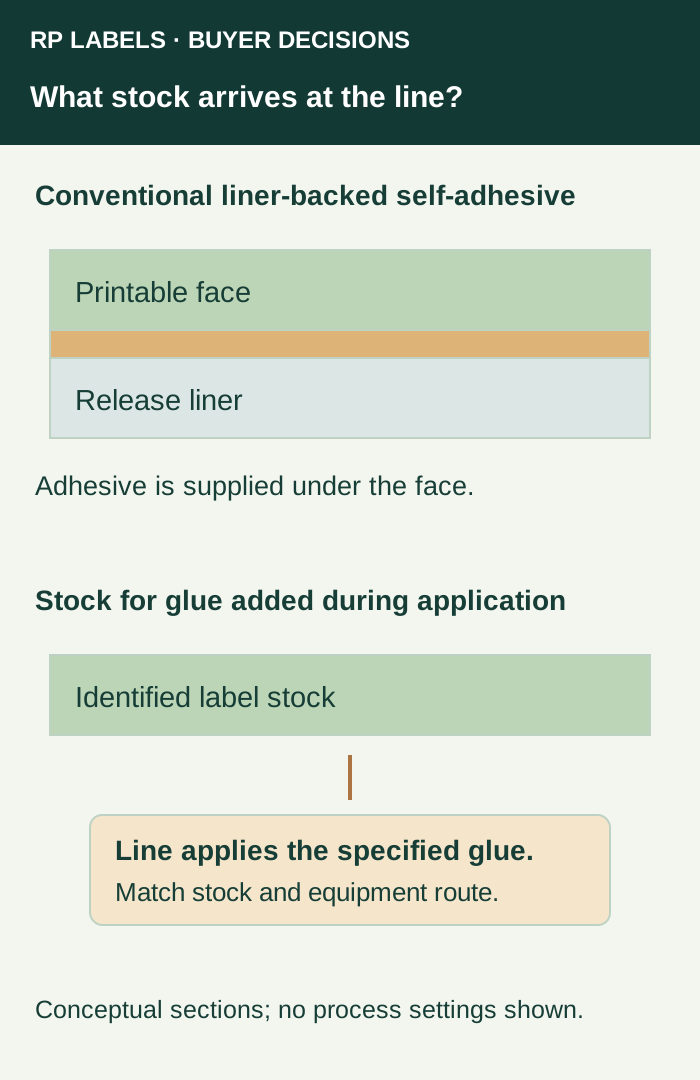
Identify what arrives at the packing line
In a conventional liner-backed pressure-sensitive construction, the face material and adhesive are carried on a release liner. The operator or machine removes the label from that carrier for application. Avery Dennison's liner overview describes the carrier's role and common paper and film liner families.
In a glue-applied route, the supplied label stock and the labeling equipment must be matched to the gluing process. A roll-fed line may cut the label from the reel before application; other equipment uses pre-cut labels. Those formats are not interchangeable simply because the finished bottle appears similar.
Krones' Contiroll description illustrates a reel-fed system with cutting and hotmelt functions. It provides a concrete contrast with a liner-backed self-adhesive supply. These references explain process distinctions; they do not establish RP stock compatibility or recommend a machine purchase.
A material name does not identify the whole route
Paper and film can appear in different label constructions. The visible face alone cannot tell purchasing whether there is a liner, how the label is separated or where adhesive is introduced. Likewise, a core size and unwind note can describe a reel without resolving the gluing question.
RP's March 2026 production example records hot-glue coated paper rolls and order-specific dimensions and finishing. It is a historical order example, not a standing specification for all vial or supplement labels. Do not turn that wording into an assumed machine route for your project. Ask RP to explain the offered construction and its intended application.
The paper versus BOPP guide compares the appearance and use of identified constructions. This earlier question decides which application system the stock must serve before those material candidates can be compared meaningfully.
Let the packer name the existing process
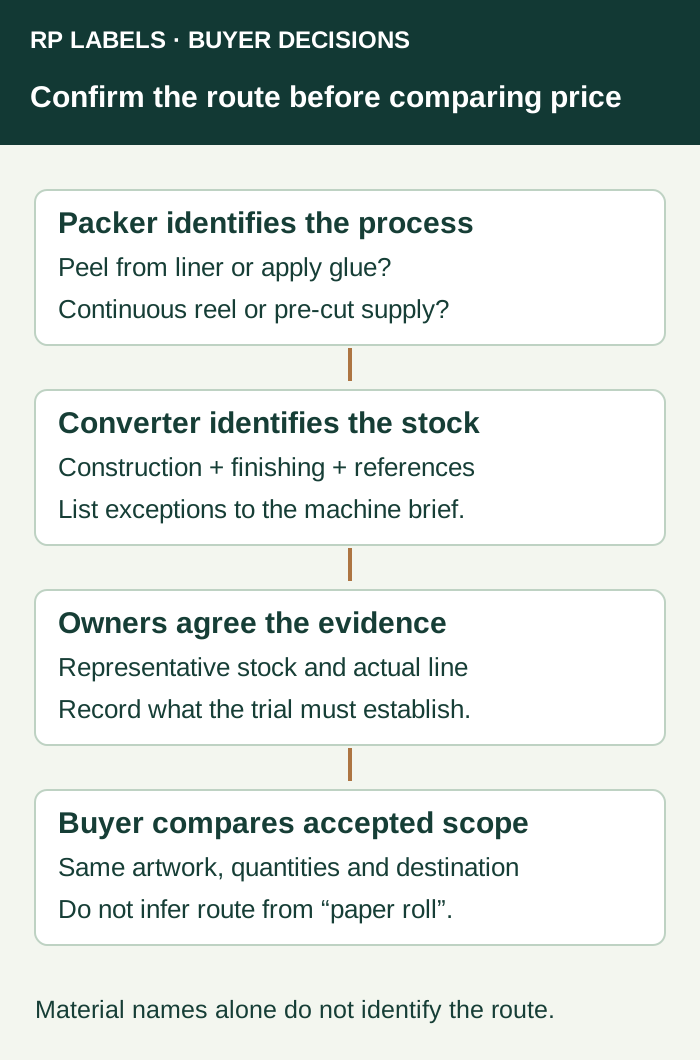
Ask the line owner to identify the actual equipment and operating route. A photograph of an accepted roll or label sample can help when it shows the relevant layers and feed arrangement, but the equipment owner's specification should resolve what is needed.
- Does the station peel a label from a liner, or apply glue to label stock or the container?
- Does it receive individual labels, a continuous printed reel or another accepted format?
- Which material, dimensions, registration, winding and joining requirements apply?
- Who supplies and approves any glue used at the labeling line?
- What representative trial and result does the packer need before accepting a new stock?
If the buyer will apply small labels by hand, explain that directly. A stock intended for an existing glue-applied industrial process is not automatically a ready-to-peel substitute at a manual bench. The converter can then propose an appropriate supply scope rather than quoting from the word “roll” alone.
Compare a repeat job with a changed packing contractor
Consider a fictional supplement brand moving production to another packer. The label design and bottle remain the same. The new packer uses a different application system. Repeating the old label purchase order without checking that system can produce the right artwork in an unusable supply format.
Give the old approved stock reference and the new line specification to the converter. Ask which construction and format changes are proposed, then review the affected size, appearance, adhesion and process evidence. Preserve the brand's approved requirements instead of allowing a machine change to authorize an unreviewed material substitution.
A first inquiry can leave the route open if the buyer has not yet chosen a packer. State that uncertainty. Obtain comparable candidate scopes and identify which decision must be closed before production. A precise price for the wrong application route does not advance the purchase.
Put the confirmed route on the quotation
For supplement labels or vial labels, prepare an RP inquiry with the actual container, artwork, quantities and packer's process description. Ask the supplier to identify whether the offered stock is self-adhesive liner-backed material or another specified route, and to confirm the required finishing and sample scope. Keep that answer with the quote and accepted machine brief.