Paper vs BOPP Supplement Labels: Choose the Construction Behind the Look
Imagine approving a softly textured paper label for a supplement launch. The bottle looks exactly right in the presentation. Then operations asks whether the same pack will still look acceptable after the handling and moisture exposure expected in distribution. The design approval contains no answer, and the purchase order is waiting.
Do not let the word “premium” settle that argument. For paper vs BOPP supplement labels, choose a proposed construction against the intended appearance and actual exposure, with the unresolved requirements written into the sample request. Paper can deserve the order. Film can deserve it too. Neither earns approval from its material name alone.
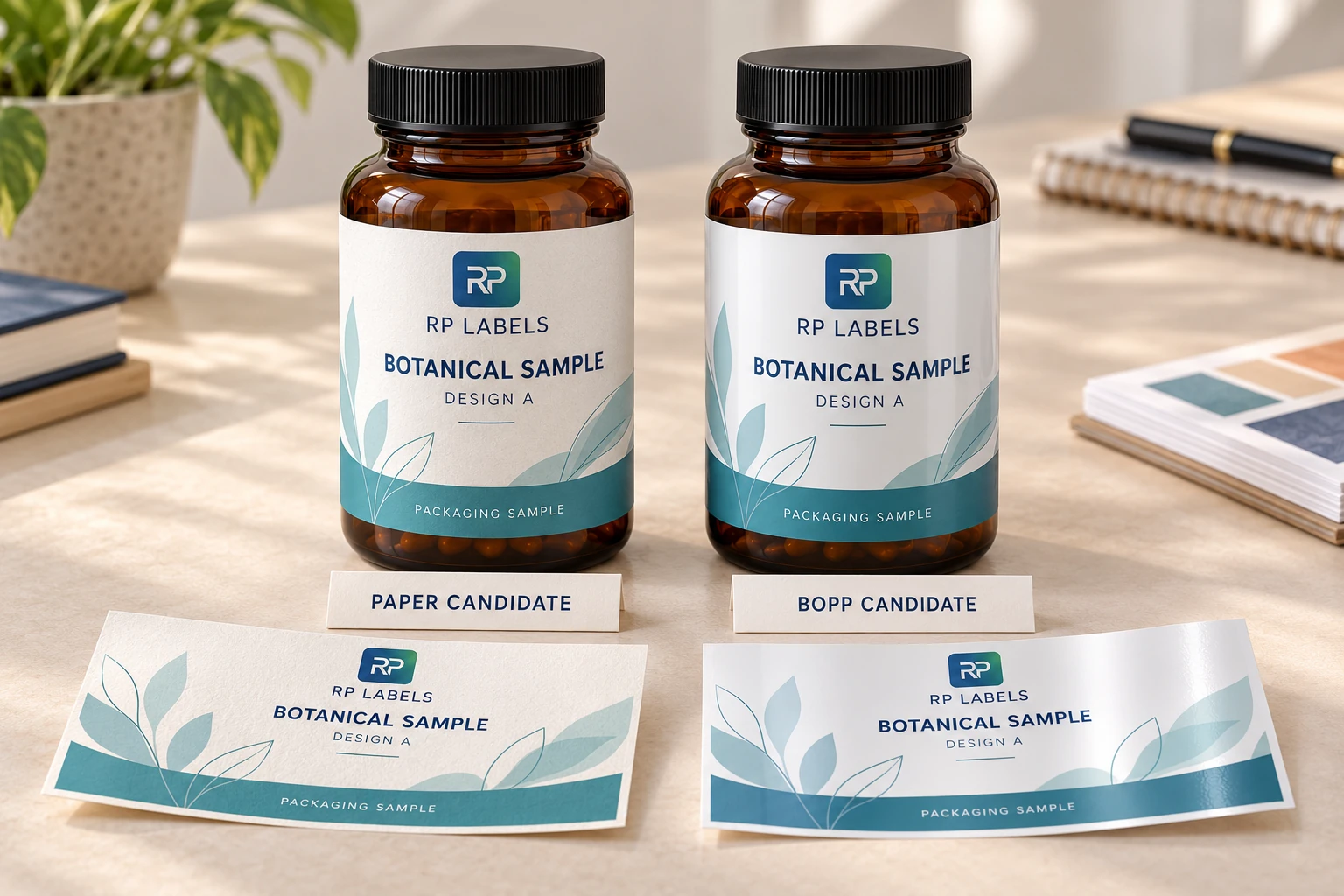
AI-generated packaging illustration. Fictional RP samples show proposed visual directions; they do not demonstrate moisture resistance, adhesion or any production result.
Start with what the brand is trying to keep
For a dry retail presentation where tactile texture carries the design, paper is a serious candidate. A designer may want the printed surface to feel like paper when somebody picks up the bottle. Covering it with a different surface solely to obtain a fashionable specification could remove the reason for choosing it.
That does not mean every paper stock has the same texture, printing behavior or exposure limits. Ask for an identified proposed stock with its actual finish. A cream illustration on a screen cannot establish the feel of the delivered label, and a coating can change the impression substantially.
Now change the brief. A buyer expects repeated handling and has identified a relevant moisture exposure. A BOPP candidate may be worth evaluating as part of the complete construction. BOPP means biaxially oriented polypropylene; it identifies a film family, not a universal waterproof label. The printed surface, protective finish, adhesive, bottle and application still have separate jobs.
The useful disagreement is therefore specific: which part of the paper appearance must remain, and which exposure requirement must the finished pack satisfy? If those requirements conflict, the buyer needs a conscious tradeoff rather than a supplier choosing silently.
“Paper versus film” leaves several purchasing questions open
The facestock is the printable face of the label. Under it sits an adhesive; above the print there may be a coating or laminate. Two quotes can both say BOPP and still propose different complete constructions. Two paper options can likewise have different surface treatments.
Ask each supplier to identify the proposed layers and any later printing zone. Keep the bottle reference and application method attached to the comparison. If the label must accept a lot code after finishing, the relevant question is whether that exact surface works with the intended marking process. A durable-looking front panel does not answer it.
Separate the purchase decisions instead of asking one adjective to do all the work. The material and finish overview explains the broader options. The matte versus gloss guide addresses reflected appearance. If the concern is a lifting edge on an HDPE bottle, use the adhesion comparison. Changing the face material without investigating the bond can miss the cause.
Give the sample a question it can answer
Consider two hypothetical candidates using the same artwork and bottle. Candidate P preserves the requested paper feel. Candidate F proposes white BOPP with an identified protective surface. Neither is approved yet. The brand owner first records which visual and tactile differences are acceptable; the operations owner separately defines the relevant handling or exposure evaluation.
Use the actual bottle, representative artwork and proposed finished construction wherever the decision depends on them. Ask the supplier to identify differences between the sample and intended production. A loose unprinted swatch can help discuss texture, but it cannot demonstrate the completed printed and applied pack.
Define the observation before looking for a winner. Depending on the actual brief, that could include whether required text remains readable, whether the intended appearance changes unacceptably, and whether the applied label stays within the agreed condition. The responsible buyer and relevant material provider should agree the method and limits. This guide supplies no universal test duration, sample count or acceptance threshold.
An adverse result should lead to a focused next step. If the paper appearance is acceptable but the proposed surface is unsuitable for the exposure, ask whether another identified construction can preserve the important texture. If the film candidate works physically but loses the desired feel, decide whether that tradeoff is commercially acceptable before releasing the order. Do not record a failed aesthetic brief as a technical success.
Ask what the paper data says about wet strength
A paper with a moisture-resistant surface can slow wetting or retain a smooth appearance under a specified exposure. A wet-strength grade addresses how well the paper fibres hold together when wet. Ask the supplier to name the grade and the property tested. UPM lists wet-strength facestocks separately from its LabelCoat Moistproof paper, which it describes for uses where wet strength is not needed. These references identify material categories and one supplier's example. UPM paper label options and UPM LabelCoat Moistproof.
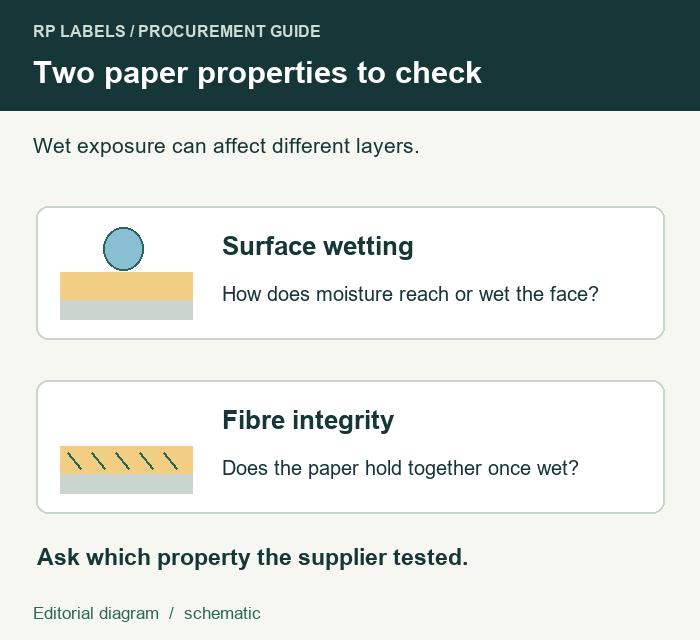
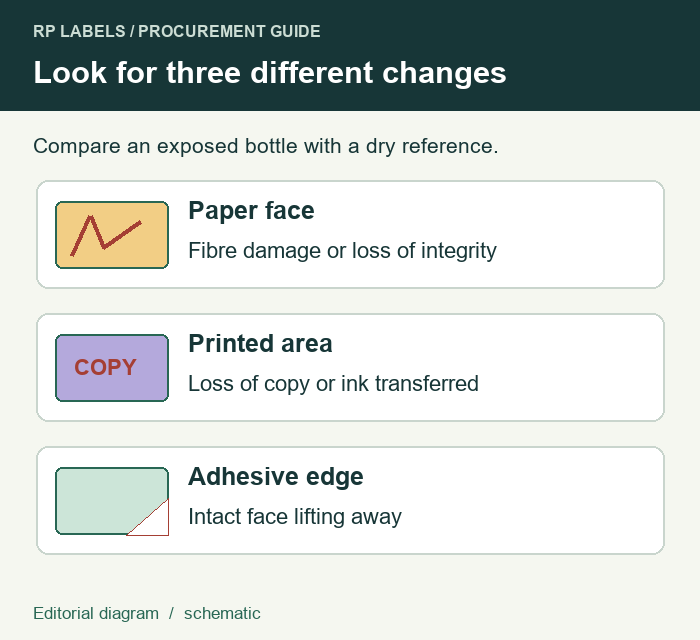
Test the finished label on the intended container if condensation, repeated handling while damp or water contact is material to the choice. Compare the paper face, printed information and adhesive edge separately. Paper fibres coming away, ink rubbing off and an intact label lifting are different observations. Ask the supplier for the proposed construction and observe a dry reference beside the exposed specimen. If handling while wet matters, agree how it will be handled during the trial.
Start with a paper sample when texture matters and the exposure is controlled. Consider a wet-strength paper or film alternative when the label must stay readable during sustained wet handling. Define the contact, timing and acceptance on the actual package before choosing. Ask RP Labels to include the named face, print, finish and adhesive in the sample request, and document which construction was tested before comparing prices.
Put the two candidates on one decision record
The worked facestock record, blank record and field guide connect each candidate to its visual goal, full construction, actual bottle, proposed exposure and approval owner. The example rows describe requests; observations and approval remain open.
This matters when different people review different evidence. The designer can approve the appearance sample while the application owner still has an unresolved physical question. Procurement should be able to see both states. A single email saying “looks good” should not expand into approval of a condition that nobody evaluated.
Keep the approved reference and construction identity together for reorders. If the next quote substitutes a different stock or protective surface, compare it with that reference through the material substitution approval process. The familiar words paper or BOPP do not make a changed construction equivalent.
Ask for comparable scope before comparing price
Request the same dimensions, artwork revision, quantity per design, supply format and delivery scope. Ask what the proposed finish includes and what evidence or samples are available for the unresolved requirements. Keep unquoted costs unknown; this article does not assume film costs more or paper costs less.
A paper option can win when its identified construction meets the real brief and its texture contributes something the buyer values. A film option can win when its identified finished pack supplies the required evidence and the appearance tradeoff is acceptable. Buying extra protection without a relevant requirement can waste budget; buying a texture without checking its intended use can leave the decision unfinished.
Send RP Labels the two-candidate brief, actual bottle reference, artwork, quantities and the handling conditions you need to address. Ask for identified proposed constructions and sample scope, so the reply can advance an approval decision rather than offer another material adjective.