Supplement Bottle Label Friction: Check the Applicator Wiper
When a supplement bottle label wrinkles or marks as it passes the applicator's wiper, check the contact between the finished label face and that wiper before changing the roll specification. A label that is acceptable at the dispensing edge can still behave differently once the packer presses it onto the bottle. If a finish change is proposed, compare it on the real line against an accepted reference.
Identify where the change first appears
Ask the line owner to inspect a bottle before and after the wipe-down point during an authorized trial. If the label is already skewed or loose before the wiper, check the web, dispensing and product presentation. If the label first wrinkles or shows a mark after contact, record the area, the wiper used and the finish on that label. An applied label that later scuffs against a tray needs a separate contact review.
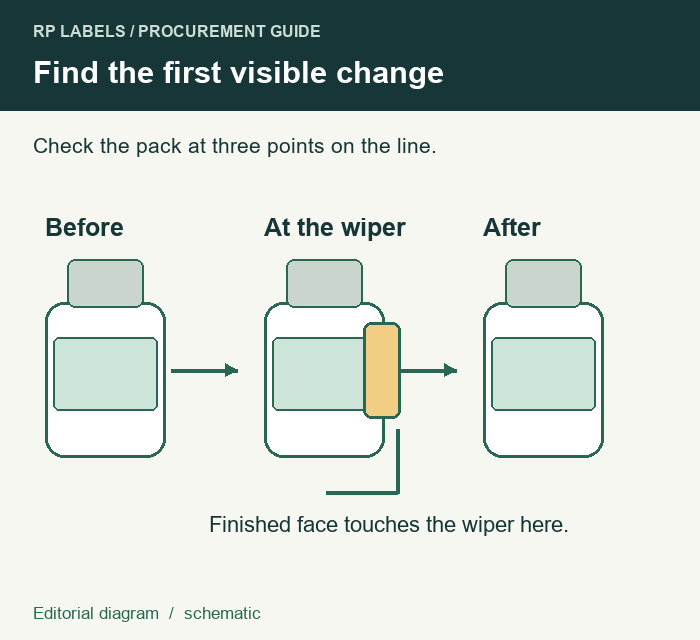
Research by Cho and Bhushan compared friction and wear in specific label and wiper material pairs and considered varnish among the variables. Their measurements describe their specimens and conditions. For purchasing, the useful implication is to name both contact surfaces and compare a representative finished label, even when the face stock and adhesive have stayed the same. Study of friction and wear at the label-wiper interface.
Ask which friction measurement was taken
A coefficient of friction, or COF, describes a pair of contacting surfaces under stated conditions. Starting and sliding friction are separate measurements. ASTM D1894-24 covers starting and sliding friction for plastic film and sheeting under specified test conditions. A test between two pieces of the same film answers a different question from a test against a named counterface. Ask whether a value covers bare stock, the finished printed and protected surface or another condition.
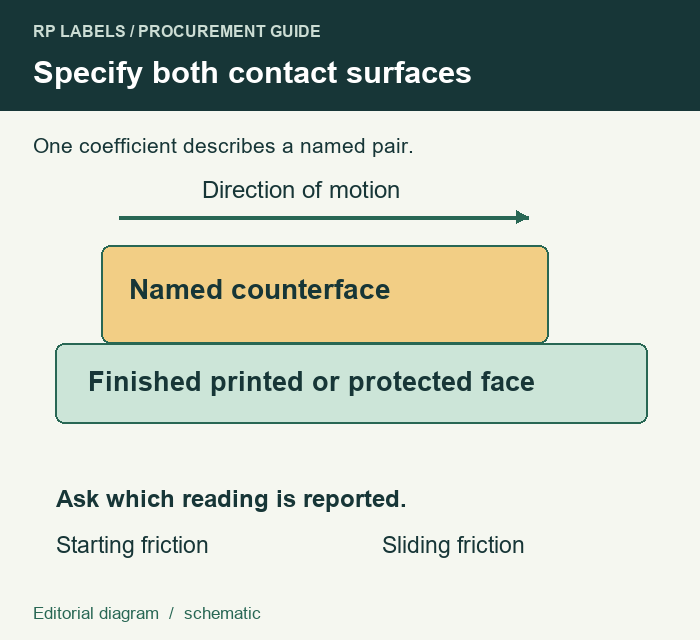
If a report is needed, request the test method and version, the two surfaces, specimen identification, relevant conditions and whether the value is static or kinetic. Hold off comparing numerical values if they were obtained with different surface pairs or methods. Have the packer confirm whether the reported test is relevant to the actual machine contact.
Compare two rolls with a clear acceptance decision
Have the packer run an accepted reference roll and a candidate under its normal authorized conditions. Record the bottle, wiper identification and condition, roll details, finish, speed range and observation points. If practical, change one feature at a time. When several features change together, compare the complete proposals and keep the limits of the comparison in the record.
Set the expected result before the trial. For example, check whether bottles are presented consistently, the label remains in position after wipe-down and the finished surface is usable for downstream handling or reading. If a new finish looks better on the bench but marks on the line, ask for a revised construction or a packer-approved alternative before ordering. The shipping scuff guide helps when the first visible damage occurs after packing.
Give the converter the actual contact requirement
Prepare an RP Labels inquiry with the bottle, artwork, per-design quantity, roll brief, finish reference and wiper contact description. Ask which construction can be sampled and agree who will approve the line outcome. Keep any finish change tied to that acceptance record for the next order.