Why a Bottle Label and Carton Match in One Light but Not Another
A supplement brand approves a green label next to a matching carton in the printer's proof room. In a store, the two greens look different. Before asking either supplier to reprint, the brand needs to identify how the parts were compared and which lighting condition will govern approval.
Agree a reference, sample construction and viewing condition for both parts. A label and carton may use different substrates, inks and finishes; their appearance can change differently under another light source. A photograph or screen can help describe the concern, but it is not a controlled color approval.
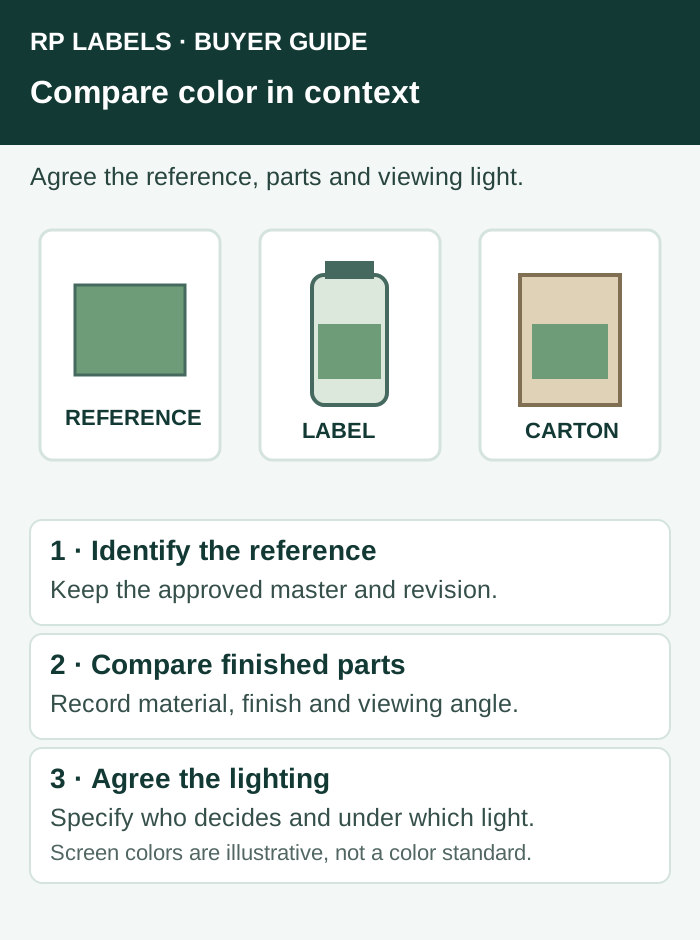
Recreate the comparison before changing a file
Keep the actual label, carton and approved color reference together. Record the artwork revision, material, print process, finish, date and the light under which the original approval was made. Check that the samples are viewed at a consistent angle and that the label is applied to the actual container if the container color or curvature affects its appearance. Do not assume that a swatch printed on one material predicts the exact appearance of another.
A buyer may see two samples appear close under one light and different under another. X-Rite explains metamerism as a color match that depends on the lighting conditions. A visual difference alone does not prove metamerism: substrate, gloss, viewing angle, sample condition and other factors can also matter. Ask a qualified color specialist to assess the actual samples when a controlled decision is required.
Choose the reference and the approval light
Decide whether the brand is matching a physical master, an agreed printed proof or another documented reference. The buyer and both suppliers should identify which version is authoritative, where it is stored and whether it is still suitable. A code or color name without the reference, material and viewing conditions leaves room for different interpretations.
For a color-critical project, ask the suppliers what controlled viewing setup and measurement method they use. X-Rite's color evaluation guidance discusses controlled illumination and measurement alongside visual review. The parties may also agree to inspect the parts under a representative retail light, but should document which condition controls acceptance if the two views differ. Do not promise a universal numerical tolerance; the brand and suppliers need to agree a feasible one for the specific materials and process.
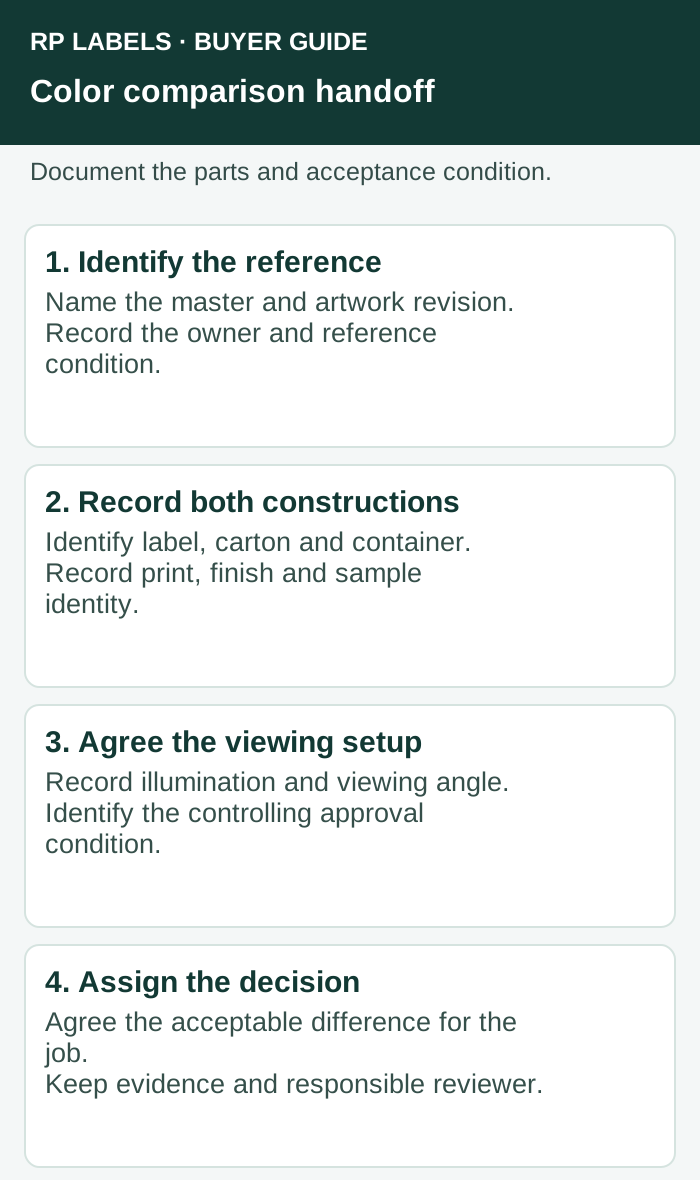
Compare the whole package, not just a flat swatch
Put the finished label on the real bottle and place it next to the actual carton. Align the orientation as it would be displayed. Gloss, matte coating, curvature, white ink and transparent material can change the visible comparison. If the important decision concerns a front-facing logo, identify that area rather than averaging unrelated colors across the package.
When a measurement is requested, ask the qualified provider to document the instrument, illumination, measurement geometry, sampling location and agreed limit. Numerical results are useful only with the correct reference and conditions. A single number or phone photograph should not be described as proof that all bottles and cartons will match under every possible light.
Agree the response if the two views differ
If samples are acceptable in the agreed approval condition but visibly different under a second light, the brand owner must decide whether that difference is acceptable for the intended display. The suppliers can discuss alternative inks, materials or finishes where available, and the brand can request a new representative proof. Changing the reference after production has begun is a new decision; retain both versions and document who approved the change.
If the label is visibly different from its own approved reference under the same controlled conditions, preserve the evidence and ask the label supplier for a review. If the label and carton each match different approved references, resolve the references before assigning responsibility. Do not treat a supplier's generic color guide as a completed test of this exact packaging.
What to send with an inquiry
Send RP Labels the actual container, carton sample or representative specification, artwork, critical color reference, proposed label material and finish, quantity and intended display conditions. Ask what proof is available and whether a controlled color assessment can be arranged for the job. The spot-color and process-color guide covers a separate print-process choice; the light exposure guide addresses fading over time rather than two samples looking different under the same moment's light.
Sources and scope
Sources accessed November 1, 2026: X-Rite, metamerism; X-Rite, controlled color evaluation. The scenario and illustrations are fictional; no RP color measurement, supplier test, certification or customer result is claimed.