Static at Bottle Label Transfer: What to Check Before Reordering Rolls
If film labels shift between the peel point and the bottle, have the packer check whether static is involved before approving a different liner or adhesive. Find the first point where the label loses its expected position. Compare a known-good roll with the candidate under the same authorized setup so the buyer can tell which change needs approval.
Map the two paths into the label transfer
The label web runs to a peel edge. The liner turns away while the label moves toward the container. The bottle has a separate route into that same transfer. If the label changes position just after peeling, ask the line owner to look at the web, the separated label and the bottle as distinct places to observe. If the bottle is already moving unpredictably upstream, record that before blaming the roll.
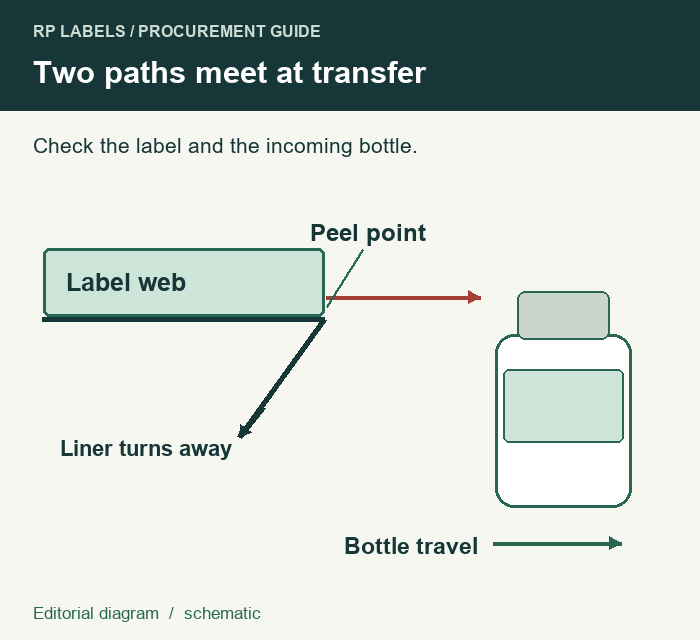
Meech's bottle-labeling example describes charge associated with liner separation. KEYENCE's resin-bottle example describes charge on both the label and the resin bottle. These are equipment suppliers' examples. Their descriptions identify a cause to check on the actual line.
Keep competing causes in the same record
A shifted label can also follow a feed or sensing fault, uneven peel, a changed roll build or a bottle that reaches the transfer in the wrong position. If the label passes the peel point correctly and first moves at the wipe-down contact, use the wiper contact guide. If the line misreads the gap on clear film, use the roll sensing guide to isolate that earlier event.
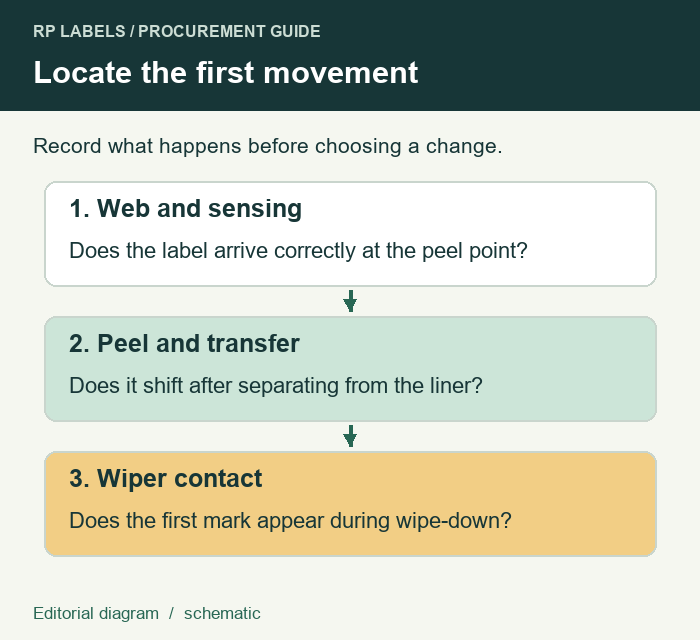
Ask the packer to record the actual bottle, roll identification, speed range, location of the first defect and which conditions were kept constant. If it has suitable equipment, the qualified line owner can record where and how any charge reading was taken. Capture the behavior and any measurements with the same specimen references. An observation such as dust on the label can guide the investigation while the cause remains open.
Decide whether to qualify the roll or the line change
If the accepted roll runs reliably and the candidate shifts at the same location under the same setup, ask the converter to confirm the candidate's construction and check its finished-roll qualification with the packer. If both rolls behave similarly when the same bottle supply or setup is used, ask the equipment owner to review that shared condition first. If an approved static-control change resolves the issue, document the accepted line setup and the roll that was tested before release.
Keep any equipment selection and operating changes with the packer and its equipment supplier. For a clear or coated label that will be printed again later, have the converter and coding owner approve any proposed change to the label surface before ordering. A line trial should preserve the other acceptance requirements, including the visibility of the printed information.
Send the observation with the roll inquiry
Prepare an RP Labels inquiry with the actual bottle, label construction, artwork, quantities per design, machine requirements and the packer's observations at the peel and transfer. Ask which roll can be quoted against that evidence and what trial specimen or documentation will support approval. Keep the agreed roll and line references together for repeat orders.