Film Label Wetting Tension: Check the Surface That Receives Ink
Before buying a film label that must accept ink on a particular face, ask which surface the converter will print and what evidence qualifies that surface for the actual ink. For polyethylene or polypropylene film, a wetting-tension reading can help screen an identified surface. The print trial must still demonstrate that the ink holds on the proposed construction under the required handling conditions.
Identify the surface that receives ink
A film can have a corona-treated surface, a print-receptive topcoat or another preparation chosen for a process. Ask the converter to state which it intends to use and which face receives print. If it will print a second code after the label is delivered, identify the surface under that code separately. The ink-facing surface may be the face stock, a coating or an overlaminate. The label adhesive meets the bottle on the other side and has its own acceptance criteria.
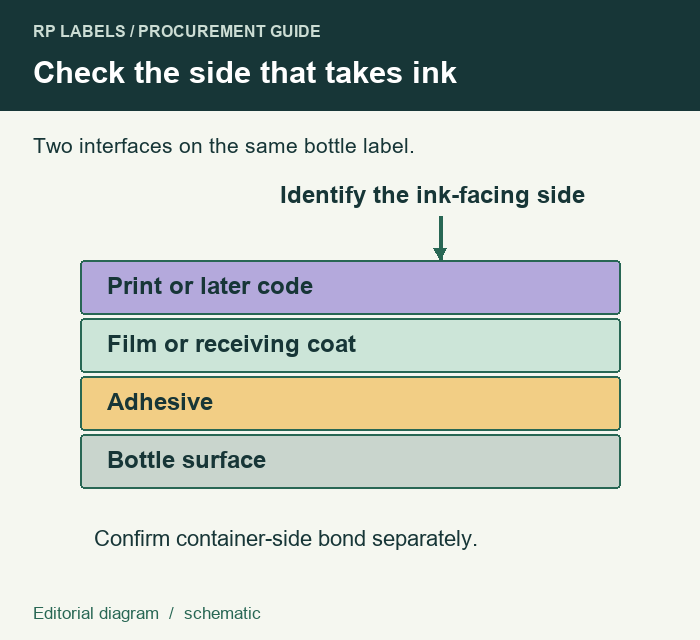
Avery Dennison's corona-treatment bulletin describes corona treatment and why different substrate and ink systems call for different conditions. ASTM D2578-23 defines a wetting-tension method for polyethylene and polypropylene films. Keep the measurement tied to the method, the named film side and the sample state. A reported number on another film or on the back of the same roll can leave the actual printing decision unanswered.
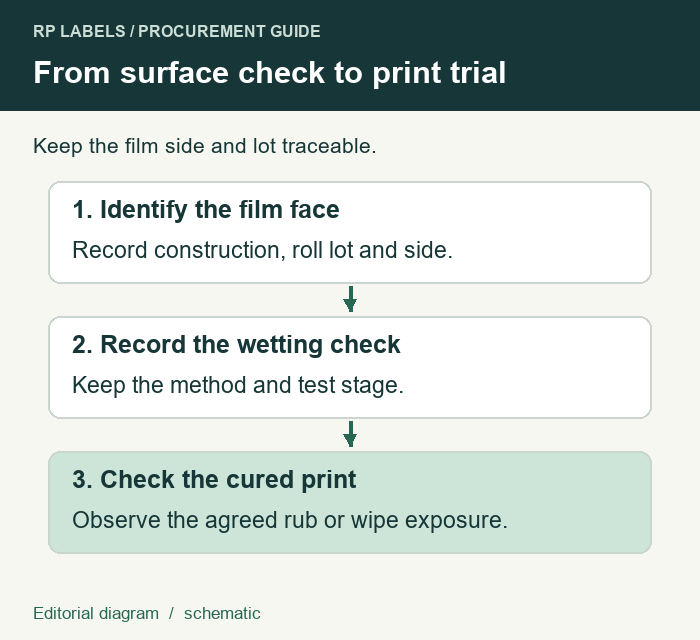
Record when and where the reading was taken
Ask the converter which face was checked, what lot it came from and whether the result was taken at material receipt, just before printing or at another stage. When a roll has been held before printing, ask whether the existing evidence still represents the surface at use. A material change can also alter the relevant surface even when the quote still says “clear film.”
For a standard construction with a qualified ink and current records, use the accepted result as part of a repeat-order check. If the film side, finish, ink or later coding method changes, ask for a new representative trial. Agree how to identify the cured sample and what handling, rub or wipe conditions matter to the actual pack. Keep that observation separate from the wetting reading.
Match the observation to the next decision
| What the check shows | What to ask next |
|---|---|
| The specified film face meets the agreed wetting check. | Ask how the intended cured ink performs on it. |
| The report gives a value with no face or lot reference. | Request a record tied to the material that will be printed. |
| Fixed artwork holds, but the later code rubs away. | Ask the coding owner to qualify the actual print zone, its finish and its ink. |
| The ink stays readable but the label lifts from the bottle. | Reopen the adhesive and container qualification. |
If the code will be printed over a protective film, the lot-window guide covers that approval in more detail. For container-side bonding, use the HDPE bottle adhesion guide.
Ask for evidence on the quoted construction
Send RP Labels your inquiry with the proposed film, the face to print, the ink or coding process, artwork, quantities and expected handling. Ask which sample and surface evidence can be provided and what the production proof will represent. Use the same construction reference for the quotation, trial and reorder.