A buyer asks for a "3D hologram QR label" as if that is one security feature. It is really at least two jobs. The optical mark gives a person something to inspect on the object. The QR code sends a device to a digital destination. Neither automatically proves the product is genuine, and putting them next to each other does not make the workflow secure.
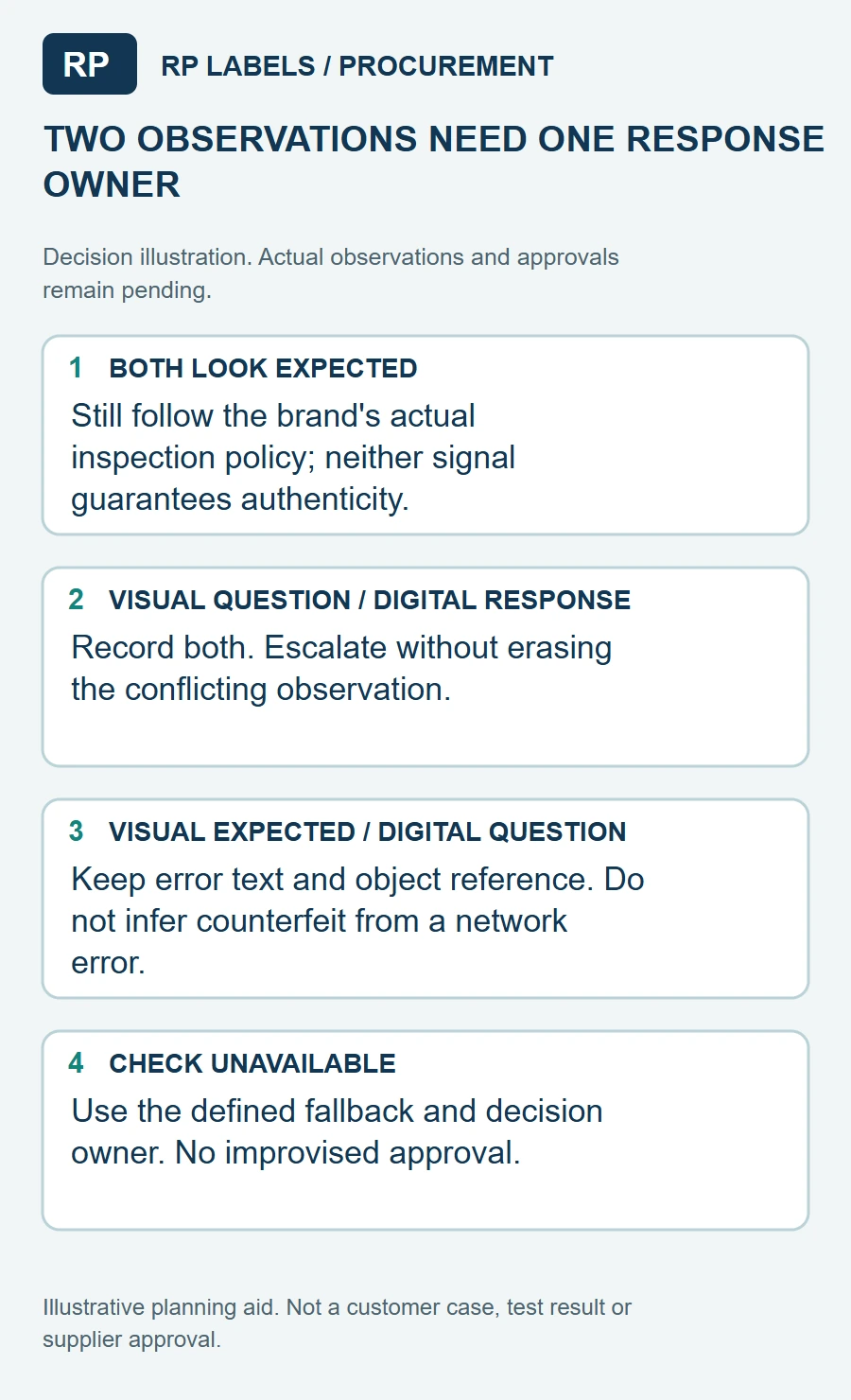
I would start the purchasing conversation with the moment of checking: who looks, what do they expect to see, what do they scan, and what happens when the result is wrong? If those answers are vague, the supplier can make a beautiful sticker that creates confidence without an operational verification process.
Give the visual mark a short, teachable check
Choose a distinct optical cue that changes with viewing angle and can be described to a buyer or distributor. An original brand emblem, controlled pattern and agreed viewing action are more useful than a generic rainbow patch. Record a genuine reference sample and keep the approved master artwork under version control. The mark may deter casual copying, but a visual cue alone cannot stop every imitation.
GS1's digital-signature guidance discusses physical security markings, including holograms, alongside digital verification. It also warns that a code can be copied and reprinted. That distinction is the heart of the brief: a scan should not be treated as the sole proof that the physical item in someone's hand is the original item.
Make the QR check answer a specific question
Decide whether the QR leads to a brand information page, a batch page or a unique-item verification flow. A common static URL can be useful for education, but it is not a unique authenticity check. A serialized workflow requires generated identifiers, a maintained destination, ownership of the data and a response policy for repeat scans. Do not print millions of codes until the brand can explain what the consumer sees for a valid, invalid or already-seen identifier.
Separate code design from holographic decoration. GS1's 2D barcode implementation guidance explains that QR symbols need a clear quiet zone and that glare, folds and reflective substrates can interfere with scanning. I would reserve a stable, high-contrast patch for the code rather than force it directly onto a shifting foil field. The illustrated RP Secure QR is DEMO art, not a working destination or scan-tested symbol.
Prove both actions on the final package
Ask for an applied sample on the real carton, bottle or pouch. Have someone unfamiliar with the project find the optical cue under ordinary light. Then have the intended devices scan the code from the actual viewing distance and angle. Repeat after normal handling and after the package is opened if the seal bridges a closure. Photograph failures as carefully as successes.
If the hologram carries a tamper-evident function, decide what a broken seal should look like and whether the QR remains readable after opening. If the code remains on a detached flap, a successful scan may no longer say anything about the contents. Likewise, if a full hologram must be tilted to show its effect, place it where a user can actually tilt the pack.
The brief I would send the converter
Specify substrate, finished dimensions, application surface, optical master, code type, static or unique data plan, safe quiet zone, roll construction and sample quantity. Assign ownership of the destination URL and the master artwork to named people on the brand side. Ask the converter to show a physical sample, not only a digital animation of the effect.
The result may be a single combined label, or a visual hologram paired with a separate code label. I would choose the arrangement that survives real handling and makes the check understandable. A label earns trust when its verification story works after it leaves the design screen.
Sources and scope
Reviewed October 5, 2026. The primary references linked below support the identified technical points. Buying scenarios and inspection checklists are editorial guidance, not RP production records, certification, legal approval or universal acceptance standards.