Hologram Microtext and Guilloche: Give Inspectors an Accepted Reference
The artwork contains microtext, fine lines and a changing optical image. The warehouse instruction says check the hologram. That leaves the inspector to decide what genuine should look like. Before buying another feature, give the existing one a reference and an action someone can actually follow.
The artwork presentation rewards detail. The receiving bench rewards a check somebody can perform before the next carton arrives. I would give the inspector one usable reference before adding another effect. A simpler feature with a clear review action can serve the brand better than a crowded sticker whose meaning lives only in the supplier's presentation.
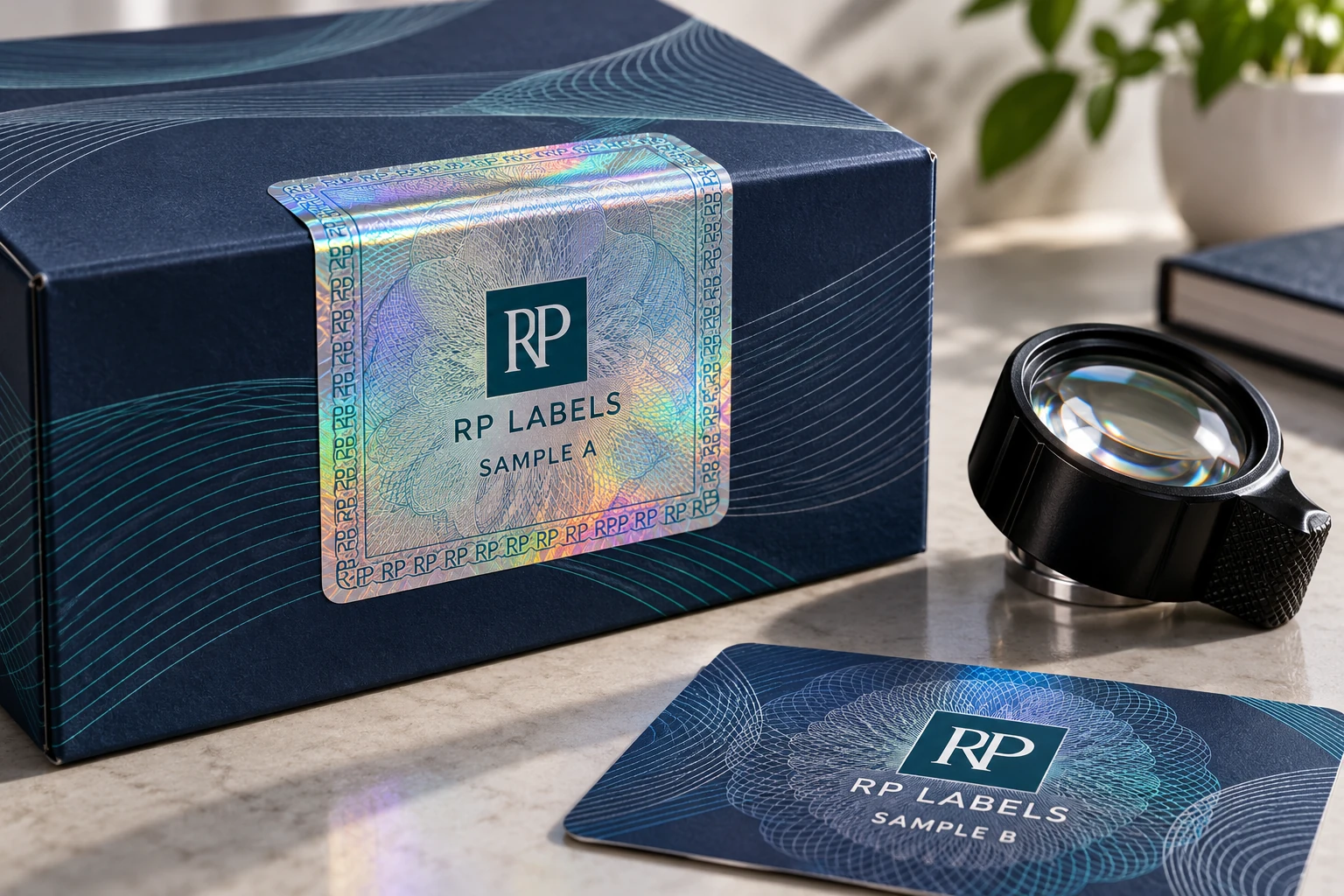
AI-generated packaging illustration. Fictional RP samples show the proposed decision; no physical test or customer order is documented.
Turn the feature list into an inspection card
Choose the feature the intended inspector is expected to use. Record whether it is printed or part of the optical structure, the viewing tool and the relevant reference sample. The supplier should confirm what can be reproduced by the selected route. A large screen preview proves neither the final fine detail nor the ease of inspection on the pack.
The worked inspection card distinguishes a public visual cue from a trained fine-detail check. It leaves the exact feature description and observations to the actual project. No magnification, minimum letter size or counterfeit detection rate is invented. Where a tool is needed, make sure it is available at the real inspection point.
Ask an intended operator to compare an applied sample with the accepted reference using the proposed instruction. Record uncertainty plainly. If the feature becomes unreadable on a curved or scuffed area, revise its position or choose another feature. Adding more small elements does not solve an instruction that is already difficult to execute.
An obvious visual cue may be sufficient for a branding-oriented inspection. A more demanding security program needs its own threat assessment, controls and competent advice. Microtext or guilloche can be part of that program, but should not be described as proof of authenticity in isolation. A missing or unclear feature can trigger review under the brand's procedure rather than an automatic public accusation.
Send RP Labels the desired feature, artwork, inspection context and quantities. Ask what physical reference and print scope can be supplied. The brand retains the accepted sample and owns the response when an inspector cannot reconcile what they see.
Start with the obvious feature
The first layer should be visible without tools: a clear logo, defined movement, depth or color-shift behavior. It gives customers and warehouse staff a quick reason to look twice.
This feature must be explained in simple language. If the genuine effect is impossible to describe, staff will accept almost any rainbow sticker as authentic.
Use guilloche to structure the field
Guilloche patterns are repeating fine-line constructions that create a difficult-to-reproduce visual field. They can frame a logo, carry controlled symmetry and reveal poor copying through broken or muddy lines.
Do not treat guilloche as random decoration. Keep line weight, spacing and contrast within the selected production process. Extremely dense lines that merge in production add complexity to the file but not value to inspection.
Buying rule: one feature that staff can explain and verify is worth more than five effects that only the supplier remembers.
Microtext needs a real inspection plan
Microtext can sit in a ring, border or repeating line. It should use controlled wording, not meaningless filler. Its minimum practical size depends on whether it is printed, originated in the holographic structure or combined with both.
Approve microtext using the intended inspection method: unaided close viewing, loupe or another defined tool. A large PDF preview proves the spelling. It does not prove final reproduction.
Latent and angle-dependent images add a second check
A latent image appears or changes at a particular angle. A flip effect can alternate between a symbol and initials. These are useful when the viewing instruction is simple and the package surface allows the label to remain flat enough.
Strong package curvature, scuffing or uncontrolled lighting can make a subtle feature harder to inspect. Test it on the actual package rather than approving only the master sample.
Serial numbers and QR codes solve a different problem
A sequential serial makes labels individually distinguishable. A unique QR code can connect each label to a record. A static QR code only points every package to the same destination. These are not interchangeable.
Before buying unique data, decide who generates it, who stores it, how duplicates are handled and what the verification page shows. Printing unique codes without an operating system creates a database-shaped hole in the project.
The material response is part of security
A visual hologram can be paired with tamper-evident VOID film, destructible film or a seal shape that crosses an opening. The correct choice depends on the package, surface energy, removal method and desired evidence.
Control the master and the variable data
Record the approved master artwork, origination reference, label size, material, adhesive, finish and serial range. Restrict who can release reorders and reconcile produced, rejected and unused serials where the application requires control.
The label supplier can manufacture features. The brand still owns the verification process.
Worked microtext reference record
The rows below are hypothetical planning examples. Empty observation or commercial fields must be completed from the actual project; no sample has been tested for this article. Use the worked CSV and blank worksheet with the field guide. Keep the example references separate from production records.
| feature reference | intended inspector | viewing method | accepted sample reference | instruction | observed result | exception action | owner |
|---|---|---|---|---|---|---|---|
| DEMO-PUBLIC | Receiving staff | Buyer-defined ordinary view | Physical sample required | Describe actual agreed visual cue | Brand review route | Brand owner | |
| DEMO-FINE | Trained inspector | Actual tool to specify | Applied reference required | Describe actual fine-detail check | Hold for competent review | Security owner |
Bring this decision into the print inquiry
Contact RP Labels with the completed microtext reference record, the actual packaging reference, approved artwork and quantity per design. State which fields remain unresolved so the print specification and any relevant sample scope can be discussed against the same decision.
Related buying guidance: Custom 3D holographic labels; Static vs unique QR labels; VOID vs destructible films; Decorative vs security holograms.