Shipping Label Rolls: Agree Protection and Receiving Evidence Before Dispatch
A buyer preparing a supplement launch asks whether a carton of label rolls will arrive dry and ready for the packer. The useful answer begins with the actual shipment: roll size, construction, route, destination and how long the stock may wait before use. “Export packed” leaves those details unresolved.
Ask the converter to explain how the roll, its immediate protection and the outer carton will work together. Agree which photographs and identifiers will travel with the shipment, and who reviews an exception at receipt. A strong carton, an inner wrap and a roll ID serve different purposes; one does not establish that the other two are adequate.
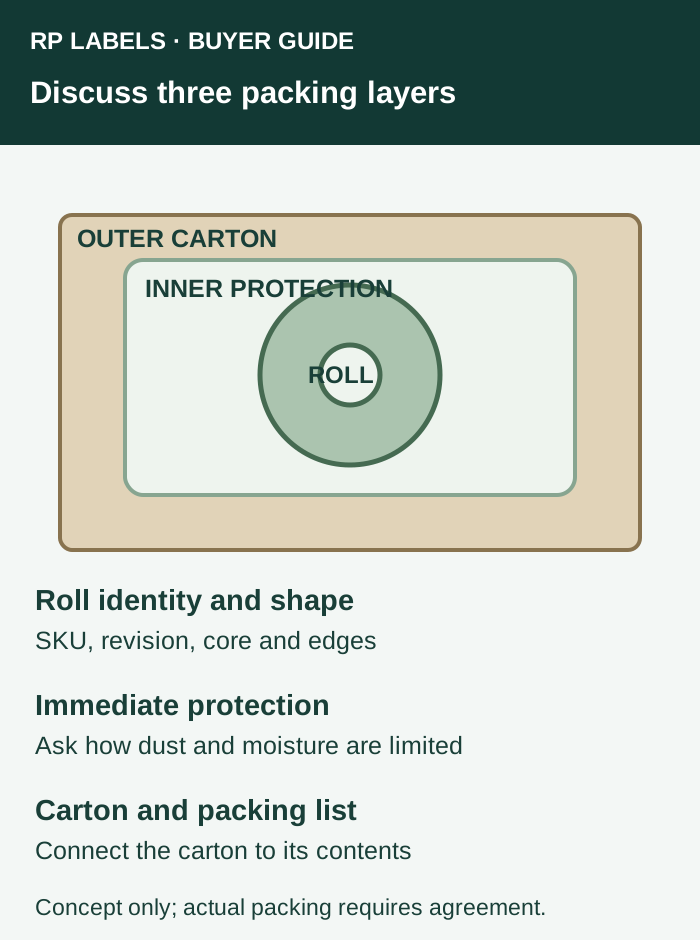
Begin with the roll and the receiving line
Identify the SKU and artwork revision, roll quantity, core, outside diameter, width and unwind. Tell the supplier if finished rolls must remain separate by design or by packer. A replacement core, extra rewind or changed roll size can affect the receiving operation, even if the printed design remains correct. Avoid accepting an undocumented change merely because it makes a carton easier to fill.
Ask how the roll faces, edges and core will be protected against the expected handling route. The supplier should propose the actual arrangement. The buyer should identify any receiving or storage restriction that arrangement must accommodate. This page supplies no universal carton strength, stacking limit or protective insert specification.
Discuss moisture protection without assuming a waterproof package
Avery Dennison's storage bulletin recommends retaining suitable protective packaging for its finished labels to limit environmental exposure. That supports discussing protection and storage as part of the purchase. Its specific conditions are not proof that another supplier's label or packing is suitable for every transit route.
Ask whether the proposed inner protection limits dust and moisture exposure, how it is closed, and what the supplier recommends after the carton arrives. An ordinary bag should not automatically be described as waterproof, vapour-proof or a guarantee against condensation. If a long route, humid destination or extended storage is expected, give that information before the packing proposal is finalized.
Export shipments of label rolls are packed to limit moisture and crush damage. Our standard export packing is a protective wrap, desiccant where appropriate, and a sturdy outer carton. If you need a different packing specification, we confirm it before shipment. Do not add a carton-strength rating or a fixed acclimation time that this page does not state. A freshly opened roll exposed to a different environment may need specific instructions from the supplier before application. The existing opened-roll storage guide addresses later reuse; this article focuses on the shipping handoff before first use.
Keep packing identity visible
Request a packing list that connects carton identifiers to the rolls or designs inside. If there is a partial roll, an allocated destination or a special handling requirement, agree how it will be marked. Internal labels should remain identifiable after the outer carton is opened. Quantity stated by a supplier remains distinct from a quantity independently checked by the receiver; the receiving quantity guide explains that distinction.
Before dispatch, ask whether the supplier can provide images of the identified rolls, the inner protection, the carton contents and the closed carton markings. Define the views needed rather than requesting an attractive generic packing photograph. Pictures can record what was visible at that moment; they do not prove the integrity of every package or guarantee its condition on arrival.
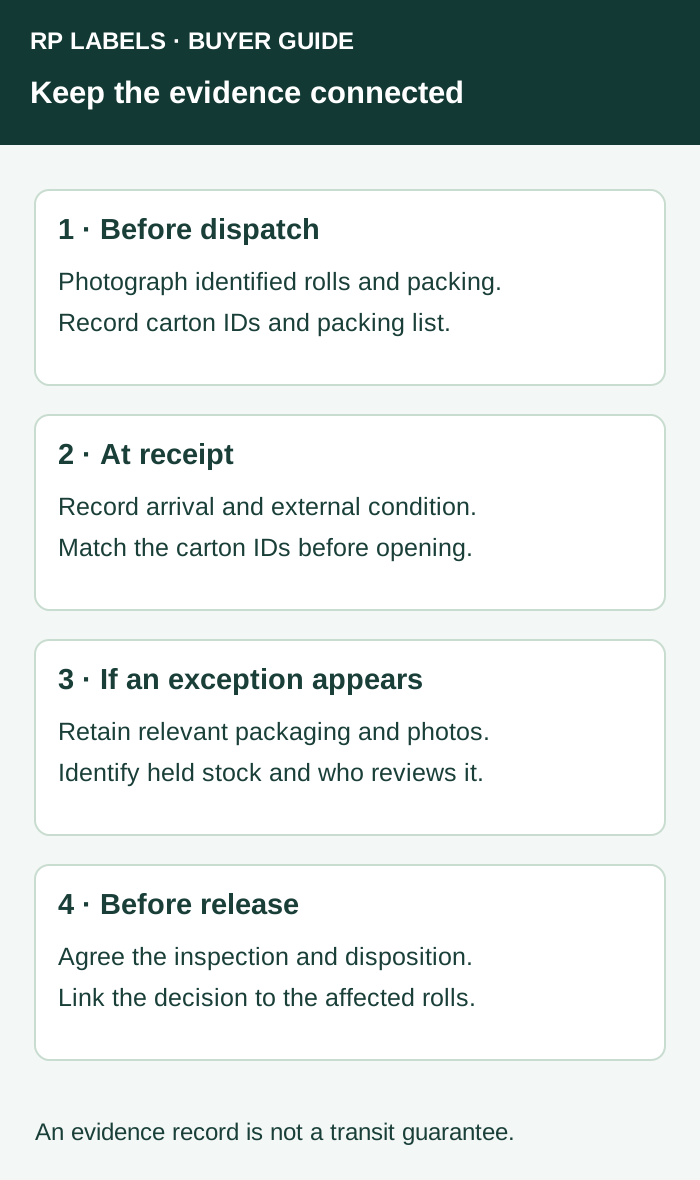
Agree the receiving response before the shipment arrives
On receipt, identify the delivery, count the cartons and inspect accessible external condition under the receiving site's procedure. If a carton is wet, crushed or opened, record the carton ID, visible condition and arrival time before disturbing the evidence. Retain relevant packaging and contact the supplier and carrier using their agreed reporting process. Do not guess the cause from the outer carton alone.
Keep affected stock identified and separate until the responsible reviewer decides the next inspection. If opening is authorized, document the inner protection and roll condition before application or rewinding. An intact outer carton does not establish that every roll is acceptable, and a damaged carton does not prove that all contents are unusable. Assess the actual material and use requirements.
Ask before shipping who receives an exception report, which documents or samples are required, and what response can be agreed. Replacement, claims, carrier deadlines and compensation depend on the actual order and transport terms. A photograph is evidence to support review, rather than an automatic entitlement to a specific remedy.
Agree when the packing team can open a cold shipment
If finished label rolls arrive from a colder route into a warmer room, agree with the converter and packer how to stage them and when to open their immediate wrap. Opening cold stock in warmer humid air can expose it to condensation. Keep the roll IDs with the cartons and record the arrival condition. The material supplier's instructions for finished stock and the packer's room conditions should guide the decision.
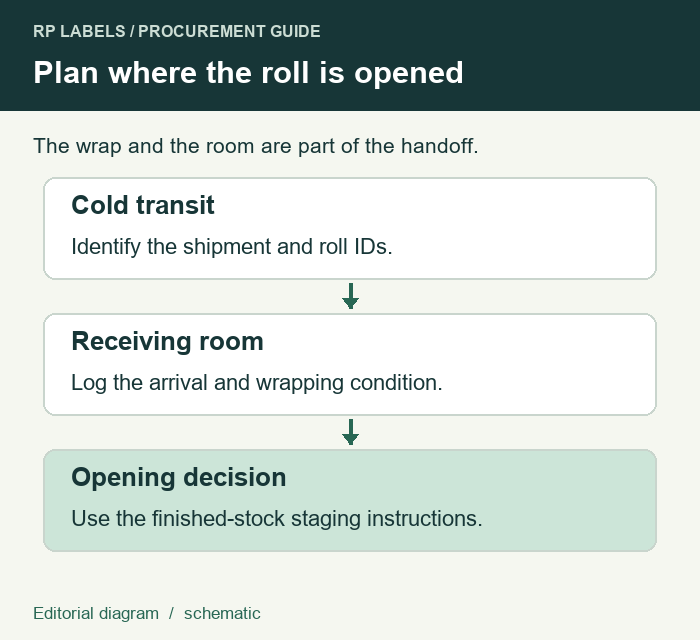
Avery Dennison's storage bulletin discusses incoming raw stock and finished rolls separately. Its conditioning example for raw stock before conversion should stay with that operation. For finished rolls it advises retaining protective cartons and wrap as long as practical. Ask the converter for applicable instructions for the actual construction and route before setting a receiving schedule.
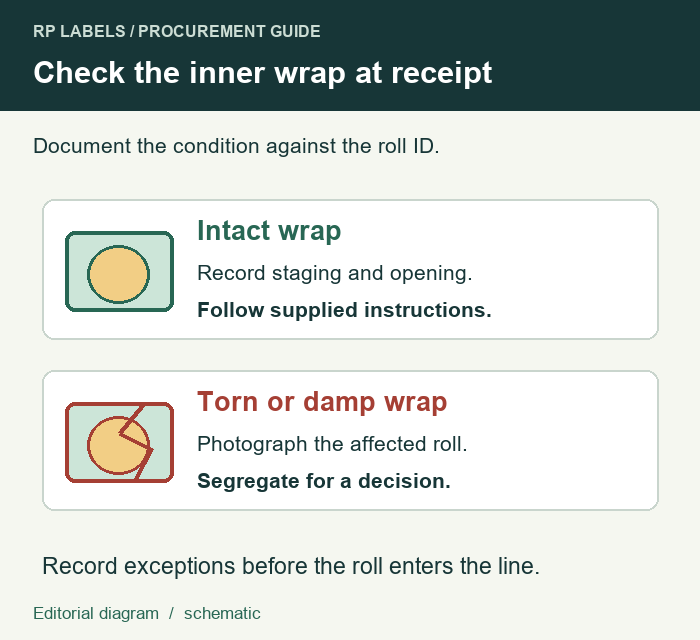
For intact protective packaging and known staging instructions, record when the rolls were staged, who opened a representative carton and what was observed. If the inner wrap is damaged, damp or of unknown integrity, segregate the affected roll IDs and document the condition before use. If a near-term packing slot leaves little time to resolve the condition, ask the line owner to approve a trial on a representative finished roll or hold the lot until the supplier gives guidance. Include the receiving window and packer conditions in the RP quote request so the dispatch plan can account for the handoff.
Bring the route into the quote
For vial labels, supplement labels or hologram labels, send RP Labels the roll requirements, quantity by design, receiving address, intended shipment timing and known storage conditions. Ask which packing arrangement is proposed and what records can be supplied. The site's shipping information confirms that the actual method and cost are reviewed by destination and order. Confirm any special protection and its cost in the written quotation.
Sources and scope
Reviewed November 3, 2026. Reference: Avery Dennison, storage conditions for pressure-sensitive materials and finished labels. The photo and receiving sequence is editorial guidance for the handoff. It is not a transit test, delivery guarantee, or claims policy. The standard export packing stated on this page is a protective wrap, desiccant where appropriate, and a sturdy outer carton. Demand layer: competitor and process pages linked here, including Avery, HERMA or OnlineLabels where cited, illustrate buyer language and process topics only. They do not supply RP minimum quantities, lead times, prices, certifications or materials. Authority layer: an RP number is backed only by a factory datasheet, a signed quote or proforma, confirmed product data, or a fact kept on the About page. The March 2026 proforma there is one production-run example, not a standing offer. RP shipping and planning pages describe what to confirm on a quote. Worked figures on this page are fictional unless an authority source is named for them.