Mixed-Vial Research Kits: Keep Component Lots Separate from the Kit Identifier
A mixed kit can have one outer identity and several component lots. Making every label display one convenient code may simplify the artwork while erasing a relationship the packing record needs. Start with which vial went into which kit, then decide what the printed components must show.
One outer code looks clean on the carton and is easy to repeat across artwork. The packing supervisor still needs to know which A and which B went inside. I would keep those component rows until the kit is assembled and checked. The outer design can remain simple while the record behind it preserves the differences that actually matter.
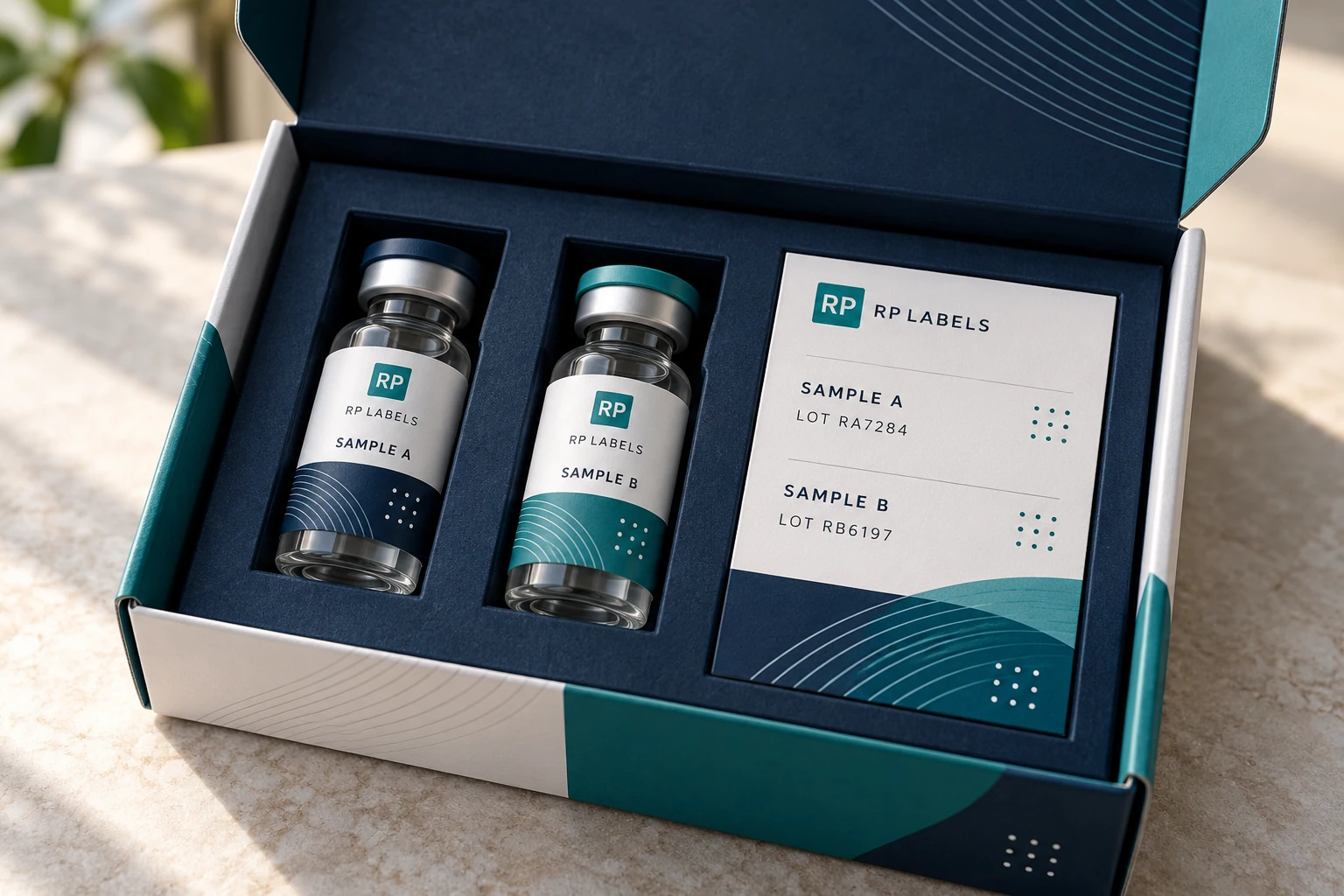
AI-generated packaging illustration. Fictional RP samples show the proposed decision; no physical test or customer order is documented.
Build the kit record before duplicating its code
List each required member, its controlled product identifier, label revision and quantity per kit. Keep the component lot separate from the kit-level reference. The process owner should state how the packed combination is recorded and whether any substitutions are permitted. A visually similar replacement is not automatically an authorized kit member.
The worked record uses two dummy components with different lot references inside one demonstration kit. Its purpose is to show the relationship, not to establish a regulated identifier format or a working traceability database. The outer label can refer to the kit while the internal record preserves the component details required by the buyer's actual process.
Assemble an actual-size proof using the intended divider and carton. Compare the printed vial identities to the component list and outer pack. Record what happens if one label is damaged, a component is held or the kit must be repacked. The authorized replacement path should preserve the record rather than silently duplicating an old kit identifier.
A simple fixed assortment may need a modest controlled packing sheet. A variable kit program may need a more capable system and explicit reconciliation at packing. The label supplier can print the agreed fields; it cannot create reliable kit traceability merely by putting the same QR code on every surface.
Send RP Labels the component map, outer label fields, dummy data schema, actual packaging and quantities. Ask for a full proof set showing every member beside its kit reference. Have the buyer and packer review that same set. The practical result is a readable packaging system that reflects the actual assembly logic rather than flattening several identities into one attractive code.
List the members of the kit before writing the carton
Build one table for the proposed kit. Give each vial its own product identifier, concentration or fill description where applicable, label version, lot field and position in the kit. Then specify the carton-level kit name, kit identifier, quantity of each member and the record that links the packed components. If the kit can contain substitutions, write that rule explicitly rather than silently changing the label at the packing bench.
GS1's Global Traceability Standard offers a general framework for tracing objects and events through a supply chain. That is a useful design principle here; it does not automatically impose a particular regulated healthcare identifier on research products. The actual legal and customer requirements must be determined for the markets and products involved.
Separate fixed artwork from variable fields
Keep stable brand and layout elements in the approved artwork. Define variable data separately: lot or batch, pack date if used, kit serial where used, and the link between component records and the outer unit. State who generates those values, who prints them, who verifies them and what happens when a damaged label needs reprinting. A reprint without an audit trail can create two visually identical labels for different physical kits.
The QR and batch layout guide covers space on a small vial. For a kit, the additional question is whether a person opening the box can tell which inner vial corresponds to each carton line without decoding a hidden database. Color can help operators sort, but the color-coded SKU guide explains why color should not replace an explicit printed identity.
Proof the outer and inner labels together
Ask for one assembled sample using the real carton, dividers and vial sizes. Read the outer label against the actual contents. Scan any codes with the normal device, and make sure each human-readable lot can be reconciled with the proposed packing record. GS1's Global Data Model guide illustrates why trade-item attributes and packaging levels should be handled deliberately; a kit record is not just an enlarged inner-unit label.
Check the mundane failure points: two similar blue vials in adjacent wells, a carton sticker covering a closure seam, a lot line too close to a corner, or a label version that differs from the bill of materials. These are buyer-side checks to request, not claims that RP has performed such tests on a real kit.
Worked kit lot matching record
The rows below are hypothetical planning examples. Empty observation or commercial fields must be completed from the actual project; no sample has been tested for this article. Use the worked CSV and blank worksheet with the field guide. Keep the example references separate from production records.
| demo kit reference | component identifier | component lot | component label revision | quantity per kit | packing record reference | actual match | owner |
|---|---|---|---|---|---|---|---|
| KIT-DEMO-01 | SAMPLE A | LOT-DEMO-A | R1 | 1 in example | Controlled record to define | Packing owner | |
| KIT-DEMO-01 | SAMPLE B | LOT-DEMO-B | R2 | 1 in example | Same kit record | Packing owner |
Bring this decision into the print inquiry
Contact RP Labels with the completed kit lot matching record, the actual packaging reference, approved artwork and quantity per design. State which fields remain unresolved so the print specification and any relevant sample scope can be discussed against the same decision.
Related buying guidance: Peptide Vial Labels; Lay out batch and code fields; Match box and vial artwork; Use color without losing identity.