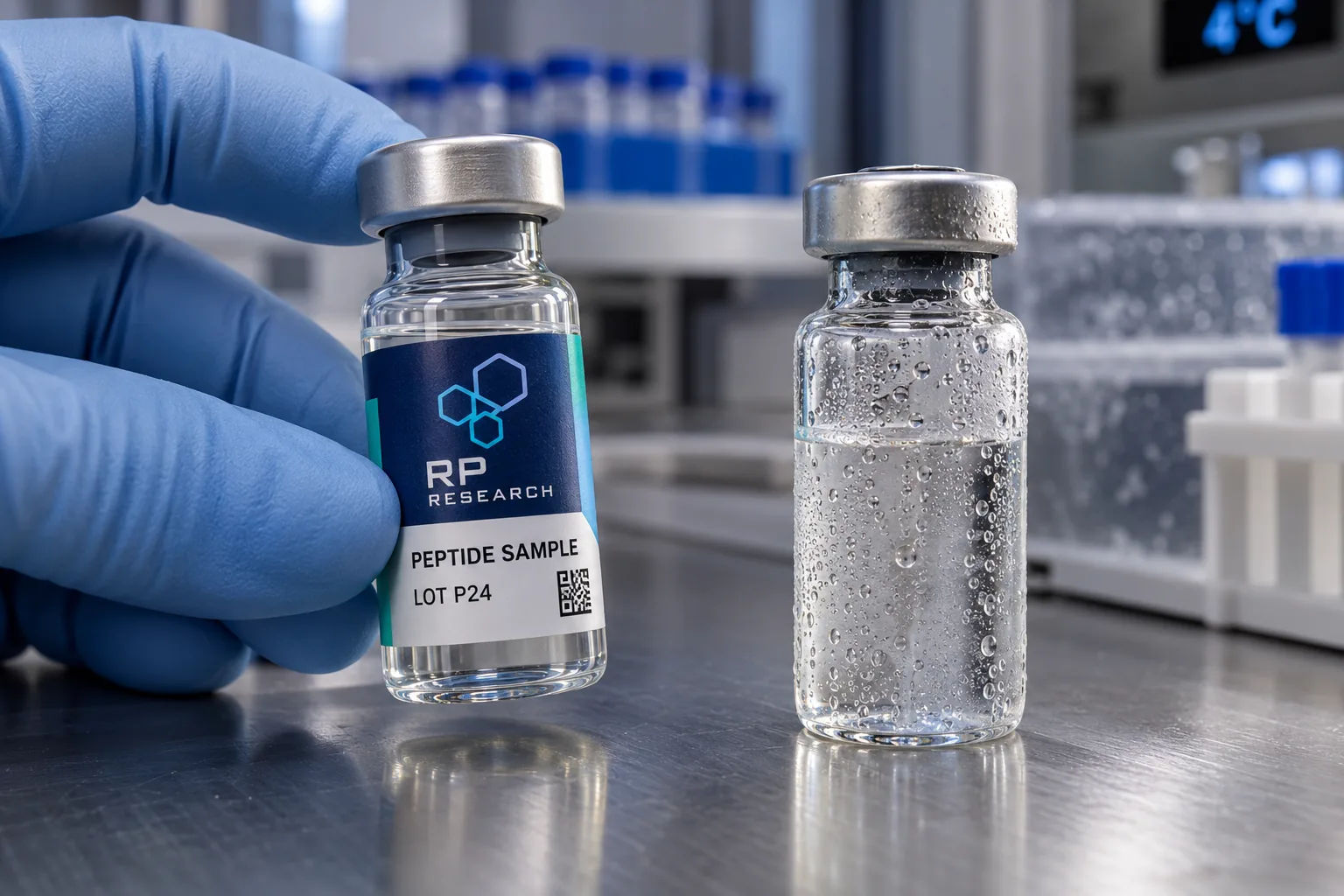
The line has chilled vials ready, the label roll is ready, and the schedule says to apply now. But a cold glass wall may be carrying a film of water that the operator can barely see. In that situation I would pause the labeling step before debating whether the artwork needs a stronger laminate. An adhesive cannot make dependable initial contact through moisture simply because the finished label is described as waterproof.
This is a sequencing decision, not a blanket claim that every refrigerated vial needs a special label. The construction must survive its intended storage environment; separately, the application surface must be suitable at the moment the pressure-sensitive label meets the glass. A label can pass one question and fail the other. The buyer should write both conditions into the request for a physical sample.
Why a cold-storage specification is not an application specification
Picture two identical 5 mL research vials. One has been allowed to reach the agreed labeling conditions and has a visibly dry wall. The other has just moved from cold storage into humid air and is fogging. They may need the same artwork and film, yet they are not the same adhesive application test. 3M's industrial tape processing guidance discusses glass, moisture and keeping the object above the dew point so condensation does not form during bonding. That is material guidance, not a guarantee for any specific RP label.
I would ask the packer for the actual container temperature and room conditions at labeling, not just the temperature on the shipping specification. “Stored at 2–8 C” does not tell a printer whether application happens before chilling, after warming, or while the glass is still wet. If the schedule allows, label the clean dry container before chilling. If the process requires later labeling, establish a controlled dry-surface window with the packer and test it on the real vial.
What to send when requesting the roll
Start with the glass vial itself or a matching sample: body diameter, straight wall height, shoulder clearance and any coating or surface treatment. State whether it is empty or filled during application. Record the minimum and maximum ambient conditions, expected storage temperature, cleaning step and likely contact with alcohol or handling chemicals. Those are separate questions; do not assume a single “cold-resistant” material answers all of them. Avery Dennison's adhesive selection guide identifies moisture, dirt and substrate surface as factors in bonding.
Include the application method. A hand-applied label can be smoothed deliberately around a small cylinder; a machine-applied roll must also match unwind direction, gap and dispenser setup. If the label extends into a curved shoulder or crosses a molded contour, adhesive choice cannot repair a poor die-line. Attach a photo with a ruler and mark the labelable straight-wall area.
How I would run the approval sample
Request a physical sample on the proposed facestock, adhesive and laminate, then apply it to the same vial type under the planned procedure. Inspect immediately for bubbles or fish-mouth edges, after the adhesive has had its specified dwell, and again after the intended cold/warm cycle. Record which vial, date, temperature and cleaning method were used. This is a proposed buyer acceptance plan, not a reported RP factory trial or a universal pass criterion.
Keep a deliberately wet control vial out of the production approval group. It can teach the team what failure looks like, but it must not become the basis for accepting a process that was never meant to label over condensation. If the packer cannot provide a dry glass surface, discuss a changed labeling sequence or another packaging method before authorizing thousands of rolls. At quotation stage, ask whether a different adhesive is even available for the stated conditions; do not promise that changing adhesive alone will solve moisture.
Decision to put on the purchase order
My preferred sign-off names three things: approved label construction, approved application condition and the vial type used for the test. Write down where the finished pack goes next. A buyer comparing quotes should ask both vendors to price the same construction and test scenario, otherwise the lower number may describe a different risk. The related cold-storage guide covers service conditions; this guide covers the point when the label first touches glass.
Send the vial dimensions, a picture of the actual container, the cold-to-room sequence and the planned application step through the custom label inquiry. That is enough to begin a useful discussion about sample stock rather than a vague promise of “waterproof” performance.
Sources and scope
Reviewed September 30, 2026. Primary FDA, GS1 and label-material references support the identified technical points. Buying scenarios and inspection checklists are editorial guidance, not RP production records, certification, legal approval or universal acceptance standards. Demand layer: competitor and process pages linked here, including Avery, HERMA or OnlineLabels where cited, illustrate buyer language and process topics only. They do not supply RP minimum quantities, lead times, prices, certifications or materials. Authority layer: an RP number is backed only by a factory datasheet, a signed quote or proforma, confirmed product data, or a fact kept on the About page. The March 2026 proforma there is one production-run example, not a standing offer. RP shipping and planning pages describe what to confirm on a quote. Worked figures on this page are fictional unless an authority source is named for them.