The PDF shows a clear lot field and a tidy square code. The first labeled vial turns under a camera, and the camera sees half the code at the edge of its view. Nobody needs a more decorative proof at that point. They need the real machine image, the vial orientation and the wrap seam position.
For a custom peptide vial label used with an inspection camera, I would treat camera visibility as a purchasing specification. Print quality matters, but a beautifully printed field placed outside the optical window is still a failed workflow. This is particularly easy to miss when the artwork is reviewed only as a flat rectangle.
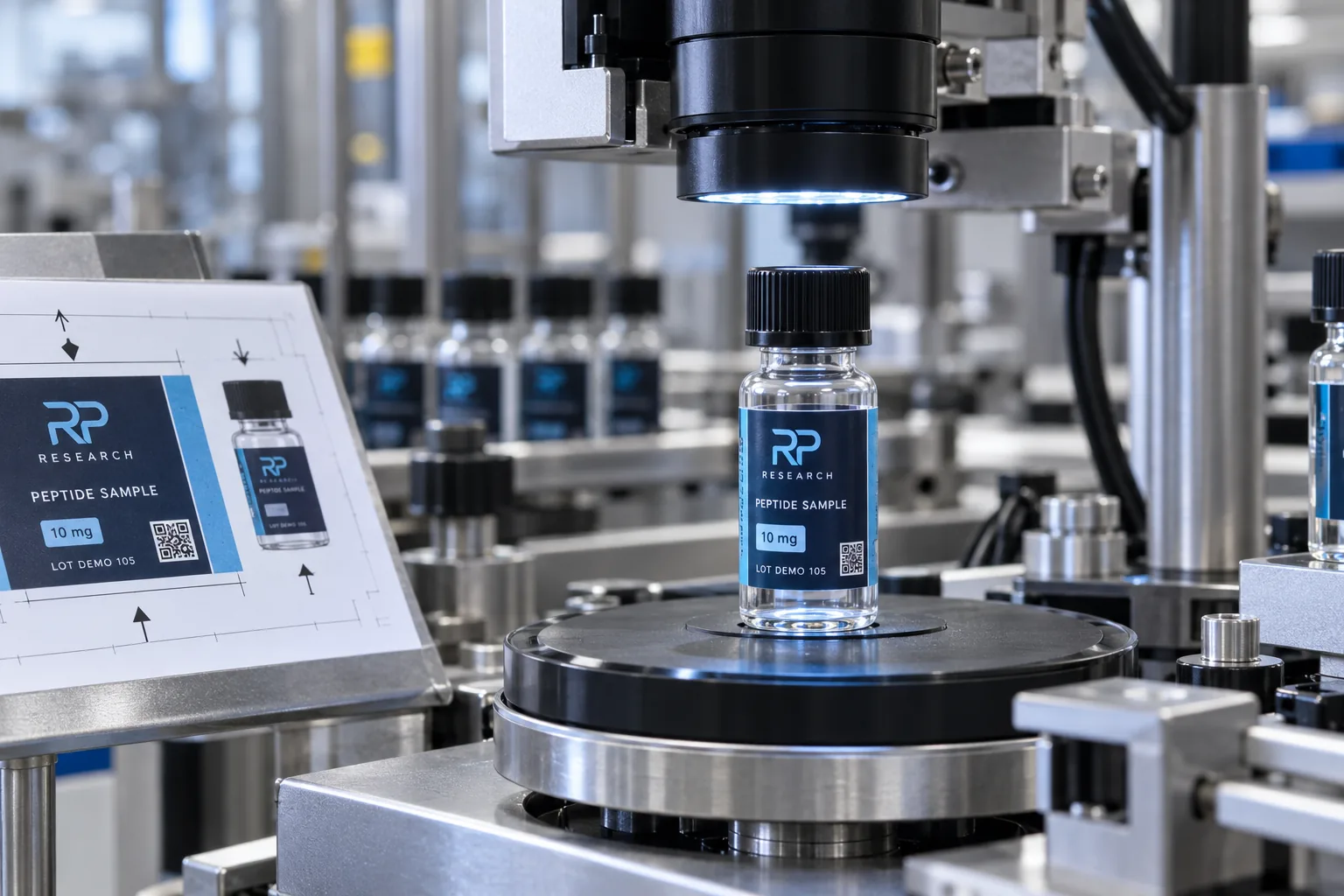
Ask what the camera actually checks
Does the station check label presence, printed batch characters, a code, cap color, or the relationship between those elements? Different checks need different clear areas. HERMA's 211 HC description notes that a small-vial labeler can integrate variable printing and camera verification of print and codes. That is a machine capability, not a promise that one artwork location suits all cameras.
Ask the line owner for an example image from the installed camera and the reject criteria. Record the illumination, viewing angle, lens position and whether the vial stops at a defined orientation. If rotation is uncontrolled, one frontal hero view may not represent the inspection cycle. If the station reads while the vial rotates, find out how much of the wrap is visible over the full motion.
Place the seam where it will not interrupt a critical field
On a narrow bottle, the overlap or gap takes a meaningful share of the circumference. Keep the lot field and code away from that transition unless the machine supplier approves a specific arrangement. A seam that crosses the code can leave part of the printed pattern on a different plane. Glass glare, cap shadow and a blue printed band can also change what the camera sees.
HERMA's vial-labeling overview describes the precision and monitoring involved in wrap-around vial labeling. In an approval meeting I would translate that into three physical objects: a blank vial, one fully labeled vial, and the actual camera capture. The artwork file is supporting evidence, not the final acceptance test.
Prove the worst version of the variable data
Do not test only a short, high-contrast demo lot. Use the longest permitted field, the densest intended code and the smallest approved text. Check a representative first, middle and last sample from the trial roll if that suits your production plan. Record whether a failure is print quality, placement, orientation or reader configuration. Those are different owners and should not be hidden under "barcode problem."
The code in our illustration is DEMO artwork, not a validated symbol. A QR-like patch in a generated image cannot prove readability. The real approval needs the final data format and a physical printed sample on the real vial, read by the line's camera or scanner under actual operating conditions.
Give the label converter a useful brief
Send the vial and closure dimensions, label position tolerance required by your line, intended roll unwind, seam location, camera frame, code type and variable-print process. Ask for a full-size applied proof, not just a PDF. If a printer or code must be added after the base label is made, identify the reserved print area and its finish before ordering stock.
I would sign off the label only after the operator can show an accepted read and a deliberately rejected sample. This does not mean every supplier must own a pharmaceutical inspection system. It means the buyer and converter should agree who runs the line trial and where the evidence will be kept. One clear camera image can prevent an entire roll of beautiful but uninspectable labels.
Sources and scope
Reviewed October 5, 2026. The primary references linked below support the identified technical points. Buying scenarios and inspection checklists are editorial guidance, not RP production records, certification, legal approval or universal acceptance standards. Demand layer: competitor and process pages linked here, including Avery, HERMA or OnlineLabels where cited, illustrate buyer language and process topics only. They do not supply RP minimum quantities, lead times, prices, certifications or materials. Authority layer: an RP number is backed only by a factory datasheet, a signed quote or proforma, confirmed product data, or a fact kept on the About page. The March 2026 proforma there is one production-run example, not a standing offer. RP shipping and planning pages describe what to confirm on a quote. Worked figures on this page are fictional unless an authority source is named for them.