A buyer sends one logo and says, "We need the same label for our powder tub and protein shake bottle." I understand the wish for a consistent range. I would still ask for two packaging specifications before touching the dieline. The tub is broad and usually dry at application; the shake bottle is narrow, often handled cold, and may be a very different product category from a regulatory point of view.
The pictured RP Wellness packs are AI-generated demonstration artwork. Their ingredient, nutrition, quantity and claim text is fictional and must not be copied into a sellable label. Use the photograph to compare package geometry, not to approve wording.
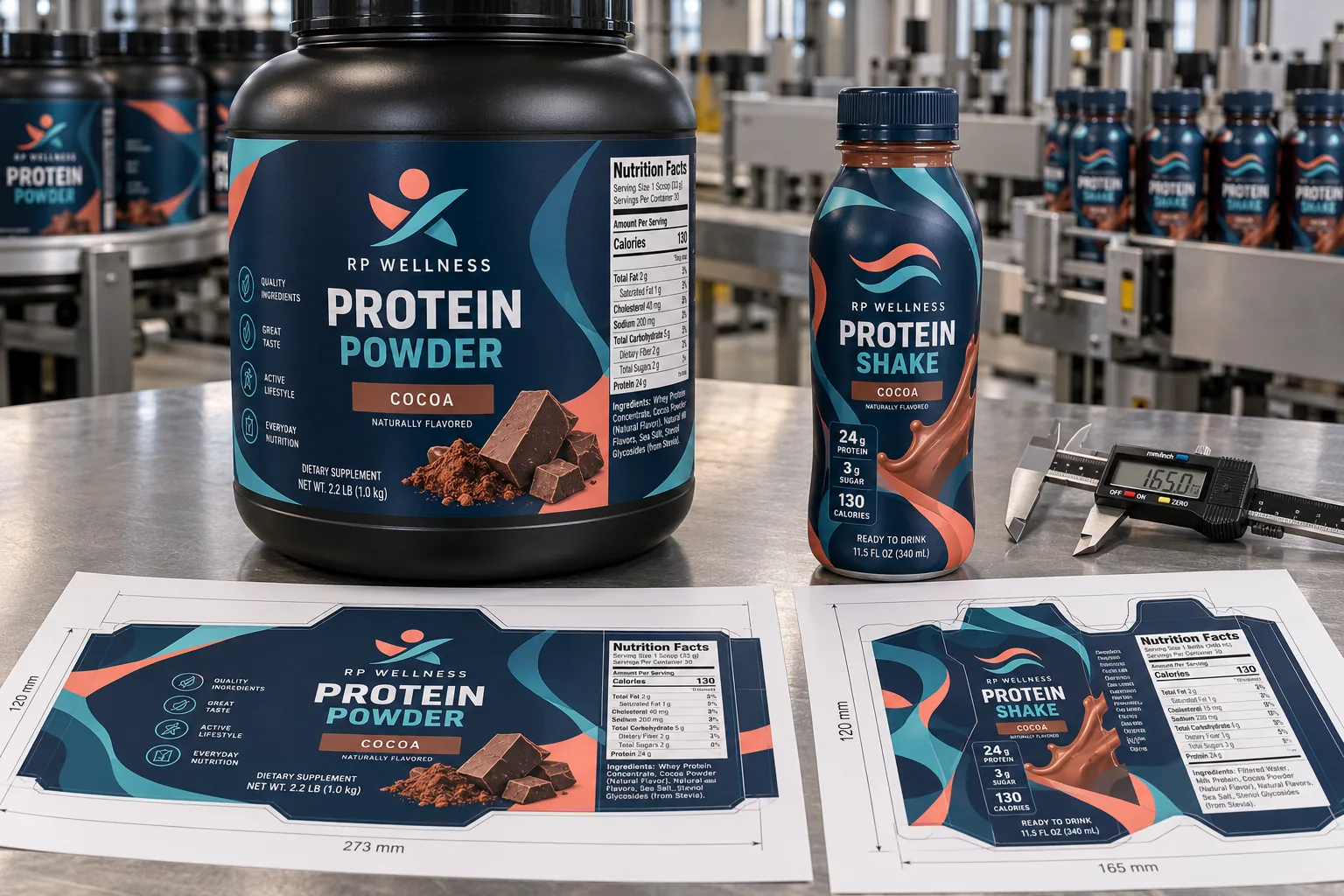
Keep the brand system; change the physical layout
A shared logo, color family and product hierarchy can connect the two packs. The tub may have enough straight wall for a broad front panel, facts panel and ingredients. The shake bottle may have a shoulder, waist or contour that limits its usable label height and changes where the back-panel seam can sit. Ask for the exact containers, caps, fill method and application stage. Measure the usable straight section on each, then build two separate panel maps.
Do not scale down the powder artwork until it "fits" the bottle. Important text may become unreadable, the barcode or other code may cross a curve, and the seam may cut through the product name. I would place both physical containers on the desk and mark the no-print or no-label zones before a designer draws a final wrap.
Choose materials for the actual exposure
A powder tub label may experience friction in shipping, powder dust and routine handling. A chilled shake bottle may face moisture, condensation, refrigeration or a wet consumer hand. These are questions for material and adhesive trials, not a reason to say every bottle automatically needs the same "waterproof" film. Tell the printer the real pack material and where the label is applied. A sample that looks fine on an empty room-temperature bottle does not demonstrate performance on a cold filled product.
For the bottle, check whether product photography requires a clear label or an opaque print field, and whether the seam sits where the consumer grips the pack. For the tub, check the label's edge near a molded handle or raised base. Send both packs through the planned handling and refrigeration steps before approving a stock. Record any edge lift, scuff or readability loss rather than accepting a vague durability promise.
Do a product-classification check before sharing copy
In the United States, a liquid protein product is not automatically labeled under the same rules as a dietary-supplement powder. The FDA guidance on distinguishing liquid dietary supplements from beverages explains why presentation, packaging and labeling matter. Your regulatory team should decide the classification and required panel before either design is released. Do not have a print supplier decide it from a marketing name.
The FDA dietary supplement labeling guide identifies required elements for dietary supplements. It is a source for review questions, not an assurance that a fictional facts box in our image is compliant. Reserve the proper width for the applicable panel, ingredients, net quantity and responsible business information. See our facts-panel width guide for the print-space problem.
Quote each format on its own numbers
Give the printer two lines in the RFQ: tub label dimensions, stock and quantity; bottle label dimensions, stock and quantity. Add expected SKU count, artwork versions, application equipment and whether labels arrive on rolls or sheets. Do not let a single blended unit price hide different setups, material choices or overrun risk. If the same supplier prints both, request a matched color proof on both chosen materials; a matching digital file does not guarantee an identical visual result on different stocks.
I would approve the family resemblance first, then verify each container separately for fit, legibility, regulatory review and application. A cohesive shelf is valuable. A single forced dieline is not. For a quote on the two real packs, use the custom supplement label brief and include both container samples.
Sources and scope
Reviewed October 8, 2026. The primary references linked below support the identified technical points. Buying scenarios and inspection checklists are editorial guidance, not RP production records, certification, legal approval or universal acceptance standards.