Powder Tub Labels: Budget the Front, Facts Panel and Seam Together
A powder tub looks generous beside a small capsule bottle. That can make the first layout overconfident: a large logo takes the front, a long story takes one side, and the remaining copy is expected to fit somewhere near the seam. Start with the most demanding approved SKU, not the easiest one to make attractive.
The launch team naturally chooses the cleanest flavor artwork for the presentation. It is the one everybody likes. I would keep it for the presentation and use the longest approved copy for the layout test. If the system survives that awkward version, the designer has earned room to make the easier ones look good without quietly changing the rules.
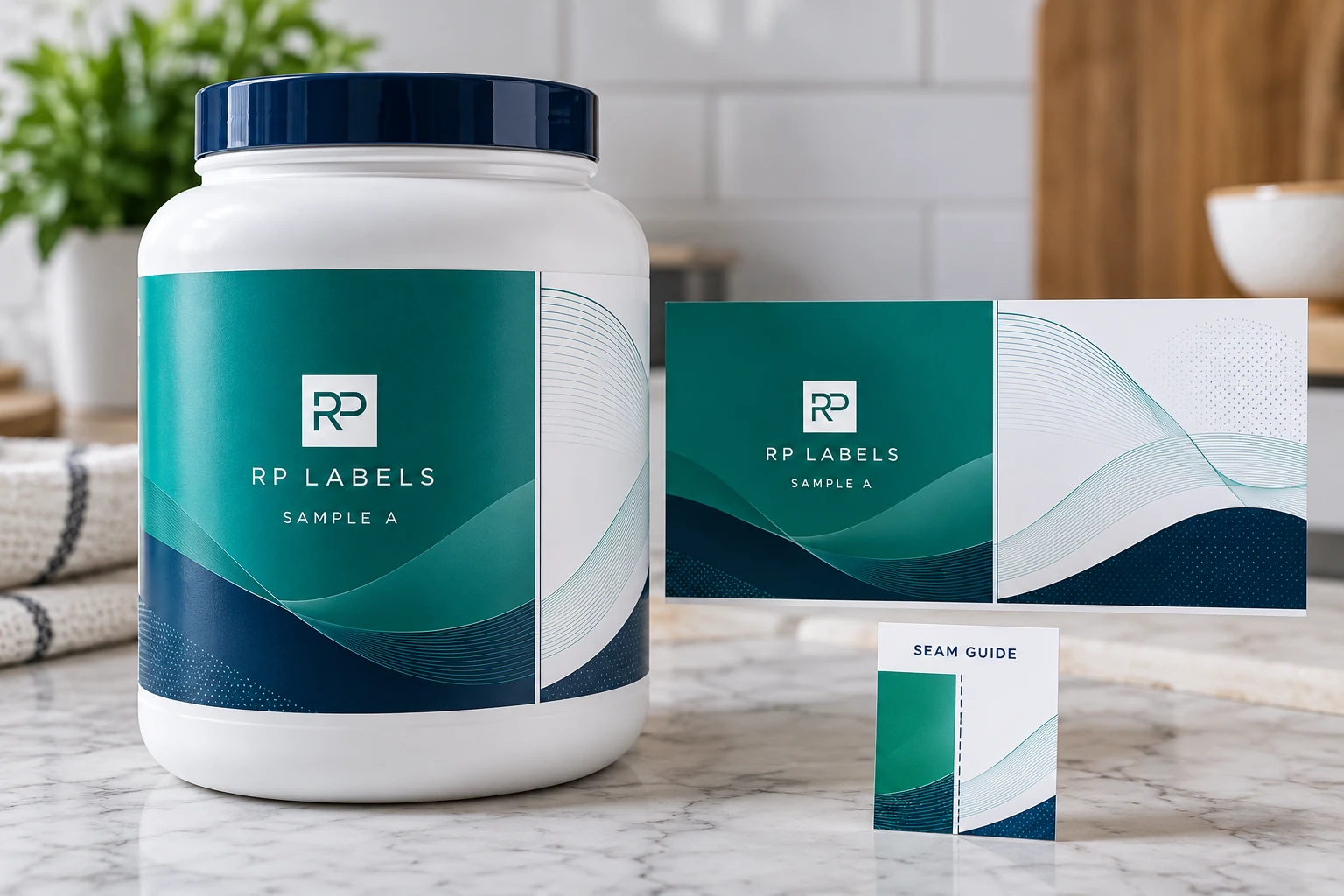
AI-generated packaging illustration. Fictional RP samples show the proposed decision; no physical test or customer order is documented.
Give the artwork a panel budget
Lay a paper strip around the actual tub and mark the intended shelf-facing area, the information zone, the coding area and the closing seam. Keep the lid fitted. The budget is a design allocation, not a substitute for the qualified review of legally required content. The person responsible for that review should identify which statements belong in which area before prepress locks the artwork.
The worked panel record includes a common front zone and a variable information zone. Use the longest approved copy from the actual range as the stress case. A flavor with fewer ingredients may fit comfortably while another cannot use the same allocation. That is a reason to revisit the family layout or approve a documented exception, not to quietly shrink just one panel.
For a hypothetical range, imagine SKU A uses one information block while SKU B needs an additional approved line. The useful comparison is the wrapped view of both, including the code and seam, with the same design rules. Record where the extra line goes and who accepts the change. Do not scale the whole label or borrow space from a code margin without returning to the relevant checks.
A stable tub and copy family may share one dieline while varying panel content. Different tub heights or wall shapes need their own physical fit evidence. A more modest front graphic can be a better buying choice than a complex extra label when the existing wrap can accommodate the content clearly.
Send the tub reference, densest copy file, other SKU differences and marked panel allocation to RP Labels. That gives the quotation and proof a real boundary, and leaves the designer free to improve the appearance inside it.
Map the principal display on the curved wall
FDA's Dietary Supplement Labeling Guide, Chapter I identifies the statement of identity and net quantity of contents as principal-display items. Chapter III explains how the principal-display area is calculated for cylindrical packages and discusses placement of the net-quantity statement. That does not mean every powder tub with the same diameter has an interchangeable front panel: height, shoulder, lid and actual shelf orientation still matter to the artwork.
Give Supplement Facts a stable side zone
FDA's Chapter IV sets out Facts-panel presentation and special provisions for some package sizes. The brand reviewer should work from the actual formula, serving size and target market. A designer cannot solve missing space simply by compressing type until it fits. If the first draft is crowded, revise the panel allocation or packaging choice before purchasing plates or dies.
Place the wrap seam outside the Facts box and outside any barcode quiet zone. Check whether the seam ends under the consumer's hand grip or where abrasion is likely during shipping. If there are multiple flavors, test the longest ingredient copy and the most crowded panel. The least demanding SKU is a poor master for a whole powder range.
Use the applied tub as the acceptance view
Ask for an applied sample on the filled or production-equivalent tub, with the actual lid. Turn it slowly under normal light. Can the identity and net weight be read without hunting? Is the Facts heading visible and the text legible on the curve? Does the seam stay clear of required copy? If the label material buckles near the top, measure the wall shape before assuming an adhesive failure.
If the same design will cover several tub sizes, do not scale the entire label file by a single percentage. The shorter tub may lose vertical space while the wider tub changes the visible front arc. Keep a separate approved dieline for each container and reuse only the visual system. When a brand changes the serving count or formula, recheck the densest Facts panel rather than treating an old proof as a permanent master.
For a quote, provide tub diameter and straight-wall height, lid size, full approved copy, actual net contents, code format, application method, finished label size and quantity per version. Ask the supplier for a dieline, finish sample and wrapped proof. Keep that physical proof with the reorder file so a future SKU does not quietly drift into the seam.
Sources and scope
Reviewed October 4, 2026. The primary references linked below support the identified technical points. Buying scenarios and inspection checklists are editorial guidance, not RP production records, certification, legal approval or universal acceptance standards.
- FDA Dietary Supplement Labeling Guide, Chapter I: display and information panels - FDA Dietary Supplement Labeling Guide, Chapter III: net quantity and cylindrical panel area - FDA Dietary Supplement Labeling Guide, Chapter IV: Facts presentation
Worked tub panel budget record
The rows below are hypothetical planning examples. Empty observation or commercial fields must be completed from the actual project; no sample has been tested for this article. Use the worked CSV and blank worksheet with the field guide. Keep the example references separate from production records.
| sku reference | copy revision | front zone reference | information zone reference | code zone reference | seam reference | exception and owner |
|---|---|---|---|---|---|---|
| DEMO-A | Approved source required | Common family zone | Standard block | Separate protected zone | Marked on wrapped proof | None confirmed; review required |
| DEMO-B longest copy | Approved source required | Same proposed family zone | Additional line to accommodate | Preserve applicable margins | Same physical reference | Designer proposes; copy owner approves |
Bring this decision into the print inquiry
Contact RP Labels with the completed tub panel budget record, the actual packaging reference, approved artwork and quantity per design. State which fields remain unresolved so the print specification and any relevant sample scope can be discussed against the same decision.
Related buying guidance: Supplement Labels; Plan identity and net quantity; Reserve Facts width; Measure cylindrical containers.