Lamination vs Varnish: Approve the Finished Bottle Label
Two finish samples look close under the meeting-room light. One quote says laminate and the other says varnish. Before paying for the heavier construction, decide which part of the finished bottle actually needs protection.
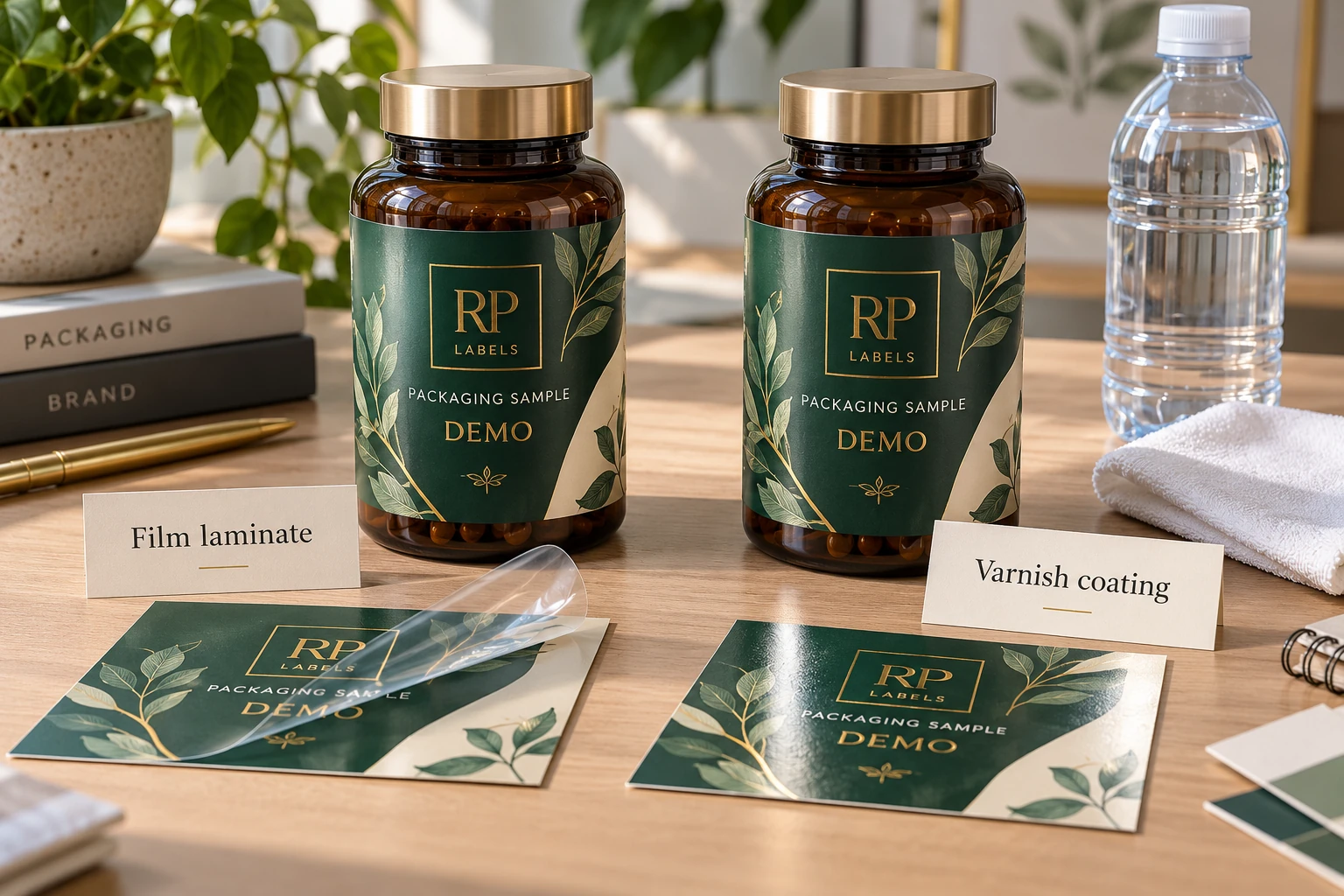
The short answer: lamination adds a separate clear film over the printed label and usually provides stronger physical protection. Varnish is a cured coating applied over the ink and can offer economical scuff protection with less added thickness. Choose from the exposure and bottle geometry, then test the full construction.
We offer glossy, matte, and soft-touch (sometimes described as velvet-touch) lamination. These finishes change sheen and hand feel; they are not the same as a change in face material. The finish used on an order is named on the written quote.
Buyers often write "matte finish" in the RFQ and believe the technical choice is complete. It is not. Matte laminate and matte varnish may look similar in a photograph while behaving differently after a bottle has crossed a filling line, a carton, a warehouse and a customer's wet hand.
The supplier's easy move is to quote whichever finish is already on press. The responsible move is to ask what can actually damage the label.
Compare the same failure question, not two different demonstrations
A wet cloth on one sample and a dry finger on the other do not make a finish comparison. Choose the credible contact that matters to the package, identify the printed zones to examine and agree the observation sequence with the converter. Keep an untouched sample of each proposed construction so a change can be distinguished from the way the original finish already looked.
Hold the artwork, container reference and application method constant where practical. Name any change in facestock, adhesive, white ink or overprint treatment. If the laminate proposal also uses another film, the trial compares two complete proposals; it does not isolate the protective layer. That can still answer the buying question, provided the record says what was compared.
Inspect appearance, edge condition and the actual information fields separately. A scuffed dark panel may be a cosmetic rejection for one brand. A lost lot mark or unreadable barcode is a different operational problem. Agree those priorities before looking at the samples, rather than allowing a pleasing sheen to decide what counts as damage afterward.
A suitable varnish should remain a legitimate option when the intended handling is mild and the applied sample meets the requirements. Laminate may earn its extra layer when the proposed exposure and protection need justify it. If either construction creates stiffness or dispensing difficulties, add that consequence to the comparison rather than judging only the face.
The finish-trial sheet separates the hazard, sample identity, observation and disposition. It deliberately contains no universal rub count, soak time or pass threshold. Those conditions need agreement for your package. Ask RP to identify the complete constructions being quoted and send the bottle, approved artwork, later marking method and named contact conditions. The useful approval is a sample reference tied to a construction, not the single word 'matte' in an email.
Download the worked example CSV · Open the working CSV · Read the field guide. The entries are planning examples, not completed results.
What lamination adds
A clear film laminate sits above the printed surface. It acts as a physical barrier against rubbing, moisture and some chemical contact. It can also change the feel, gloss and depth of the artwork.
The extra layer adds thickness and may add stiffness. On a large straight supplement bottle that can be harmless or even desirable. On a small radius or squeezable package, the same construction may resist the curve and place more force on the seam.
What varnish adds
Varnish is a clear coating cured over the printed ink. It can provide gloss, matte appearance and protection from ordinary handling. Because it does not add a separate film in the same way, it can keep the construction thinner and may be economical for suitable runs.
Not all varnishes are equal, and coverage matters. A decorative coating should not be described as unlimited chemical protection. Ask what test method and exposure the quote is intended to meet.
The gym bottle and the cabinet bottle
Imagine two products using the same black label design. One is a daily capsule bottle stored in a dry cabinet. The other is a powdered supplement tub opened beside a sink and handled during workouts. The second label sees moisture, powder, repeated grip and cleaning.
Giving both products the same finish because the artwork is the same ignores the job the surface must do. The dry cabinet bottle may perform well with a suitable varnish. The high-contact container may justify laminate after testing.
Buying rule: specify the hazard before the finish. "Waterproof" is too broad; describe droplets, immersion, refrigeration, oil, alcohol, abrasion and expected contact time.
Scuff and ink protection
Dark solid backgrounds, fine reverse text and barcodes make rub damage easy to see. Shipping dividers and adjacent bottles can polish or scratch the same area repeatedly. A finish should preserve both appearance and functional information.
For barcode or QR areas, check glare as well as abrasion. A very glossy surface can create reflections under some scanners. Position, contrast and curvature still matter even when the code is protected.
Moisture and chemical contact
A laminate can help shield ink, but water can still attack at cut edges or reach an unsuitable paper facestock and adhesive. Varnish performance also depends on full cure, coverage and the chemistry involved. Neither word is a complete durability guarantee.
Name likely contact materials: water, oil, hand sanitizer, cleaning fluid or product residue. The factory can then build a focused test instead of promising resistance to an undefined world.
Finish affects color and feel
Gloss often increases apparent contrast and saturation. Matte reduces reflection and may feel more restrained. Soft-touch can create a premium tactile effect but may show marks or need special testing. A black bottle with a black label can shift noticeably when the sheen changes.
Approve the finish on the actual printed design. A blank laminate swatch cannot show what happens to fine type, dark solids or metallic areas.
Machine application and tight curves
Added stiffness changes dispensing and wrap behavior. Tell the printer whether labels are hand applied or machine applied, the bottle diameter, line speed and wipe-down method. A construction that feels luxurious in the hand can become difficult on a small curved bottle.
The label, adhesive and finish must be treated as one system. Upgrading protection while creating edge lift is not an upgrade.
Run a test that resembles use
- Apply labels to the production bottle and allow normal dwell.
- Rub printed areas, edges and codes with a consistent material and motion.
- Expose the sample to the named moisture or chemical condition.
- Observe haze, whitening, delamination, ink transfer and edge lift.
- Scan codes and read small text after the test.
- Keep the approved sample as a reorder reference.
Finish selection checklist
- Bottle resin, diameter and squeeze behavior
- Label facestock and adhesive
- Dry, refrigerated or wet-use environment
- Expected water, oil, alcohol or cleaner contact
- Handling and abrasion during packing and use
- Matte, gloss or tactile appearance
- Barcode and QR scan requirements
- Hand or automatic application
Bring the decision into your print brief
Use the identified references and open items in the worked record when discussing your custom print project. Include the actual package, artwork revision, quantity per design and the conditions explained above; leave unknown inputs marked for confirmation. Review the relevant custom-label service, then send the project details to RP Labels.
Related buying decisions
- Matte vs Gloss Supplement Labels: Approve the View You Actually Sell
- Supplement Labels Scuffed in Shipping: Test the Pack, Not Just the Ink
- Paper vs BOPP Supplement Labels: Choose the Construction Behind the Look
Sources and scope
Reviewed October 25, 2026. Primary supplier or official reference supports the identified production concept. Procurement comparisons and worksheets are editorial guidance. Conditional examples are not customer records, completed tests, regulatory approval or universal acceptance standards. Confirm the actual proposed construction and process with the responsible supplier and buyer.