Squeezable Supplement Bottle Labels: Check Recovery After Flexing
A label that looks flat on a full bottle may crease when the bottle is squeezed or stay wrinkled after the wall returns. If the pack is designed to flex in use, compare the finished label through that motion before approving stock. If it flexes only while the applicator handles the bottle, focus first on the bottle's condition and support during application.
Identify when the panel moves
Ask the packaging owner whether the bottle is empty, filled or supported at the point of labeling. Record where the wall flexes during packing or use. Mark the direction of the movement and note whether it crosses a label edge, a printed fold-prone area or a code. Avery Dennison's conformable-film portfolio distinguishes semi-squeeze and full-squeeze constructions. Those categories describe possible material choices. The movement of the actual pack defines which options deserve a trial.
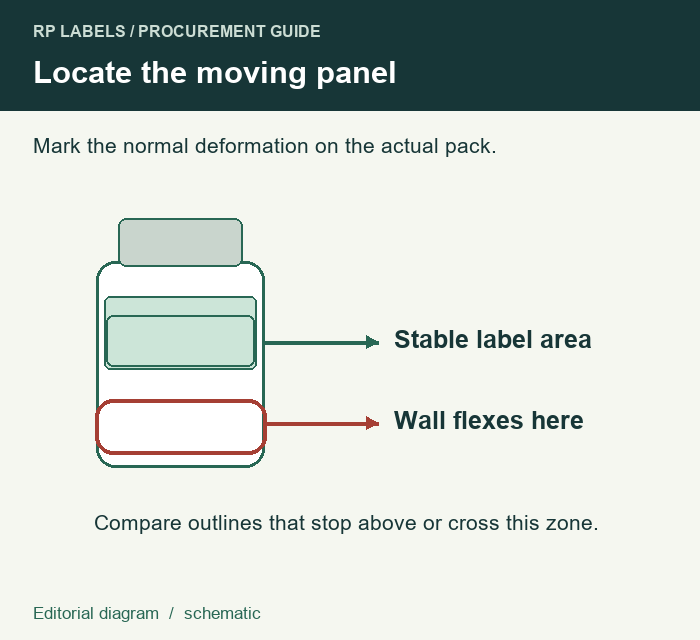
Compare two layout options before changing the material. If a smaller label can stay on a stable part of the bottle and still carry the approved information, request the smaller outline as a fit option. If the print has to cover the moving wall, ask for a conformable construction and identify the label's print and finish as part of the trial. The supplement bottle sizing guide helps with the outline. The lamination and varnish guide explains why the finish is a separate choice.
Observe the pack while it flexes and after it returns
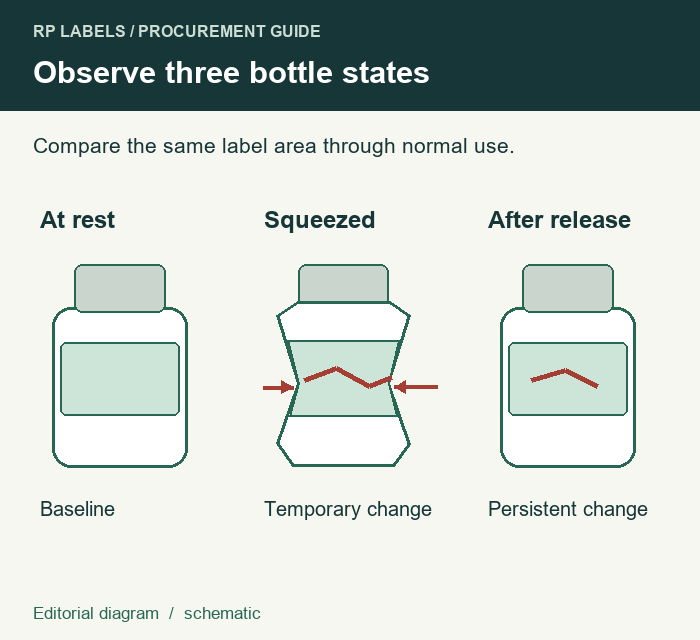
Ask for samples with the same artwork, size and positioning. Have the packaging owner define the fill state and normal handling sequence. Look at the flat state, during normal squeeze, and after the wall returns. Record the region and condition of any crease, print break, lifted edge or loss of code readability. Agree how many repetitions represent the use case with the buyer's packaging owner. If the bottle itself retains a dent, flag the container result alongside the label result.
| What you see | What to check before release |
|---|---|
| Both samples are creased straight off the line | Have the packer review wall movement and contact while the label is applied. |
| The change appears only while the pack flexes and disappears after return | Agree whether that temporary change is acceptable for graphics and any code read during use. |
| A crease, lifted edge or loss of readability persists | Hold approval. Compare the same outline with another construction, or move the outline clear of the moving zone. |
Keep the packer’s application trial separate from any later use check. A flat proof may confirm copy, but the approved reference for this decision should include the applied and handled pack. If changing the print finish or label outline would alter the comparison, note the new revision on both the bottle and the trial record.
Ask for a quote that names the moving area
Prepare your RP Labels inquiry with the bottle drawing, fill state, artwork, quantity per design and the area that flexes. Send the comparison you want to make, such as a smaller label on a stable panel or a finished film over the flexing zone. Ask what construction and applied sample scope can be quoted. Confirm the exact material, finish and trial conditions on the accepted reference.