Hologram Label Quotes: Separate First-Order Cost from Repeat Cost
Imagine two hologram quotes on your desk. One has a low unit price and a separate setup line. The other offers a single total. Neither is necessarily expensive, and neither is yet comparable. Before negotiating, ask what you would pay again if the next order used exactly the same approved specification. That question makes the quotation more useful than another discount percentage.
The founder wants a modest first commitment. Purchasing wants a quotation that can be defended when the reorder arrives. Both are sensible. I would keep the two invoices side by side and mark every item that changes between them. A slightly higher first invoice can be the easier purchase if the repeat conditions are clear; a lower one can win when the project is still likely to change.
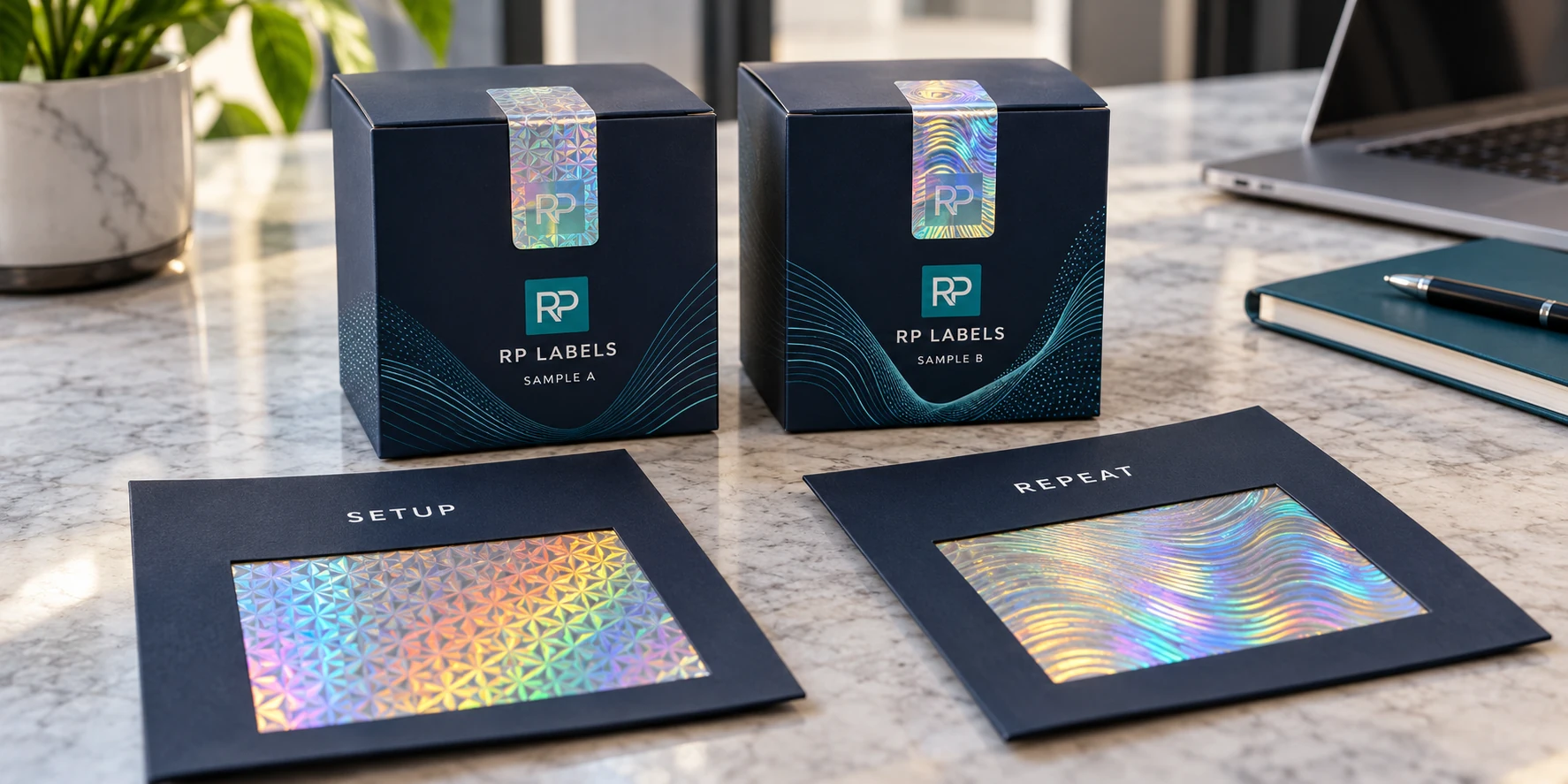
AI-generated packaging illustration. Fictional RP samples show the proposed decision; no physical test or customer order is documented.
Compare the first invoice with an unchanged reorder
Start with one approved specification and give it a revision. Each supplier should identify exceptions against that revision: optical route, security construction, size, artwork count, variable data and delivery format. An exception is not automatically a reason to reject the quote. It is a reason to stop calling the two totals equivalent.
The worked sheet separates first-order preparation, recurring manufacture and delivery. Leave monetary cells empty until there is an actual quotation. In a hypothetical comparison, Supplier A lists optical mastering separately while Supplier B includes it in the first invoice. Mark both arrangements, then ask whether reuse is conditional on an unchanged master, a minimum release or continued storage by that supplier. Do not assume that paying a setup charge transfers tooling ownership.
Next compare the quantity that can actually enter the packing process. A roll requiring unplanned rewinding is a different delivered specification. Likewise, a quote that excludes serialization cannot be compared with one that includes supplied-data handling merely by dividing totals by label count. Keep optional services outside the common subtotal until both parties understand the difference.
A small launch with uncertain artwork may rationally choose a simpler printed-stock route and avoid commitment to optical origination. A stable repeat program may prefer the originated design even if its first invoice is higher. The purpose of the sheet is to expose that tradeoff, not to manufacture a universal break-even number. Ask purchasing to approve the assumptions and the supplier to confirm what changes would trigger new preparation.
There are two very different kinds of customization
Printed customization starts with an existing holographic film or pattern. Your logo, colors, text, barcode or white ink are printed over that stock effect. It is flexible and often suitable for smaller branded packaging runs.
Optical customization creates a proprietary holographic image, lens, kinetic effect or repeating security pattern in the hologram itself. It can offer stronger brand distinction and security value, but it normally involves mastering or tooling work before labels are produced. Ask the supplier which type is included in the quote; the words custom hologram can describe either one.
| Label size and shape | Larger area uses more material. Custom shapes may need a dedicated die and can reduce efficient layout across the web. |
|---|---|
| Holographic effect | Stock rainbow, dot, lens or pattern films are different from a proprietary optical master. |
| White ink and color | Selective white controls where the hologram shows through; additional passes and precise registration add production work. |
| Security construction | VOID transfer, destructible film, residue pattern and unique data use different materials and processes. |
| Finishing format | Roll labels need a defined core, gap, unwind direction and maximum roll diameter; sheets or individual pieces are finished differently. |
Why MOQ changes from one project to another
MOQ is not simply a factory preference. Every job has fixed preparation time for artwork, proofing, color setup, die cutting and machine setup. A standard printed holographic label spreads those costs across a relatively simple production route. A proprietary hologram master, complex tamper construction or multiple variable-data sequences creates more fixed work before the first usable label is made.
Quantity also needs to be considered by design version. Ten thousand labels using one artwork are not the same job as ten SKUs of one thousand labels each. Each version may require separate files, plates, data checks or changeovers. State the total quantity and the quantity per SKU when requesting a quote.
Unit price falls, but inventory risk rises
A larger run can reduce unit cost because setup is spread across more labels and material can be used more efficiently. That does not make the largest quote automatically best. If artwork, regulation, packaging size or brand identity may change, excess inventory can cost more than the printing saving. Ask for two or three quantity tiers and compare the delivered cost per usable label, not only the headline unit price.
White ink changes both appearance and production
Ink printed directly on a holographic surface remains influenced by the reflection beneath it. Selective white ink creates opaque zones for text, logos and brand colors while allowing the hologram to show through elsewhere. A full white flood can make the label behave more like a normal printed label with a reflective border. The proof should identify the white layer separately so the buyer knows which areas will be metallic.
Tamper evidence requires the package, not just artwork
A VOID label, destructible film and ordinary permanent holographic sticker are not interchangeable. The correct construction depends on the package surface, opening method, application area and evidence you want after removal. A smooth coated carton, rough plastic cap and glass bottle can produce different results with the same adhesive. Physical testing on the finished package is part of a responsible security-label purchase.
What makes first orders and reorders different
The first order may include dieline confirmation, samples, plates, dies, data setup or optical mastering. A true reorder can be more efficient when the approved artwork, size, material and finishing remain unchanged. Keep the final proof, material code, die size, roll direction and color reference together. A change to any of those details may turn a reorder into a new production setup.
How to control cost without making the label look cheap
Begin with a standard effect and invest design effort in selective white, strong logo geometry and clear contrast. Use one common label size across related SKUs when possible. Avoid a custom shape when a circle, square or rounded rectangle serves the same purpose. Confirm roll specifications early so labels do not need to be rewound or repacked later.
Most importantly, approve the effect with a material sample. A screen cannot reproduce the way a hologram changes with light and angle. The sample prevents an expensive mismatch between the digital proof and the physical expectation.
Worked hologram quote scope record
The rows below are hypothetical planning examples. Empty observation or commercial fields must be completed from the actual project; no sample has been tested for this article. Use the worked CSV and blank worksheet with the field guide. Keep the example references separate from production records.
| scope revision | cost component | first order treatment | repeat order treatment | condition to confirm | supplier reply | decision owner |
|---|---|---|---|---|---|---|
| DEMO-R1 | Optical mastering | Separate or included: confirm | Reuse charge: confirm | Same master; ownership and retention terms | Purchasing | |
| DEMO-R1 | Variable identifier handling | Scope not yet quoted | Per release or retained setup: confirm | Same schema and new authorized data file | Data owner and purchasing |
Bring this decision into the print inquiry
Contact RP Labels with the completed hologram quote scope record, the actual packaging reference, approved artwork and quantity per design. State which fields remain unresolved so the print specification and any relevant sample scope can be discussed against the same decision.
Related buying guidance: Custom 3D holographic labels; Custom logo hologram sticker guide; VOID vs destructible hologram labels; Tamper-evident hologram label guide.