A round lid sticker can make a gummy jar look finished in a top-down display or product photo. That does not mean the lid should become the whole label plan. I would give the lid one clear job: help a shopper recognize the range from above. The body wrap has a different job: carry the information a customer must be able to find on the pack.
Plan the two viewing angles
Put an actual jar on a shelf and look at it from the top, then from standing eye level. A lid can show a brand mark, flavor or short product identifier. The body has room for the main identity, variant, quantity and reviewed information panels. Do not assume an online product image represents how the pack reads in a store or warehouse bin. If there are several berry flavors, make each variant distinguishable by words as well as color.
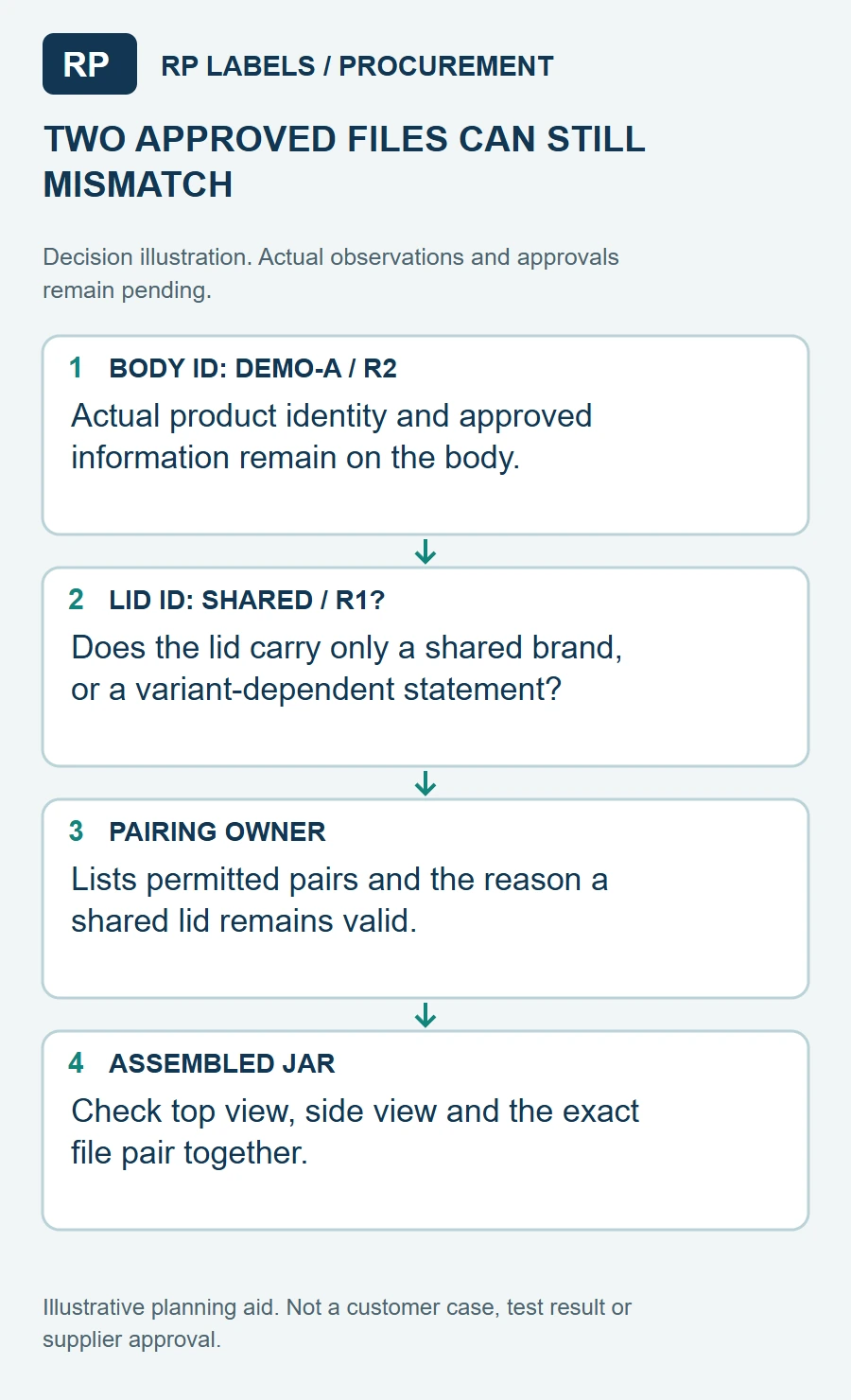
Make one SKU table covering both files. I would include lid artwork ID, body artwork ID, flavor, jar size, lid size and revision date. When an ingredient or product name changes, someone should know whether both files require a new proof. An old lid on a new body is a pack-level error that will not show up when either PDF is reviewed alone.
Measure the real lid's usable center
Threaded lids can have ridges, a recessed center or a molded ring. Size the circular sticker to the flat usable area, not the outside cap diameter. Leave a border so the adhesive edge does not catch during closing. A lid dot is not the same as a band crossing the opening; if you need evidence of opening, specify a separate construction and test its actual peel or tear path.
HERMA's jar-label examples show that round lid and rectangular body labels can be supplied as different formats. That is a packaging-format reference, not evidence that any specific lid adhesive suits a gummy jar. Test adhesion on the actual cap material, including the texture or coating supplied by the jar vendor.
Keep required copy on a readable panel
For a US dietary supplement, the FDA's general labeling guide is the starting point for required statement review. Your qualified regulatory reviewer must determine final content and placement for the actual product and market. A logo on a lid is not a substitute for the required product identity, Supplement Facts, ingredient and other information that may belong on the main pack. This is why I would draw the front identity and quantity area on the body before filling every spare inch with fruit art.
Keep a variable-code location in the body design if the buyer prints lot or date information after the main label run. The overprint-zone guide explains why that area needs its own proof. Do not squeeze a variable code into a dark leaf pattern just because it was the last empty corner.
Proof the pack as a pair
Ask for one finished jar with both printed labels, not just two flat sheets. Check lid centering, body seam, hand grip, cap opening and how the jar looks in a shipping carton. Turn the lid to see whether the top identity appears upside down at common display angles. If a top-view image is important for e-commerce, photograph the real sample under ordinary light and confirm the flavor remains legible.
My quote request would list jar and lid samples, usable diameters, body-wrap dimensions, SKU table, label materials, quantity per SKU and application method. A lid sticker is worth buying when top-view recognition is a genuine sales or handling need. If it creates another file to mismanage without improving recognition, spend that effort on a better gummy body label first.
Sources and scope
Reviewed October 8, 2026. The primary references linked below support the identified technical points. Buying scenarios and inspection checklists are editorial guidance, not RP production records, certification, legal approval or universal acceptance standards. Demand layer: competitor and process pages linked here, including Avery, HERMA or OnlineLabels where cited, illustrate buyer language and process topics only. They do not supply RP minimum quantities, lead times, prices, certifications or materials. Authority layer: an RP number is backed only by a factory datasheet, a signed quote or proforma, confirmed product data, or a fact kept on the About page. The March 2026 proforma there is one production-run example, not a standing offer. RP shipping and planning pages describe what to confirm on a quote. Worked figures on this page are fictional unless an authority source is named for them.