A supplement bottle design may be fully approved while the batch code is still undecided. The label goes to print with a handsome dark background; weeks later the packer discovers that its date coder cannot make a readable mark on the only free corner. That is the moment when an inexpensive blank zone becomes expensive.
If I were buying the label, I would ask the packer for the actual printer model, ink or ribbon, character height and maximum string before freezing the artwork. "Leave room for lot" is too vague. Write down the longest lot, the exact date format if a date will be used, and whether the code is printed before application or onto a curved, filled bottle. Those two processes have different setup constraints.
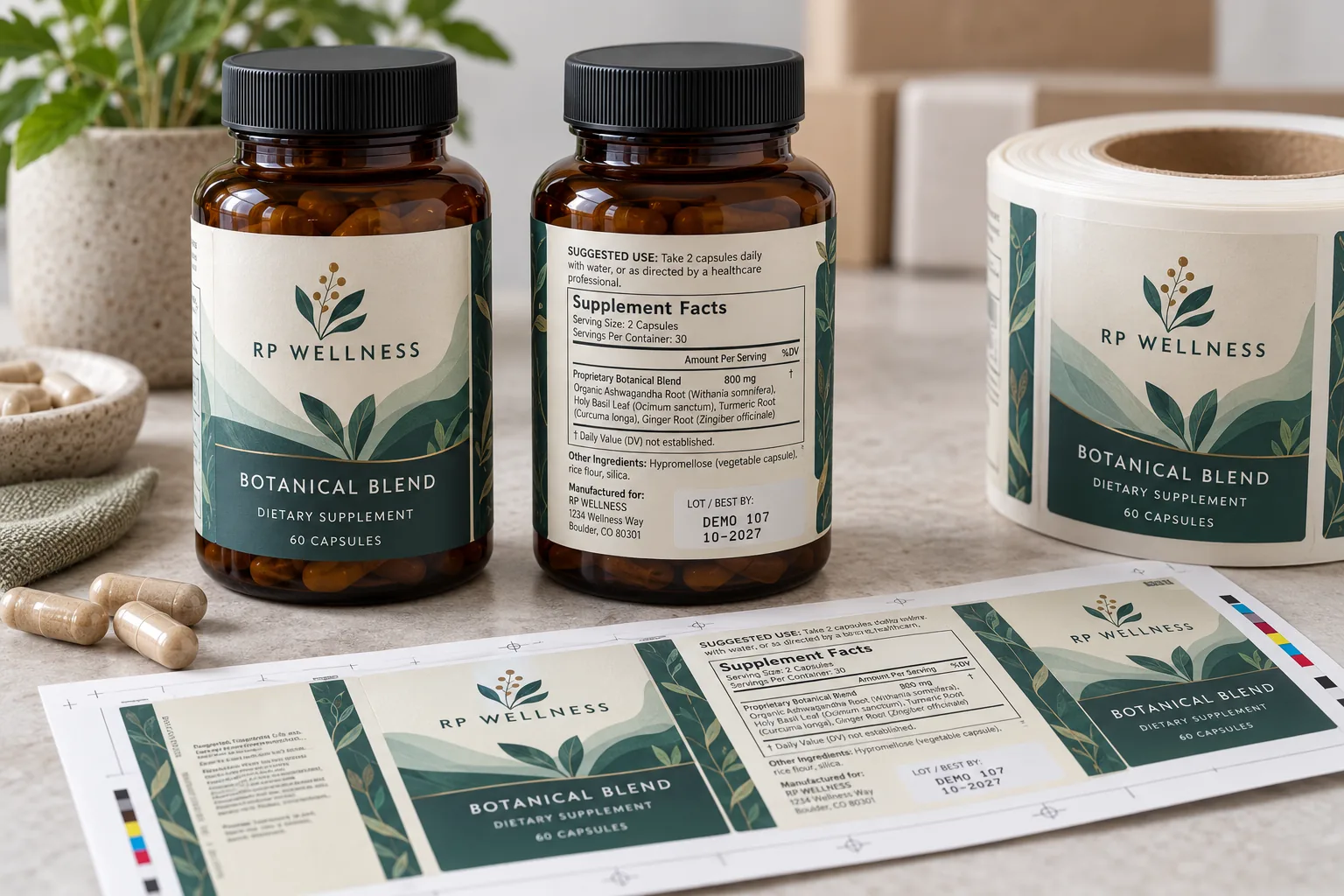
Separate coding space from required label copy
Mark the front display panel and information panel first. The FDA dietary supplement labeling guide identifies the core required statements and explains that nonrequired material should not interrupt required information on the information panel. A variable-code zone should be located with that structure in mind, not squeezed into the middle of Supplement Facts or between required declarations because it looks visually balanced.
Make a flat proof with all copy, then wrap it on the real bottle. A neat rectangle in a design file may land across the label seam, a bottle rib or a curve too steep for the coder. Leave clearance from the cut edge and from high-contrast graphics. A pale opaque patch may help on a dark design; its dimensions should be set by the print head, expected text length and bottle geometry, not by the brand's desire to make the patch disappear.
Do not treat a best-by date as decoration
The distinction matters. The FDA CGMP guide for dietary supplements says a batch, lot or control number on the finished pack is one way to support traceability, though other mechanisms are possible. It also says a voluntarily placed expiration, shelf or best-by date needs supporting data. This article is about making a reserved print zone work; it is not advice to invent a shelf life or to print a date merely because the artwork has room.
Keep ownership clear. The brand or manufacturer approves the meaning and format of the code and any date. The converter supplies a compatible label construction and proof. The packer demonstrates that its equipment prints the information in the right place. None of those three tasks can be completed by a stock image or a line drawn on the dieline.
Test the code on the actual finish
Ask for a few labels made with the proposed face material, coating and varnish. Print the longest expected line after the intended storage and application step. Rub it as your handling process requires; examine smearing, skip marks and contrast. Read the lot under ordinary pack-room lighting and on a shelf. If the bottle is amber or the label is metallic, check the patch on the finished bottle rather than on a white backing sheet.
Test a code near the first and last label on the sample roll, not just a single centered label. If the target zone shifts under the print head, investigate the web path and registration. If the code is applied after the label is on the bottle, rotate the bottle through the actual coder and inspect the complete string. A sample should prove positioning and legibility, not only that the text exists in the artwork.
Send a finished specification
Send the exact bottle, approved flat artwork, reserved-zone dimensions, code syntax, print process, proposed material and coating, and who owns the coding trial. State whether variable information is applied by the label printer or by the packer. Keep the approved code proof with the label version so an attractive redesign does not quietly remove the usable zone. The supplement label category is the place to start a custom brief, but the coder details should accompany the first inquiry.
The RP Wellness photograph is AI-generated. Its formula, Facts-style panel, DEMO lot and 10-2027 date are fictional visual examples, not validated supplement copy or shelf-life data. The purchase decision I would sign off is simpler: a real code, printed by the intended equipment, remains legible in a deliberately reserved place without displacing reviewed label information.
Sources and scope
Reviewed October 7, 2026. The primary references linked below support the identified technical points. Buying scenarios and inspection checklists are editorial guidance, not RP production records, certification, legal approval or universal acceptance standards.