Perforated Carton Seals: Compare Planned Opening with Accidental Damage
A sample seal tears when the carton opens. That is encouraging, but it answers only half the question. In a hypothetical packing trial, another seal might split while the unopened carton is handled. The buyer needs the deliberate-opening evidence and the ordinary-handling evidence before choosing the perforation.
The designer wants the seal to tear clearly when the flap opens. The dispatch team needs it to remain understandable before the customer gets there. I would keep an unopened handling sample beside the opened one. A dramatic split is less persuasive when a second carton developed the same mark without anybody trying to open it.
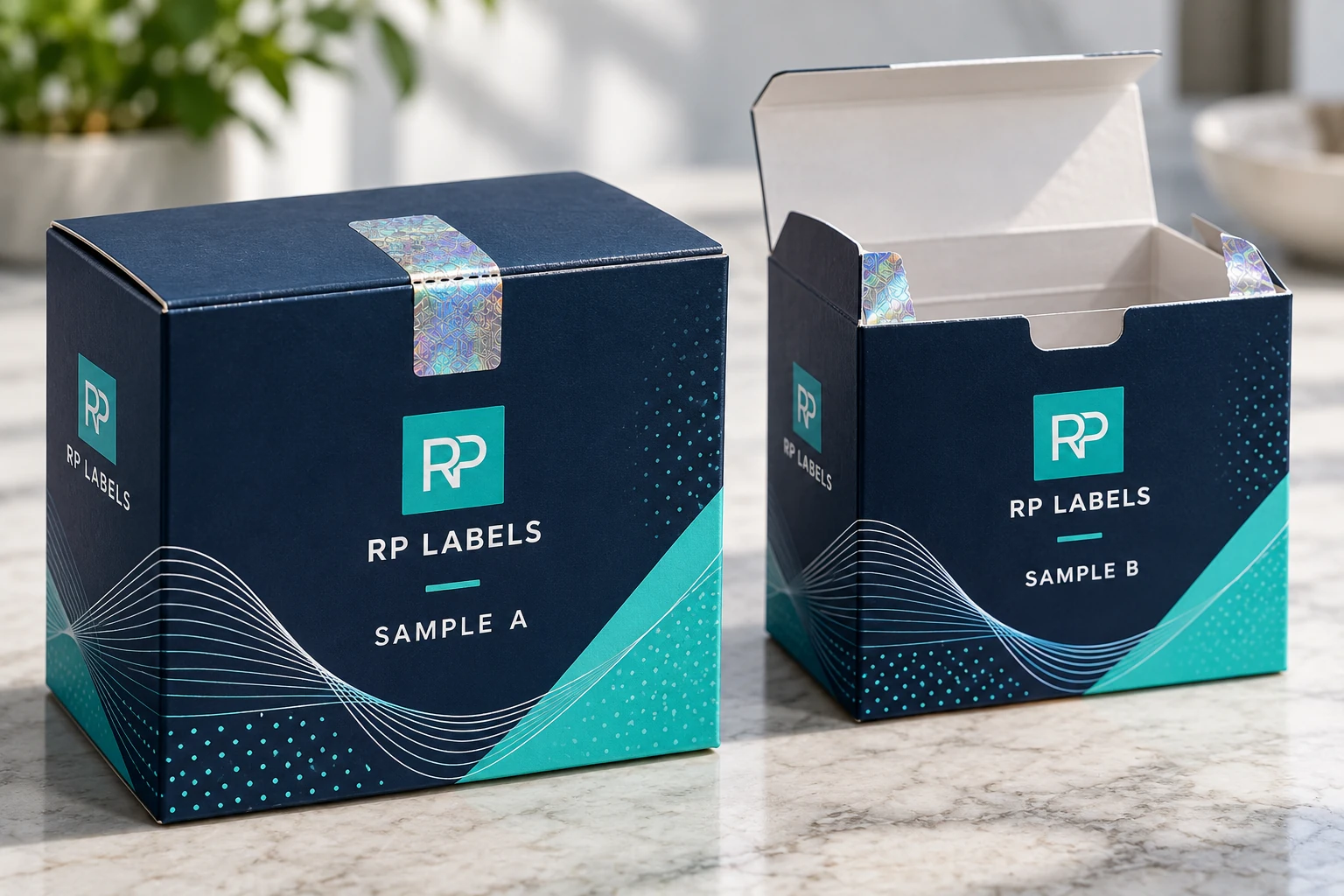
AI-generated packaging illustration. Fictional RP samples show the proposed decision; no physical test or customer order is documented.
Run two routes from the same carton specification
Identify the assembled carton, coating, seal construction and placement reference. Use the intended packing method and the supplier's relevant application guidance. The worked plan sends comparable specimens through an unopened handling route and a deliberate opening route. Its blank observation cells must be completed from actual samples, not from the illustration.
For the unopened route, record the handling that is genuinely relevant to the project. Do not invent a drop height or a shipping standard. For the opening route, record where the user pulls and where the seal begins to change. Inspect whether the perforation intersects that movement and whether one adhesive end simply lifts before the intended tear begins.
The decision should describe the visible result a receiver can interpret. A dramatic tear hidden under a flap may be less useful than a modest, obvious change. Ask somebody outside the design conversation to inspect the pack using the proposed instruction. Record uncertainty rather than coaching them toward the answer.
A plain closure label may be sufficient if the buyer only wants to hold a flap shut and makes no security claim. A perforated evidence-oriented seal may be justified when the opening outcome is defined and demonstrated on the real board. A changed carton coating reopens the surface question even when the hologram artwork stays the same.
Send RP Labels the opening-path photos, assembled carton and both trial routes. Ask the supplier to identify the proposed cut and construction rather than merely matching the appearance of a torn sticker. The approval should retain the intact and opened references together so a reorder preserves the intended distinction.
Locate the opening path first
Identify which flap the user pulls, where the flap pivots, and how much of the seal lands on each side. The ideal graphic center is not necessarily the mechanical tear center. A narrow bridge can concentrate stress; an off-center bridge may let one adhesive end lift before the intended tear begins. Place the holographic motif so critical branding remains recognizable while the opening evidence is also obvious.
HERMA describes tamper-evident sealing labels for folding boxes and notes that a security perforation can be included. Its sealing-label overview also lists perforations, pre-cut tearing lines, adhesives and challenging surface shapes among the design choices. Those are possibilities, not proof that one construction will work on every coated carton. Ask the converter how the chosen film, perforation and adhesive behave together.
Compare two failure modes
One trial can fail because the seal is too easy to peel intact from a glossy or dusty box. Another can fail because the strip tears before the box is intentionally opened during normal handling. Both are procurement problems. The first weakens visible evidence; the second creates false alarms and wasted packaging. A sample trial should include unopened handling and deliberate opening, not only a photo of a torn strip.
The physical carton matters. Coated board, uncoated board and corrugated material can produce different adhesive behavior. The fold radius, surface finish, storage condition and application pressure all influence the result. If the carton is changing supplier or coating, repeat the trial. An approved label on the old board does not automatically transfer its performance to the new one.
Perforation is not the same as authentication
A tear line helps indicate opening when a specific construction is applied correctly. It does not, by itself, verify the origin of a product. A holographic visual effect can support branding, while a security program may need additional controls such as controlled artwork, variable identifiers or a brand-owned verification process. Do not describe an ordinary decorative hologram as certified anti-counterfeit protection without evidence and a defined threat model.
The example photo shows a conceptual intact carton beside an opened one. It is not an RP adhesive test or a standard-compliance certificate. The buyer should approve a real sample that reproduces the chosen carton stock, coating, seal film, cut and application method. Inspect not only whether the strip tore, but whether a consumer can see the evidence and whether the box still opens without destroying the contents.
What to specify before ordering rolls
Send an assembled carton, flat dieline, opening direction, surface coating details, target seal footprint, application method and any automatic-labeler specifications. Mark exactly where the tear should start and finish. Ask for a physical sample on the production carton, then document the intact appearance, normal-handling result and opened appearance. If the fold or board changes later, treat the seal as a new test item rather than only a color revision. A convincing hologram is easy to admire; a well-planned opening path is what makes the seal useful.
Sources and scope
Reviewed October 2, 2026. The primary references linked below support the identified technical points. Buying scenarios and inspection checklists are editorial guidance, not RP production records, certification, legal approval or universal acceptance standards. Demand layer: competitor and process pages linked here, including Avery, HERMA or OnlineLabels where cited, illustrate buyer language and process topics only. They do not supply RP minimum quantities, lead times, prices, certifications or materials. Authority layer: an RP number is backed only by a factory datasheet, a signed quote or proforma, confirmed product data, or a fact kept on the About page. The March 2026 proforma there is one production-run example, not a standing offer. RP shipping and planning pages describe what to confirm on a quote. Worked figures on this page are fictional unless an authority source is named for them.
- HERMA: tamper-evident seal labeling and security perforation - HERMA: sealing labels, tearing lines and surface requirements - HERMA: tamper-evident label with center perforation
Worked seal tear path record
The rows below are hypothetical planning examples. Empty observation or commercial fields must be completed from the actual project; no sample has been tested for this article. Use the worked CSV and blank worksheet with the field guide. Keep the example references separate from production records.
| specimen | route | carton and coating | seal and placement | handling or opening method | observed change | inspection owner | decision |
|---|---|---|---|---|---|---|---|
| DEMO-U | Unopened handling | Actual production reference | Candidate and placement reference | Buyer relevant handling to define | Packaging owner | PENDING | |
| DEMO-O | Deliberate opening | Same comparable carton | Same candidate and placement | Actual flap pull to record | Packaging owner | PENDING |
Bring this decision into the print inquiry
Contact RP Labels with the completed seal tear path record, the actual packaging reference, approved artwork and quantity per design. State which fields remain unresolved so the print specification and any relevant sample scope can be discussed against the same decision.
Related buying guidance: 3D Holographic Labels; Compare carton fiber tear; Plan seal placement; Compare evidence constructions.