Hologram Seals Across Bottle Caps: Qualify Both Ends of the Bridge
A seal can hold firmly on the bottle and still lift from the cap. It can also bond at both ends while tenting across the rim. In a hypothetical jar project, those are different failures. The quote needs the actual closed pack and separate observations for the top end, bend and lower end.
The broad flat sample is the easy part of this purchase. The awkward part is the cap rim. I would ask for the actual closed bottle with the final cap, then look at each end separately. The brightest foil is worth little if the chosen shape cannot keep its intended contact across that short change in direction.
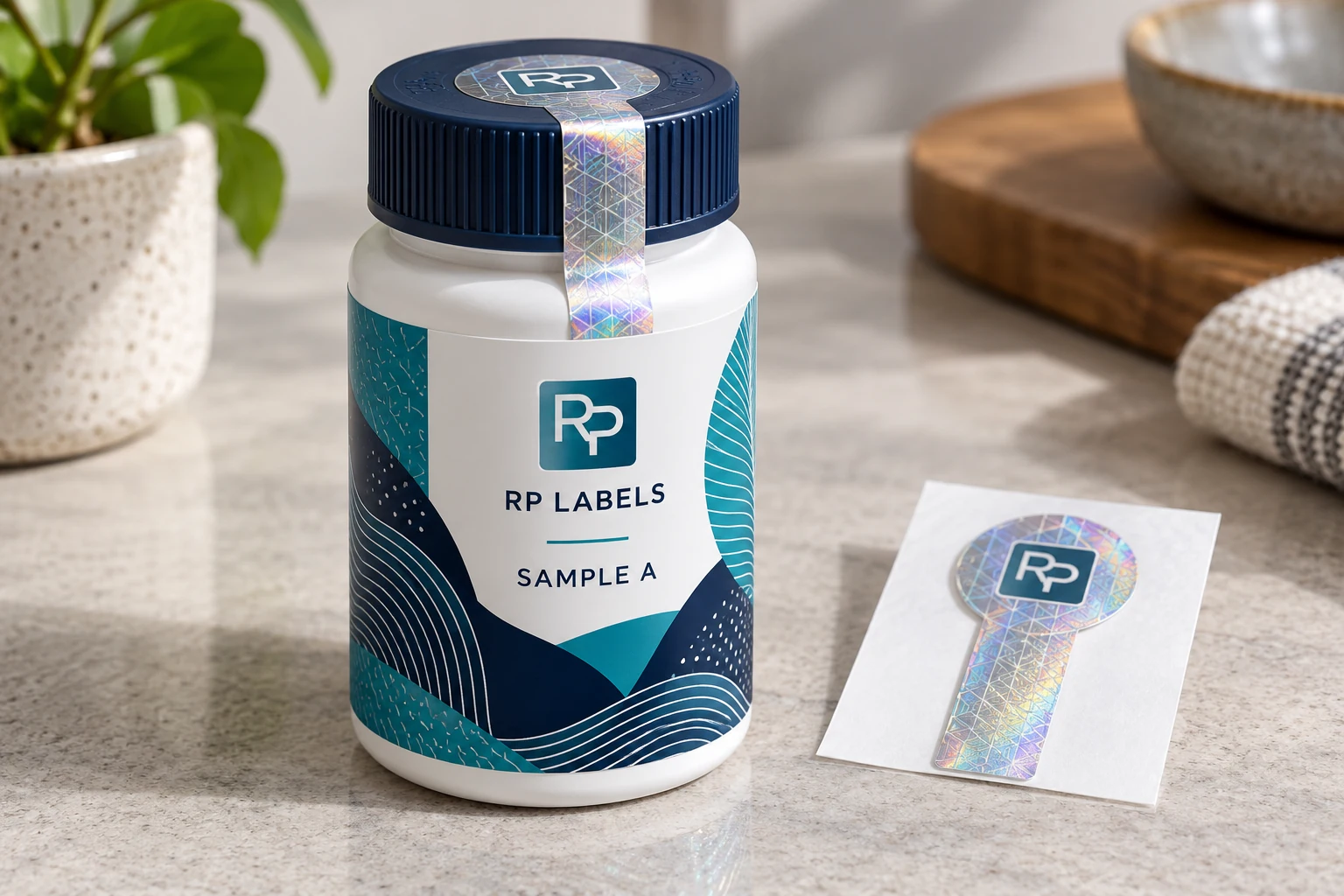
AI-generated packaging illustration. Fictional RP samples show the proposed decision; no physical test or customer order is documented.
Treat the bridge as three physical zones
Mark the intended seal route on the closed container. Identify cap and body materials separately, including relevant coatings or texture. The worked record keeps a contact zone on the cap, a bend zone across the rim and a contact zone on the body. It does not assume that one adhesive claim covers all three.
Ask for the complete proposed construction, including any finish that changes stiffness. Apply candidate shapes using the intended process and inspect after the relevant dwell and handling. Record tenting separately from end lift. More pressure may improve contact in one situation, but it cannot make a wide stiff strip follow every compound curve.
Open the pack using its normal motion and observe what changes. Retain the closed-position photograph as well as the opened evidence. If the package can open through another route without disturbing the seal, tell the design owner. The label may still have a branding role, but its opening-evidence role needs reconsideration.
A narrow bridge can be sensible when flexibility and a clear opening cue matter more than printable area. A shaped seal can be worthwhile when it follows the geometry and carries an identifiable reference. A cap decoration that never bridges a moving joint has a different job. Do not force codes and slogans into a tiny bridge at the expense of its mechanical purpose.
Send RP Labels the exact cap and bottle, proposed placement and the desired post-opening observation. Ask which candidate can be physically demonstrated on both materials. The purchasing approval should name the accepted geometry and construction, rather than describing only the holographic color.
Map the opening path before choosing the seal shape
Bring the exact filled or empty sample pack with its final cap. Close it to the normal torque and mark where the cap skirt ends and the bottle wall begins. Ask what part actually moves when someone opens the container. A seal stuck to only the cap can be decorative; a seal bridging the cap and bottle may provide visible disturbance if the material and adhesive are suited to both surfaces. A decorative holographic label, however, is not automatically tamper-evident.
Try a narrow strip and a purpose-cut shape as alternatives. The narrow strip may bend more easily but offer less printable area. The custom shape may carry a stronger logo and serial cue but bridge a compound curve badly. Do not specify a universal seal width from a photograph. Measure the cap diameter, cap-wall height, shoulder radius and the area below the thread where the lower end can actually bond.
Choose flex and adhesive for both contact surfaces
HERMA's curved-surface guidance emphasizes flexible materials and secure adhesion on small diameters. Avery Dennison's film guide distinguishes rigid and more conformable films for complex package shapes. Neither source establishes that any particular RP holographic construction will pass on this jar. Material choice has to be tested with the holographic layer, adhesive and final finish together.
The two ends of a seal may meet different materials: a PP cap and a PET or glass body, for example. Ask for the actual cap resin, bottle resin and any varnish or surface treatment. Cleanliness and application pressure matter, but increasing pressure cannot flatten a design that is geometrically too wide for the cap rim. A material with a dramatic optical effect may require a compromise in flexibility; tell the printer which outcome matters most.
Test opening evidence without overstating it
Apply candidate constructions to several real containers using the intended hand or machine process. Inspect for tenting, bubbles and edge lift at application, after the specified dwell and after normal storage or handling. Open the jar and record what remains on each surface. Is the evidence immediately visible to a buyer? Can someone open from another point without disturbing the seal? If the result is ambiguous, revise the placement or construction.
Worked curved cap bridge record
The rows below are hypothetical planning examples. Empty observation or commercial fields must be completed from the actual project; no sample has been tested for this article. Use the worked CSV and blank worksheet with the field guide. Keep the example references separate from production records.
| candidate | zone | surface reference | application reference | closed pack observation | opened pack observation | owner | decision |
|---|---|---|---|---|---|---|---|
| DEMO-BRIDGE | Cap end | Actual cap resin/finish | Actual method required | Packaging owner | PENDING | ||
| DEMO-BRIDGE | Rim bend | Actual closed geometry | Same application | Packaging owner | PENDING | ||
| DEMO-BRIDGE | Body end | Actual bottle surface | Same application | Packaging owner | PENDING |
Bring this decision into the print inquiry
Contact RP Labels with the completed curved cap bridge record, the actual packaging reference, approved artwork and quantity per design. State which fields remain unresolved so the print specification and any relevant sample scope can be discussed against the same decision.
Related buying guidance: 3D Holographic Labels; Seal placement basics; VOID versus destructible; Carton fiber-tear seals.
Sources and scope
Demand layer: competitor and process pages linked here, including Avery, HERMA or OnlineLabels where cited, illustrate buyer language and process topics only. They do not supply RP minimum quantities, lead times, prices, certifications or materials. Authority layer: an RP number is backed only by a factory datasheet, a signed quote or proforma, confirmed product data, or a fact kept on the About page. The March 2026 proforma there is one production-run example, not a standing offer. RP shipping and planning pages describe what to confirm on a quote. Worked figures on this page are fictional unless an authority source is named for them.