Hologram Pouch Seals: Choose First-Opening Evidence or Reclosure
The pouch needs to open neatly and close again, while the purchasing brief also asks the seal to show irreversible first opening. Those wishes may require separate features. Start by deciding what the label itself must do, then examine the filled pouch rather than a smooth empty sample.
The customer wants an easy opening. The brand wants a clear first-opening cue. The zipper may already do the repeated-closing job perfectly well. I would let each feature earn one clear responsibility before buying a complicated label expected to do everything. That often makes the packaging instruction easier to understand as well.
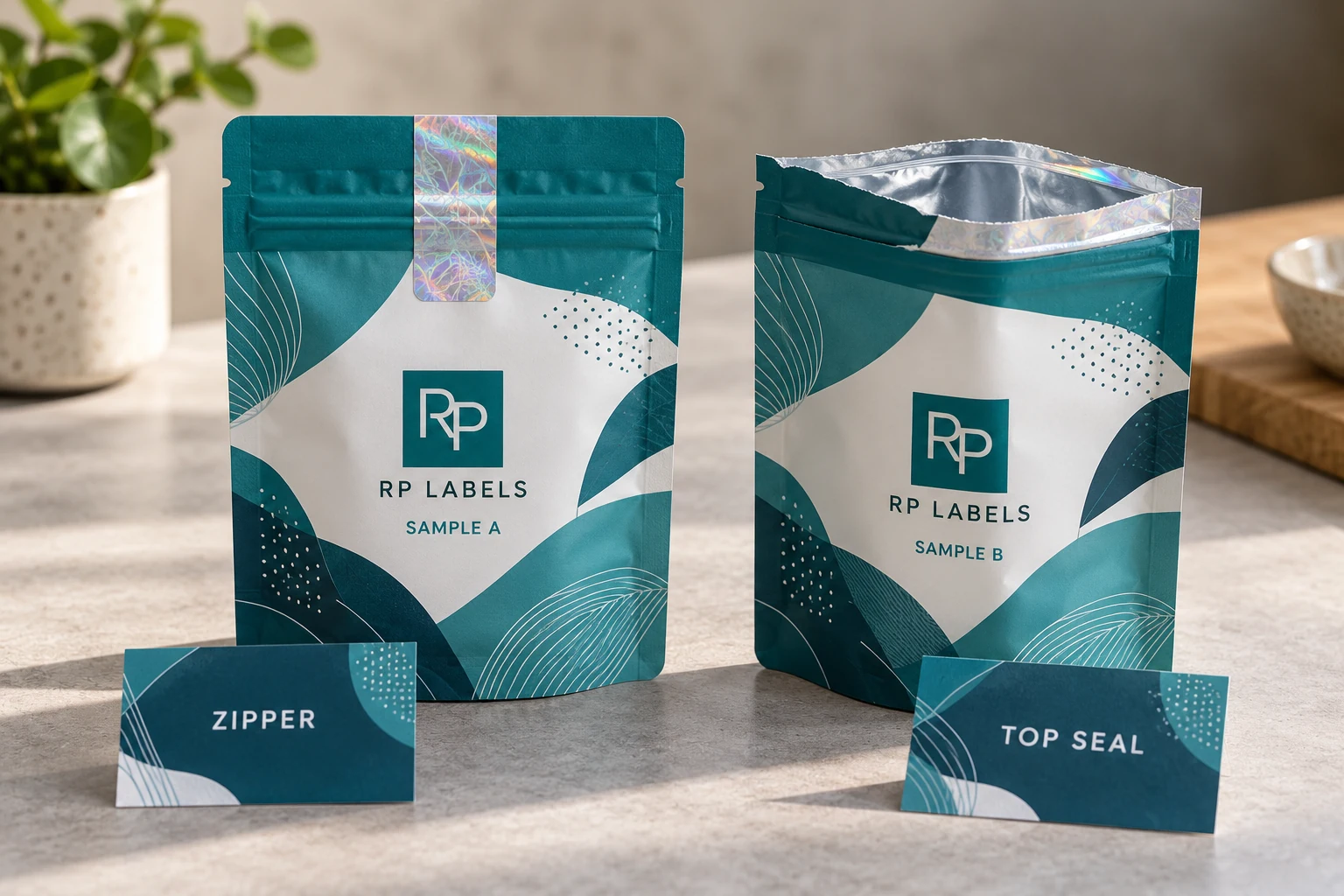
AI-generated packaging illustration. Fictional RP samples show the proposed decision; no physical test or customer order is documented.
Separate the first opening from the next closure
Mark the top seal, tear notch, zipper and actual finger-grip area. State which movement must disturb the label, and whether the label has any job after that first opening. The worked brief has a first-opening row and a reclosure row so the brand can choose one role or deliberately engineer a combination. It does not declare a single stock construction suitable for both.
Use filled samples because the top shape and surface tension can change with the contents. Ask the packer about actual powder, oil or handling contamination where relevant. Record the pouch film and surface finish, not just the word plastic. Apply the candidate by the intended hand or machine process and preserve the placement reference.
For the opening route, observe whether the zipper can be accessed without the desired disturbance. For reclosure, observe the actual repeated use the buyer requires and define that expectation before sampling. A peel that is convenient in one route may defeat the evidence sought in another. Keep visual sparkle separate from that functional decision.
A zipper may already provide adequate repeated closure, leaving the label responsible only for a defined first-opening cue. Another pack may need a dedicated closure tab and no security promise. Choosing the simpler role can reduce converting complexity and make the instruction clearer. Where a combined feature is justified, request physical evidence for each job.
Send RP Labels filled and empty pouch references, the marked opening map, the required role and quantities. The supplier can then discuss a candidate construction against a real action. A center-aligned hologram on a flat artwork file cannot establish how the pouch will open.
Map the actual opening motion
Mark where the zipper sits, where the user's fingers grip, and which surface changes shape as the pouch opens. A seal placed across two moving faces may wrinkle before opening; a seal placed only on one face may do nothing to reveal that the zipper was opened. A tear line, if used, has to intersect the real opening path rather than merely look centered in flat artwork.
HERMA's closure-label example describes how uneven package surfaces, dust, grip tabs and adhesive selection affect closure behavior. Its flexible-bag example demonstrates that a label for repeated opening is designed differently from a one-time seal. These are material-selection lessons, not evidence that any particular RP hologram has passed a security test.
Try the film and adhesive on the filled pouch
Ask for pouches from the actual filling run, not just empty smooth samples. The fill changes the tension at the top seam, while heat sealing, powder dust or handling can change the surface. HERMA's material range distinguishes seal and security adhesive constructions; the exact choice still depends on your film and desired removal behavior.
Apply several sample seals with the intended pressure and dwell time. Open the pouches the way a customer would: pull from a corner, pinch the zipper, flex the gusset and try a slow peel. Note whether the label tears, leaves visible residue, lifts cleanly, damages the pouch or interferes with the zipper. A product photo cannot answer those questions.
Run the trial on more than one pouch from the same production lot. Pouch thickness and the position of the heat-seal edge can vary enough to change how a short label bridges the opening. If the hologram is applied by machine, test placement tolerance on a filled pouch; if it is applied by hand, record the position that workers can reproduce without covering the zipper's grip area.
Keep the approved pouch, seal sample and opening photographs with the reorder brief. They give the next print run a physical reference, not just a color PDF.
Do not let the hologram hide the evidence
The optical effect belongs where the customer can see it, but the evidence feature needs to be visible too. If a VOID or destructible construction is proposed, test whether its residue or break pattern is readable on the chosen dark or glossy film. If a perforation is proposed, test its tear direction. In either case, avoid claiming "tamper-proof" or regulatory compliance based on a graphic rendering.
Send the supplier the pouch material, filled and empty samples, zipper/heat-seal drawing, expected storage and handling conditions, target seal position, application process and the evidence you want after opening. Request a physical trial before buying a roll. The picture in this guide is a visual concept, not a documented security-performance result.
Sources and scope
Reviewed October 3, 2026. The primary references linked below support the identified technical points. Buying scenarios and inspection checklists are editorial guidance, not RP production records, certification, legal approval or universal acceptance standards. Demand layer: competitor and process pages linked here, including Avery, HERMA or OnlineLabels where cited, illustrate buyer language and process topics only. They do not supply RP minimum quantities, lead times, prices, certifications or materials. Authority layer: an RP number is backed only by a factory datasheet, a signed quote or proforma, confirmed product data, or a fact kept on the About page. The March 2026 proforma there is one production-run example, not a standing offer. RP shipping and planning pages describe what to confirm on a quote. Worked figures on this page are fictional unless an authority source is named for them.
- HERMA: closure labels for uneven food packaging - HERMA: product and closure labels for flexible tubular bags - HERMA: security-label materials and adhesion
Worked pouch opening route record
The rows below are hypothetical planning examples. Empty observation or commercial fields must be completed from the actual project; no sample has been tested for this article. Use the worked CSV and blank worksheet with the field guide. Keep the example references separate from production records.
| function | pouch reference | trigger motion | required after action | candidate construction | actual observation | owner | decision |
|---|---|---|---|---|---|---|---|
| First-opening evidence | Actual filled pack | Define notch zipper or fold motion | Defined visible disturbance | Supplier proposal required | Packaging owner | PENDING | |
| Repeated closure | Actual filled pack | Define opening and closing motion | Buyer-defined reclosure function | Separate proposal if required | Packaging owner | PENDING |
Bring this decision into the print inquiry
Contact RP Labels with the completed pouch opening route record, the actual packaging reference, approved artwork and quantity per design. State which fields remain unresolved so the print specification and any relevant sample scope can be discussed against the same decision.
Related buying guidance: 3D Holographic Labels; Choose a seal position; Compare carton tear paths; Compare evidence materials.