Opaque Supplement Overlabels: Prove Coverage and Reconcile the Rework
An opaque label on its backing looks as though it will hide anything. On the bottle, an old dark line can show through or remain visible beside the new edge. The correction also has to reach the right stock. A buyer needs an applied coverage review and a rework count, not simply a carton of replacement stickers.
Rework is attractive because it may preserve bottles already paid for. That is a valid commercial motive. I would still put the darkest old label under the proposed correction and ask the supervisor how the units will be counted. Saving the packaging is useful only if the finished stock has one clear approved identity.
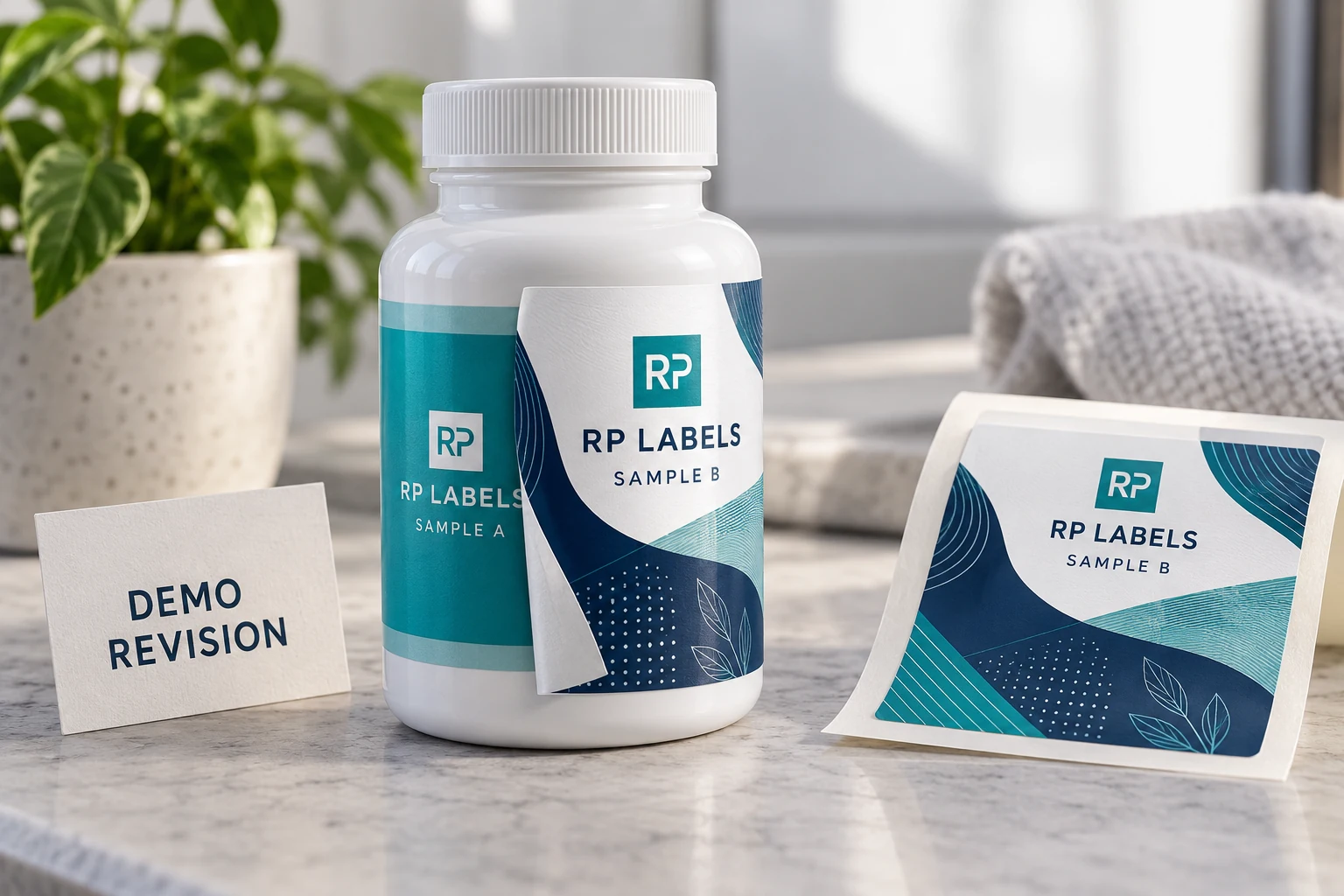
AI-generated packaging illustration. Fictional RP samples show the proposed decision; no physical test or customer order is documented.
Keep the coverage decision separate from the inventory release
Ask the qualified content owner to approve the correction scope first. Record the affected SKU and lot references, what must change and which new file is authorized. The label printer can discuss opacity and printability; it cannot determine whether overlabeling is an acceptable regulatory correction for the exact product.
Use the darkest relevant old print and the actual existing label surface in the applied trial. Check straight-on, at the seam and at normal handling angles. Record show-through, exposed old text, edge fit and adhesion concerns separately. A smaller patch may be enough for a local correction, while a full wrap may be needed for a broader change. Neither should create a second conflicting identity.
The worked rework record tracks units received into the controlled operation, units corrected, units held or rejected and units released. The example has no invented quantities or release result. The packer's actual process should account for the full affected stock and any replacement labels left over. A printed overlabel count is not proof of corrected bottle count.
Removing the original label and relabeling may be preferable where layering creates an unreliable surface or a visible old identity. Overlabeling can be practical where the approved scope, coverage and applied construction are demonstrated. Compare the operational routes as well as the cost of the new sticker.
Send RP Labels the existing labeled bottle, approved replacement copy, affected stock references and proposed application method. Ask for an identified opaque candidate and an applied sample scope. Keep the content approval, physical coverage decision and inventory release as distinct records that agree on the same correction revision.
First decide whether an overlabel is appropriate
If the error involves a critical claim, required declaration, ingredient statement or safety information, have the responsible regulatory and quality teams review the correction plan for the market where the product will be sold. Do not ask a printer to decide whether a revised dietary supplement label meets law. The FDA dietary supplement labeling guide is a useful US starting point, but it is not a substitute for product- and market-specific review.
A small promotional date change is not the same risk as contradictory ingredient information. Some inventory should be reworked; some should be held or replaced. I would settle that decision before asking a converter for a thousand cover-up labels. A fast quote is not a release decision.
Opacity is a material specification, not a promise from a mockup
White print over old dark text can look opaque on a screen and still show the underlying copy in daylight. Avery Dennison's cover-up range describes high-opacity materials designed to conceal outdated information and emphasizes that overlabeling must really hide the old print. Ask for the proposed face material and opacity construction, not merely “white BOPP.”
Test the new label directly on the darkest old artwork, on the actual amber or clear bottle, under strong light and after the expected handling interval. Look for shadows of old letters through light areas, especially near the edges. Also check whether the old barcode or QR code remains partly visible. Two readable codes or two conflicting statements on one bottle are not a cosmetic nuisance.
Fit the correction to the whole bottle
The overlabel must sit flat on the existing label, stay clear of the shoulder, cap and tamper feature, and avoid creating an edge that catches in a shipper. Measure on a labeled production bottle, not an empty container from a catalogue. Check where the old seam lands: a second seam placed on top of it may make a thick ridge or create a lifting edge.
A full wrap may conceal more information but demands a more careful registration trial. A smaller patch may be simpler but leaves more chances for a remnant of the old message to show. Neither answer is automatic. Use the bottle measurement guide for the base dimensions, then test the additional layer at the real position.
Keep old and new inventory separate
| Control | Evidence | Reason |
|---|---|---|
| Scope | Affected SKU, lot and unit count | Prevents applying the correction to the wrong stock |
| Artwork | Approved new file and dated revision | Prevents a second unreviewed change |
| Opacity | Applied sample on darkest old print | Reveals show-through |
| Application | Real bottle trial including seam and edges | Reveals fit and adhesion problems |
| Release | Quantity reconciled and quality sign-off | Stops mixed old and corrected stock |
Give rework staff a clear accept/reject sample. Hold any bottle with wrinkled placement, exposed old text or a displaced information panel. Do not treat a carton of loose overlabels as evidence that all bottles were corrected. Our artwork-version guide offers a broader way to keep revisions from crossing markets or SKUs.
Worked overlabel cover record
The rows below are hypothetical planning examples. Empty observation or commercial fields must be completed from the actual project; no sample has been tested for this article. Use the worked CSV and blank worksheet with the field guide. Keep the example references separate from production records.
| rework reference | affected stock | new artwork revision | coverage sample | units in | units corrected | units held rejected | units released | owner |
|---|---|---|---|---|---|---|---|---|
| DEMO-REWORK | Actual SKU and lots required | Approved correction file required | Darkest old print on actual surface | Rework owner | ||||
| DEMO-RECONCILE | Same controlled stock | Same approved revision | Record exceptions separately | Release owner |
Bring this decision into the print inquiry
Contact RP Labels with the completed overlabel cover record, the actual packaging reference, approved artwork and quantity per design. State which fields remain unresolved so the print specification and any relevant sample scope can be discussed against the same decision.
Related buying guidance: Supplement Labels; Artwork version control; Measure the actual bottle; Private-label packaging checklist.
Sources and scope
Demand layer: competitor and process pages linked here, including Avery, HERMA or OnlineLabels where cited, illustrate buyer language and process topics only. They do not supply RP minimum quantities, lead times, prices, certifications or materials. Authority layer: an RP number is backed only by a factory datasheet, a signed quote or proforma, confirmed product data, or a fact kept on the About page. The March 2026 proforma there is one production-run example, not a standing offer. RP shipping and planning pages describe what to confirm on a quote. Worked figures on this page are fictional unless an authority source is named for them.