Vial Cap-Top Dots: Check the Pair When the Lid and Body Are Labeled Separately
The cap dot says A. The body label says B. Both pieces may be printed accurately, yet the finished vial gives conflicting instructions to the person looking down into the tray. A top-view aid needs a pairing step at the point the two streams meet.
The top dot helps the person looking into the tray. It adds another piece for the assembly team to control. I would first test whether the top-view task really saves effort, then watch where the dot and body label meet. A second label should reduce uncertainty downstream, not create a small matching problem at the bench.
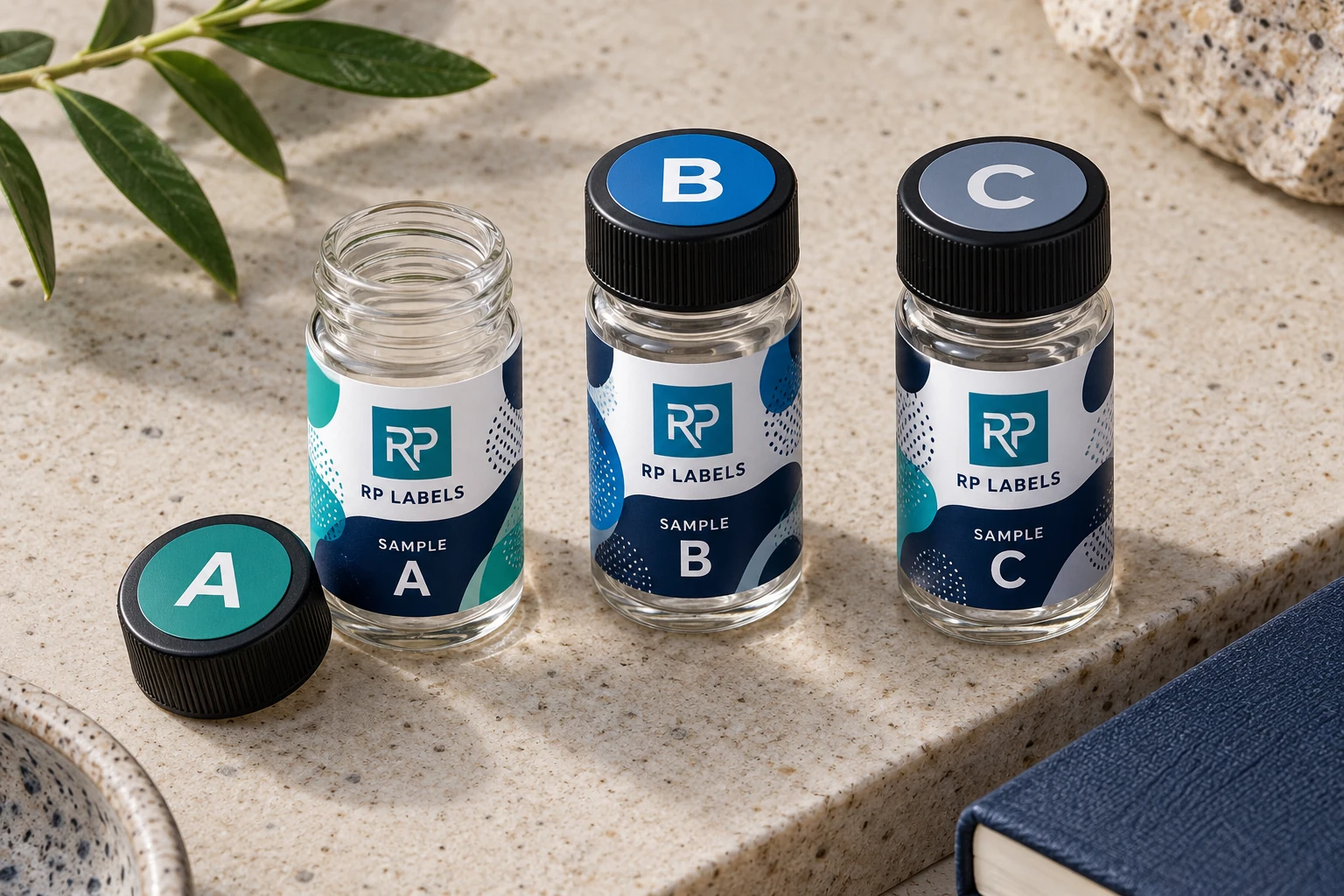
AI-generated packaging illustration. Fictional RP samples show the proposed decision; no physical test or customer order is documented.
Test the pairing process with deliberately different samples
Use a controlled map of body identifier, top identifier and any color cue. Identify who applies each part and when they become a pair. If caps are labeled before assembly, the process has a different handoff from labeling completed vials. Do not assume a common color will prevent a mismatch, especially when adjacent SKUs share a similar shade.
The worked pairing sheet uses A and B as dummy references. It includes a deliberately mismatched demonstration row that should be identified as a mismatch, not used as production stock. That exercise makes the operator's task concrete without inventing an actual mislabeling incident. The process owner determines how the real operation checks and reconciles pairs.
Put correctly paired samples in the actual tray and review the top-view reading task. A dot may be readable alone and obscured by the tray or closure rim in use. Measure the usable flat cap face, not just the outside diameter. Keep the body label's durable identity accessible after the cap is removed.
A side label alone can be the simpler choice where users routinely pick up each vial and read it. Cap dots add value when top-view selection is a real recurring task and the pair can be controlled. They should not become a second uncontrolled product identity.
Send RP Labels the cap and vial, actual tray, identity map, application order and per-design quantities. Ask for a paired proof and a physical fit sample. Retain the map beside both artwork files so a changed body identifier prompts a review of the top dot as well.
Start with the actual top-view problem
If the user removes one vial from a tray and reads its side, a cap dot may add little. If the tray stays closed or tightly packed while someone locates a sample, top identification can be useful. Define what needs to be recognized from above: a color family, an abbreviated product code, a lot, or a combination. I would avoid using color alone where adjacent products could be confused or where a color change is not documented.
Build a matching table before artwork: side-label code, cap-dot code, color, lot behavior and the person who verifies the pair. Keep the same master identifiers on both layouts. If a late artwork revision changes the side-label product name but not the cap-dot file, the attractive matching colors become misleading.
Measure the flat cap face, not the cap diameter
Many caps have a rolled outer lip, ridges or a domed center. A dot sized to the full outside diameter may crease or hang over the edge. Send the printer an actual cap or precise photographs with a ruler and measure the usable flat top. Leave a visible margin between the printed edge and the metal lip. On a small face, a short code and high-contrast color block often work better than a miniature full logo.
Top application is a distinct packaging operation. HERMA describes top labeling as a format separate from wraparound labeling, while its bottle-labeling applications show how labels can serve different surfaces on a container. These sources establish the physical application categories; they do not validate our fictional research-vial design.
Protect the body label's job
The body-label size still has to accommodate the fields your organization requires. A cap can be removed, replaced or separated from the vial. That is why I would keep the durable product or sample identity and controlled lot reference on the body, then make the top dot a fast visual echo. If the vial must be inspected for fill level or contents, preserve the glass viewing window rather than expanding the body label to carry decorative material.
Check the intended handling sequence. Will dots be applied to caps before capping, to finished vials, or by a person picking from two rolls? If two people handle cap and body labels separately, specify a reconciliation point. The easiest mislabel is a perfectly centered dot on the wrong cap. That is an operational risk, not a print defect.
Run a simple physical proof
Ask for a few printed dots and body wraps, then apply them to the exact cap and vial. Place the samples in their actual tray. Can the code be read at the normal viewing distance? Does the dot catch the edge of a divider? Does a gloved finger lift it during routine opening? Test how the pair looks under the lighting used by the intended operator. Do not infer adhesive performance from a flat digital proof.
For a multi-SKU program, use a controlled color key and decide how new products enter it. Reserve enough difference between neighboring colors and back every color with text or a code. A screen rendering is a poor substitute for comparing the approved print samples side by side.
Worked cap dot identity record
The rows below are hypothetical planning examples. Empty observation or commercial fields must be completed from the actual project; no sample has been tested for this article. Use the worked CSV and blank worksheet with the field guide. Keep the example references separate from production records.
| demo row | body identifier | top identifier | color reference | pair result expected | actual observation | pairing owner | next action |
|---|---|---|---|---|---|---|---|
| Correct example | A | A | Controlled reference | MATCH | Assembly owner | Review sample | |
| Deliberate challenge only | B | A | Do not rely on color | MISMATCH | Assembly owner | Demonstration; never production release |
Bring this decision into the print inquiry
Contact RP Labels with the completed cap dot identity record, the actual packaging reference, approved artwork and quantity per design. State which fields remain unresolved so the print specification and any relevant sample scope can be discussed against the same decision.
Related buying guidance: Peptide Vial Labels; Measure the vial body; Keep a glass viewing window; Build a color-coded SKU system.
Sources and scope
Demand layer: competitor and process pages linked here, including Avery, HERMA or OnlineLabels where cited, illustrate buyer language and process topics only. They do not supply RP minimum quantities, lead times, prices, certifications or materials. Authority layer: an RP number is backed only by a factory datasheet, a signed quote or proforma, confirmed product data, or a fact kept on the About page. The March 2026 proforma there is one production-run example, not a standing offer. RP shipping and planning pages describe what to confirm on a quote. Worked figures on this page are fictional unless an authority source is named for them.