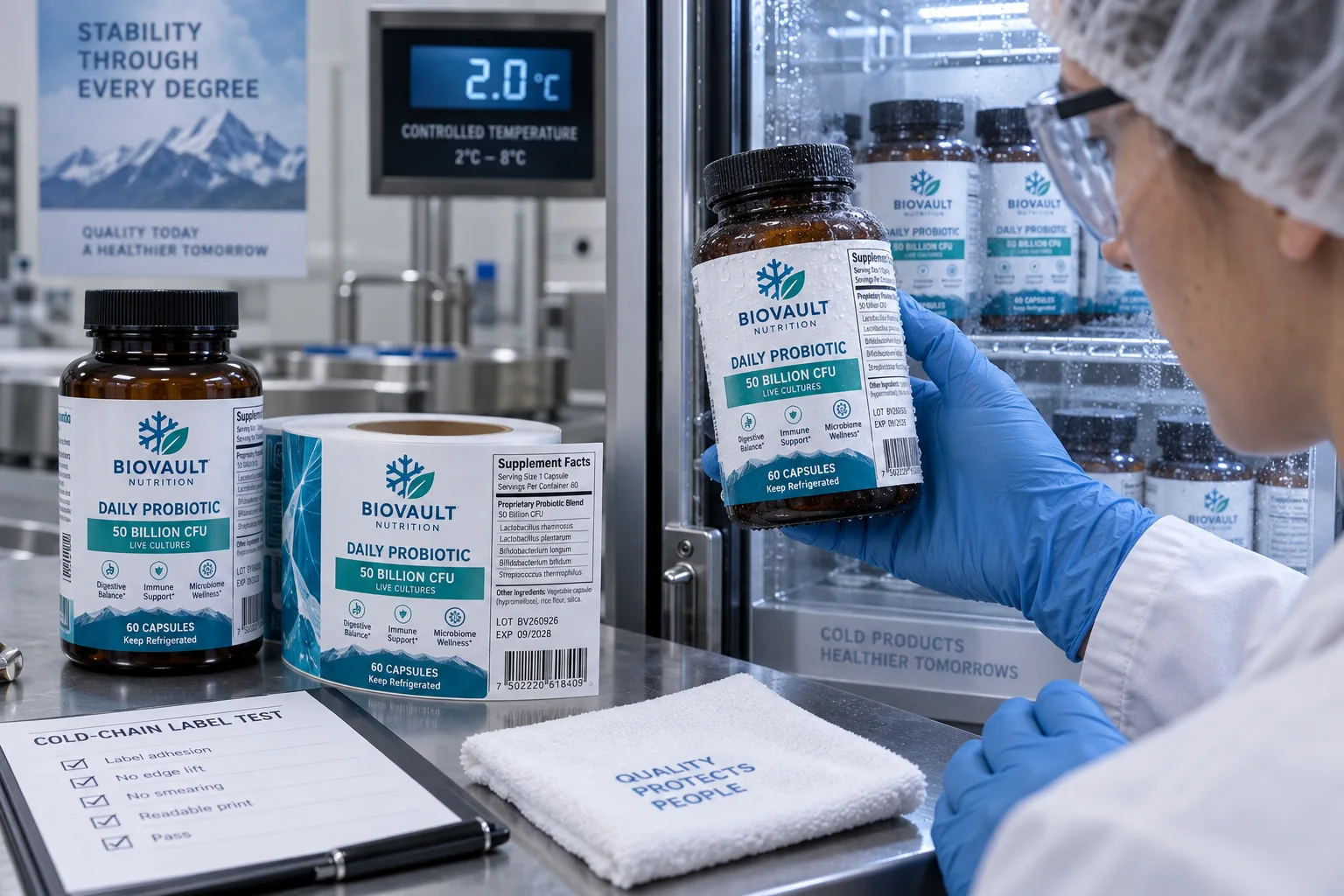
The short answer: first separate application temperature from service temperature. A film label applied to a clean, dry bottle at room temperature and given time to build adhesion may perform well after refrigeration. The same construction can fail when it is applied immediately to a chilled bottle with invisible moisture on the surface.
At the quote desk, “this product is refrigerated” sounds complete, but it is not a usable label specification. We need to know when the bottle becomes cold, what resin it uses, how long the label can dwell before chilling and what happens when the consumer takes it out of the refrigerator.
Application temperature is the question buyers often miss
Pressure-sensitive adhesive needs contact with the package surface. Cold can make some adhesives less able to flow into microscopic surface texture. Water between adhesive and bottle can interfere with that contact entirely. Firm application pressure and sufficient dwell time matter because tack at the labeling station is not the same as final adhesion after storage.
I used to ask only for the storage temperature. That was incomplete. The more useful question is: “What is the bottle temperature at the exact moment the label is applied?” Once that answer changes from 20 C and dry to 4 C and damp, the material discussion changes with it.
Buying rule: write two temperatures into the brief: temperature during labeling and temperature during distribution or storage. Add whether the bottle surface is dry, frosted or carrying condensation.
The bottle material is part of the adhesive system
Glass and PET commonly present different bonding conditions from HDPE and PP. Polyolefin bottles may have lower surface energy, while small supplement bottles also introduce a tight radius and label-edge tension. Mold-release residue, dust or product oil can create another failure path.
Do not approve only on a flat material sample. Send the exact production bottle, including its surface finish and fill condition. A label that stays flat on glass may lift at the overlap or leading edge on a small flexible HDPE container.
Film helps with water, but film is not the whole answer
BOPP or another suitable film facestock generally resists moisture better than unprotected paper. Lamination can protect color, small type and the Supplement Facts panel from wet handling. The adhesive still has to suit the bottle and application process, and the ink or variable-data ribbon still needs its own rub test.
For a refrigerated probiotic, inspect more than peeling. Look for whitening, tunneling, bubbles, edge flagging, distorted fine print and softened varnish. Test the lot code and expiration date after the package has sweated and been handled by wet fingers.
A realistic condensation test is a cycle, not a splash
Apply labels with the planned machine or hand pressure. Allow the intended dwell period. Chill the filled packages for the expected time, then move them into the actual warm and humid environment that creates condensation. Rub the print, scan codes, inspect edges and return the packages to cold storage. Repeat if the sales channel will expose the bottle to several temperature changes.
Avery Dennison publishes a technical overview for a label construction intended for wet and cold bottle applications. It is useful evidence that application conditions and wet performance are designed properties, not generic promises. It is not a substitute for qualifying your own bottle and process. See the manufacturer technical bulletin.
Separate refrigerator use from freezer claims
“Cold-chain” can describe very different environments. A probiotic kept in a refrigerator is not automatically a frozen-product application. Ask for the real temperature range, duration and number of cycles. If the package may freeze, say so explicitly and test it as a separate condition instead of extending a refrigerator result by assumption.
Cold-label qualification checklist
- Exact bottle resin, diameter, texture and production sample
- Bottle temperature and moisture level during labeling
- Time between application, filling, packing and refrigeration
- Lowest and highest service temperatures
- Expected condensation and temperature cycles
- Film, adhesive, laminate or varnish construction
- Lot, expiry and barcode printing method
- Edge lift, rub, scuff and scan acceptance criteria
FAQ
Can I label bottles after they enter the refrigerator?
Only with a construction qualified for that cold application and with the bottle surface under control. Avoid treating a wet bottle like a dry one.
Is waterproof film enough?
No. Moisture-resistant facestock, adhesive, protected print and the actual bottle all need to work together.
How long should labels dwell before chilling?
There is no universal time. Use the material supplier's guidance and validate the shortest production dwell your line can realistically provide.
Should we test filled or empty bottles?
Use filled production-equivalent bottles whenever possible because temperature, stiffness, surface contamination and handling can differ.