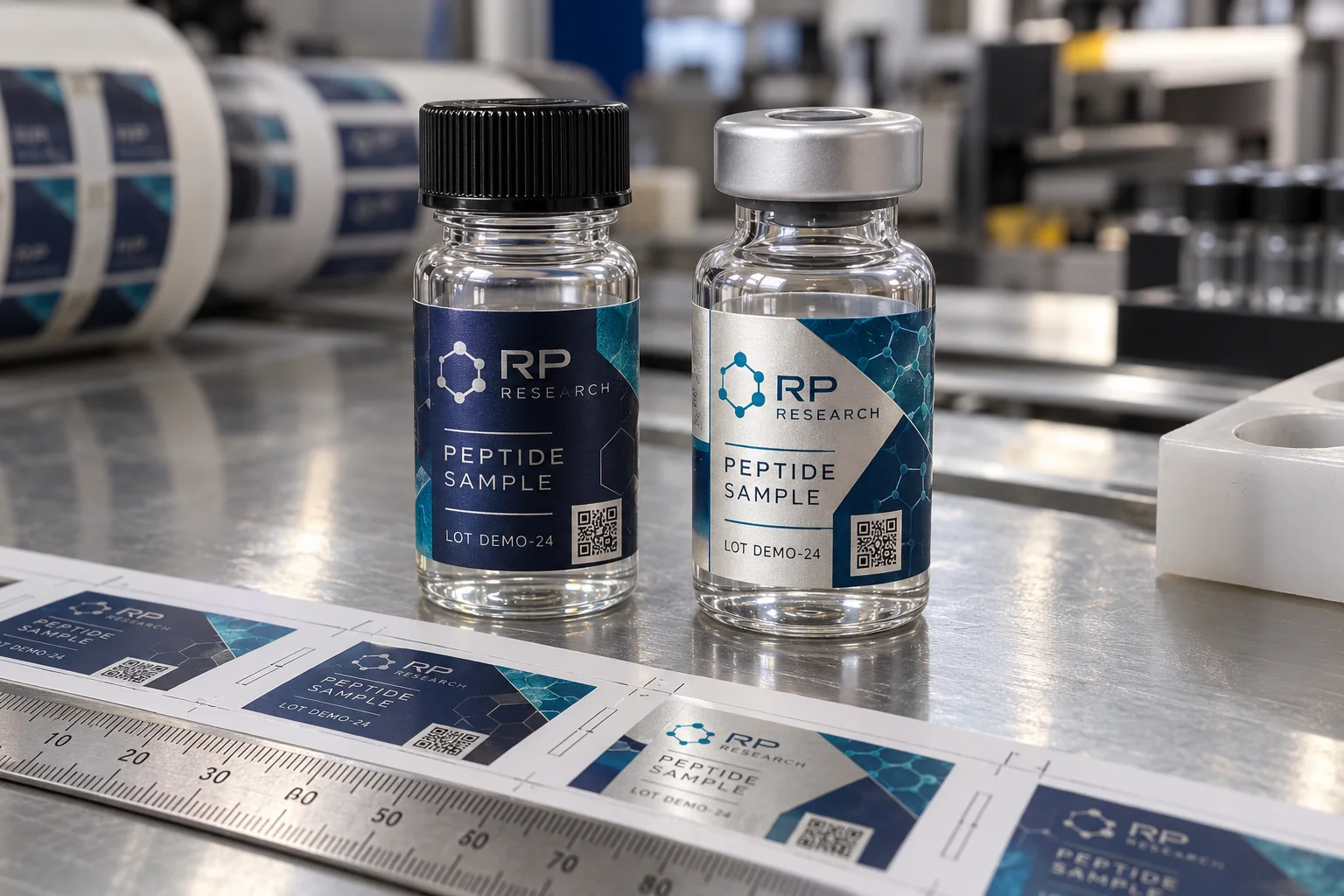
Imagine the artwork team is told that both containers are "2 ml vials." One has a black screw cap and a threaded neck. The other has a silver crimp closure and a different shoulder. A shared label PDF may save a file name, but it does not make those glass walls identical. The first thing I would request is a physical example of each finished container, cap included.
The label supplier needs the area that remains straight and visible after closure, not just the nominal capacity. A correct layout on one bottle can sit too high on the other, hide its lot field beneath the closure, or place the wrap seam where a user grips the vial. None of those problems is obvious from a flat rectangle.
Separate the container specification from the label specification
DWK Life Sciences describes screw-neck chromatography vials by size and finish and notes that a 12 x 32 mm vial can be described by several different nominal volumes. Its NextGen V Vial family offers screw-thread and crimp/serum finishes. These manufacturer examples illustrate why a purchase brief should name the actual container SKU or drawing rather than rely on "2 ml" alone; they do not establish dimensions for the buyer's own vial.
Measure body diameter, straight-wall height, shoulder start, base curve and closure overhang for both formats. Photograph each vial from front and side with a ruler. If the supplier receives only one sample, ask them to note which version the proposed dieline was based on. A paper wrap can help establish fit, but it cannot show final adhesive behavior.
Check the closure's working clearance
On a screw-cap bottle, fingers turn the closure and may brush the upper label edge. On a crimped vial, the metal skirt and the glass shoulder define a different boundary. Neither closure should scrape or trap the label during ordinary handling. Keep the printed identity, batch field and any code below a measured clearance line, with room for application tolerance.
HERMA's vial-labeling overview treats small cylindrical glass bottles as a distinct application. For the buyer, the useful translation is simple: do not approve placement from the unclosed empty bottle alone. Fit the real closure, apply the label by the planned hand or machine method, then rotate and handle it. If the upper edge catches, first examine label height and placement before changing the adhesive.
Decide whether one artwork can still serve both
The brand design may be shared while the dieline changes. A common color system, logo, hierarchy and lot-data structure can keep two labels recognizably related, even if their widths or safe zones differ. If both formats truly use the same die cut, document the smaller usable wall as the controlling case and confirm that the code, text and seam remain sound on both bottles.
I would not pay for two dies by default. I would ask for a full-size printed proof on each container first. If the second format only needs a small shift of noncritical decoration, one size may be reasonable. If the cap or shoulder cuts into required content, a second dieline is cheaper than relabeling a run. Test the longest product name and the densest batch data, not only the prettiest short variant.
Send a brief that a printer can actually use
Include both vial SKUs or dimensioned drawings, the actual caps, target label material, intended application method, label count per design, and any variable lot or code fields. Ask for a separate applied-photo approval of screw-cap and crimp versions. The illustrated RP Research artwork here is a visual comparison, not a tested label or a claim that these dimensions fit a specific commercial vial.
Sources and scope
Reviewed October 4, 2026. The primary references linked below support the identified technical points. Buying scenarios and inspection checklists are editorial guidance, not RP production records, certification, legal approval or universal acceptance standards. Demand layer: competitor and process pages linked here, including Avery, HERMA or OnlineLabels where cited, illustrate buyer language and process topics only. They do not supply RP minimum quantities, lead times, prices, certifications or materials. Authority layer: an RP number is backed only by a factory datasheet, a signed quote or proforma, confirmed product data, or a fact kept on the About page. The March 2026 proforma there is one production-run example, not a standing offer. RP shipping and planning pages describe what to confirm on a quote. Worked figures on this page are fictional unless an authority source is named for them.