Small-Batch Vial Labels: Allocate the Trial Before Ordering the Quantity
The first label order arrives and the brand team uses most of it to dress presentation samples. A few days later, the packer asks for a trial roll and the photographer wants an untouched reference. The labels have not failed. The small order has simply been spent before the remaining questions were answered.
In this hypothetical launch, buying more pieces might have avoided the shortage. Planning what the pieces were for would have been more useful. Before requesting a small-batch vial-label quantity, list the decisions the run must support, the owner of each activity and whether the same physical label can serve more than one purpose.
I would order against that allocation, then ask the converter which quantities and supply formats are feasible. A low minimum is helpful only when the delivered labels can do the work that justified the order.
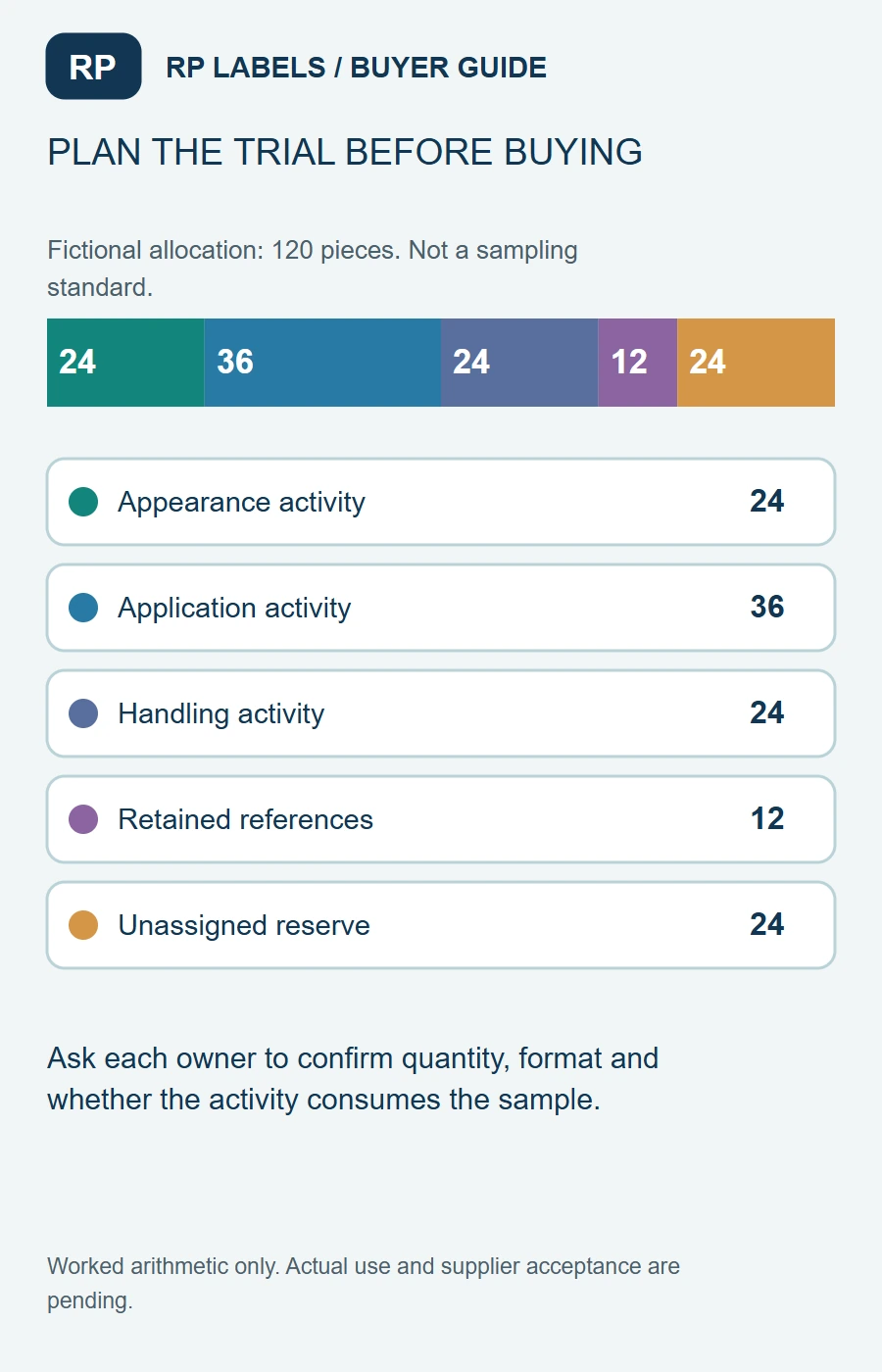
Illustrative planning example. Quantities are arithmetic only, not a recommended sample size, an RP minimum or a completed test.
Name the decisions before counting pieces
Write down the unresolved task rather than a broad activity such as “testing.” An actual-size appearance review, a proposed hand-application check and a machine-loading trial may require different samples. A photograph can document a view; it cannot replace every physical sample needed later.
Ask each activity owner what sample identity, format and quantity they need. The packer may need an identified finished roll, while the designer needs a few full-size applied examples. If those requirements are not yet known, mark them as open inputs instead of inventing a quantity allowance.
Keep the content and compliance decisions with their responsible reviewers. A small label run does not make an unapproved product statement suitable for printing. Likewise, completing a visual review does not establish adhesive durability or machine performance.
Separate pieces that will be consumed from pieces that must remain
Some labels are applied and handled, some may be removed or otherwise consumed during a planned review, and some should remain as identified references. Do not allocate one physical piece simultaneously to several activities that cannot share it.
Here is a fictional allocation of 120 pieces: 24 for an appearance activity, 36 for a packer-defined application activity, 24 for a handling activity, 12 retained as references and 24 left as an unassigned reserve. The total is 120. None of these numbers comes from a sampling standard or RP trial result.
The example exposes the next question: are those counts sufficient for the owners' actual methods, and can the converter supply them in a usable format? If the packer needs a different roll length or repeated starts, the allocation must change. The arithmetic does not override an equipment requirement.
Make the format fit the purpose
A loose sheet can be useful for comparing artwork or an initial material direction. It does not reproduce the liner, winding and dispensing behavior of the finished roll. Avery's custom-printing overview distinguishes sheet and roll formats by their intended application; its product and ordering conditions are not RP's terms.
Use the digital-proof and physical-sample guide to decide which evidence is appropriate for a particular question. This allocation records how much of each approved sample scope is needed and where it goes. It does not replace that sample-selection decision.
If the order is for hand-applied presentation samples only, a simpler format may be enough. A buyer planning an automatic filling run should obtain the packer's actual roll requirements early. The more elaborate trial should win because it addresses the actual process, not because a machine sounds more professional.
Keep separate designs visible
An order total can hide a shortage in the one SKU that needs the most attention. Allocate each artwork revision separately where its content, size or handling task differs. Do not assume spare labels from another design can be substituted in a comparison without affecting the evidence.
At the same time, avoid duplicating every activity unnecessarily. The responsible owner may be able to justify a shared construction review across a defined set of artworks while still checking each final file for its own content. Record the scope of that decision rather than turning it into an implied approval of all future variants.
Ask the supplier which minimums apply per design, construction or format and what rounding affects the proposed quantity. The printing-process comparison addresses production-route economics. A hoped-for repeat order should not quietly become the reason to buy excess trial stock today.
Use the reserve without losing the reference
An unassigned reserve can provide flexibility when a review needs another sample. It is not a substitute for a planned activity count, and it should not be mistaken for stock already approved for sale or use.
Record who may draw from it and for what purpose. If the trial changes the artwork or construction, keep old and revised samples separately identified. A remaining roll of the earlier version should not become the accepted reference merely because it is the last one left.
The worked allocation, blank allocation and field guide connect purpose, owner, planned count, format, actual use and open scope. The worked numbers remain fictional and the actual-use fields remain empty.
For custom vial labels, send RP Labels the trial allocation, actual vial reference, artwork revisions, quantity per design and each activity owner's sample requirements. Ask the converter to confirm the feasible supply arrangement and identify any change to the requested quantity. The first small order should leave the team with answered questions and identifiable references, not merely fewer blank bottles.
Sources and scope
Demand layer: competitor and process pages linked here, including Avery, HERMA or OnlineLabels where cited, illustrate buyer language and process topics only. They do not supply RP minimum quantities, lead times, prices, certifications or materials. Authority layer: an RP number is backed only by a factory datasheet, a signed quote or proforma, confirmed product data, or a fact kept on the About page. The March 2026 proforma there is one production-run example, not a standing offer. RP shipping and planning pages describe what to confirm on a quote. Worked figures on this page are fictional unless an authority source is named for them.