The 30-count bottle is already on sale. A buyer asks whether the next 60-count version can use the same label with one number changed. I would slow that request down. The count on the front panel is only one field in a package that may also change bottle size, serving count, panel spacing, barcode or trade-item identity.
The two RP Wellness bottles and proof sheets in the image are AI-generated, fictional examples. They show the version-control problem, not approved supplement copy or a real production record.
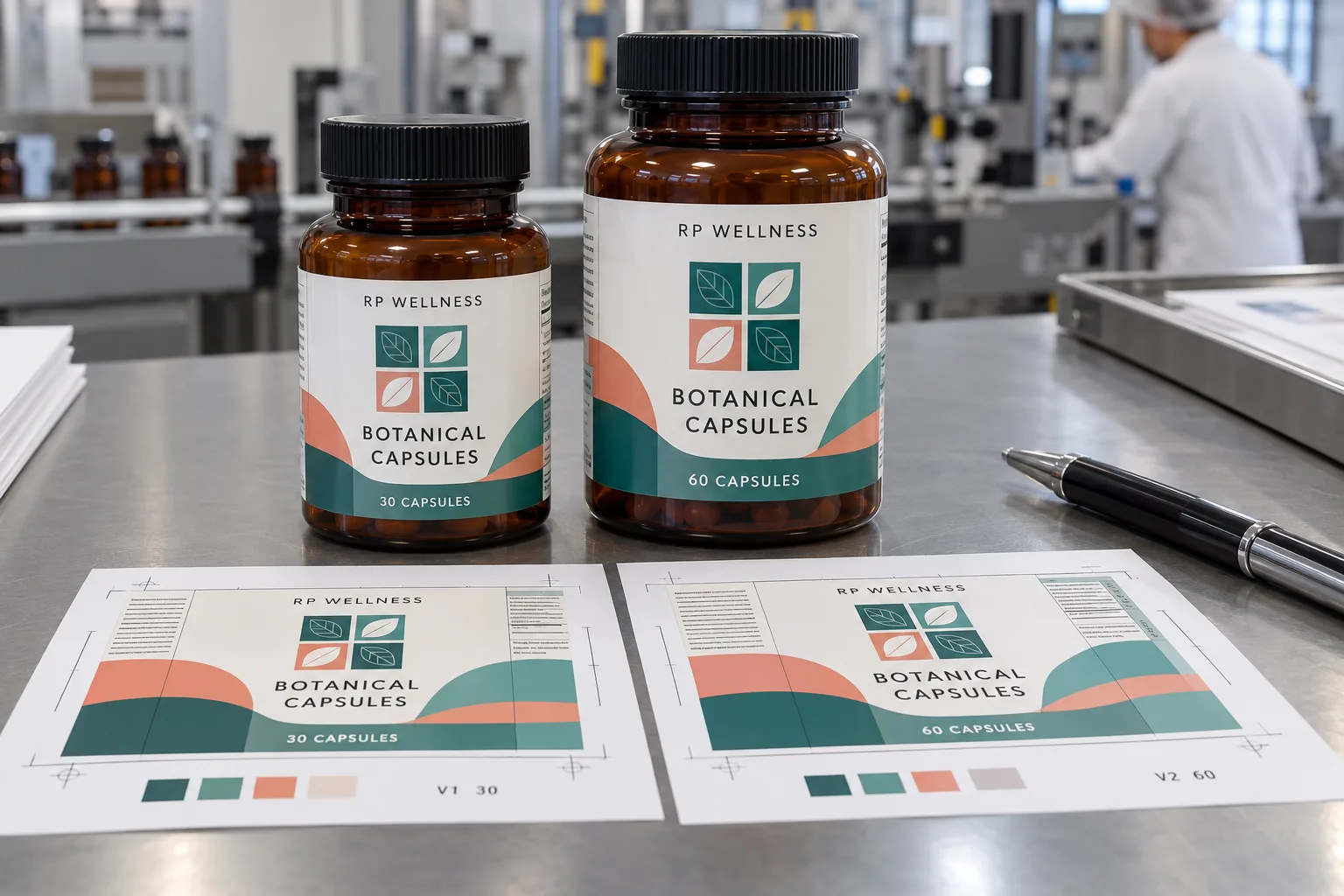
Make a change matrix before touching the artwork
Put the 30-count and 60-count versions in adjacent columns. Compare actual container dimensions, net quantity statement, serving size and servings per container, ingredient and caution copy, brand address, barcodes, carton or shipper identity, and variable-data positions. Not every field must change, but every field must be reviewed. The FDA's net quantity chapter explains how a count statement is handled for dietary supplements in the US. The final wording belongs with the brand's qualified reviewer.
A larger bottle can change the usable wrap width and straight-wall height. Conversely, the brand may choose identical bottles for both counts, in which case the visual distinction matters even more. Use the bottle size guide to measure the exact production container, not a catalogue photo.
Give each saleable version its own approval identity
Issue separate filenames and revision numbers for the 30 and 60 count. Put the count in the proof title and the approval log. Include the associated bottle reference and, if assigned by the brand, the correct trade-item code. The SKU and GTIN guide covers why distinct consumer choices often require distinct trade-item decisions; do not create or reuse a code without the brand's data owner.
I would not rely on a small color shift alone to separate versions. If both rolls are on the same packing floor, put a plain-text count and artwork version on the outer roll label or job ticket. Keep the printed consumer-facing count prominent. This is a practical process recommendation, not a claim that any particular color is required by law.
Keep the approved 30-count proof accessible when reviewing the 60-count proof. A side-by-side read often catches a field that was copied forward without an owner: for example, a serving count that belonged to the earlier package. Record who checked that field and which source document they used. The designer should not invent new product facts to fill a blank line.
Check the line changeover, not just the PDFs
Before an order is released, ask the packer how the first labelled bottle is checked after changeover. Which empty bottle size is loaded? Which label roll is mounted? How is the finished count verified? Where is the previous roll stored? A proof can be perfect while the wrong roll is installed. The buyer, packer and designer should agree on a short first-article check.
FDA's general dietary supplement labeling guide is useful when checking the required label information, but this article is not legal advice or a complete US compliance review. For other markets, use the applicable local rules and your regulatory team. Do not ask the printer to silently infer serving math from the new capsule count.
Order a versioned proof set
Send a bottle sample for each size, the approved copy for each count, the material and finish requirements, expected quantities, application equipment, unique code fields and the intended release date. Ask for labelled physical samples side by side. A separate packaging brief for each version makes later reorders less ambiguous.
My rule is simple: two counts, two named approvals. That does not force two unrelated designs; it prevents one attractive design from hiding a critical packaging difference.
Sources and scope
Reviewed October 17, 2026. The primary references below support the cited technical or regulatory points. The illustrated buying scenarios are editorial guidance, not RP production records, certifications, legal approvals or universal acceptance standards.