A buyer may ask for "one label that does everything": brand the supplement bottle, carry the required information and show whether the cap has been opened. It is possible to combine functions in some constructions, but the side label and the closure indicator should be assessed separately. One stays readable on the bottle body. The other has to react when someone opens the pack.
My first question would be where the real opening path is. Does the cap rotate, lift or snap? Is there already an induction liner, shrink band or carton seal? A decorative tab placed near the cap is not automatically evidence of first opening. Draw the path from cap to neck, then decide whether a band, bridge label or other feature can cross it without becoming easy to remove and replace.
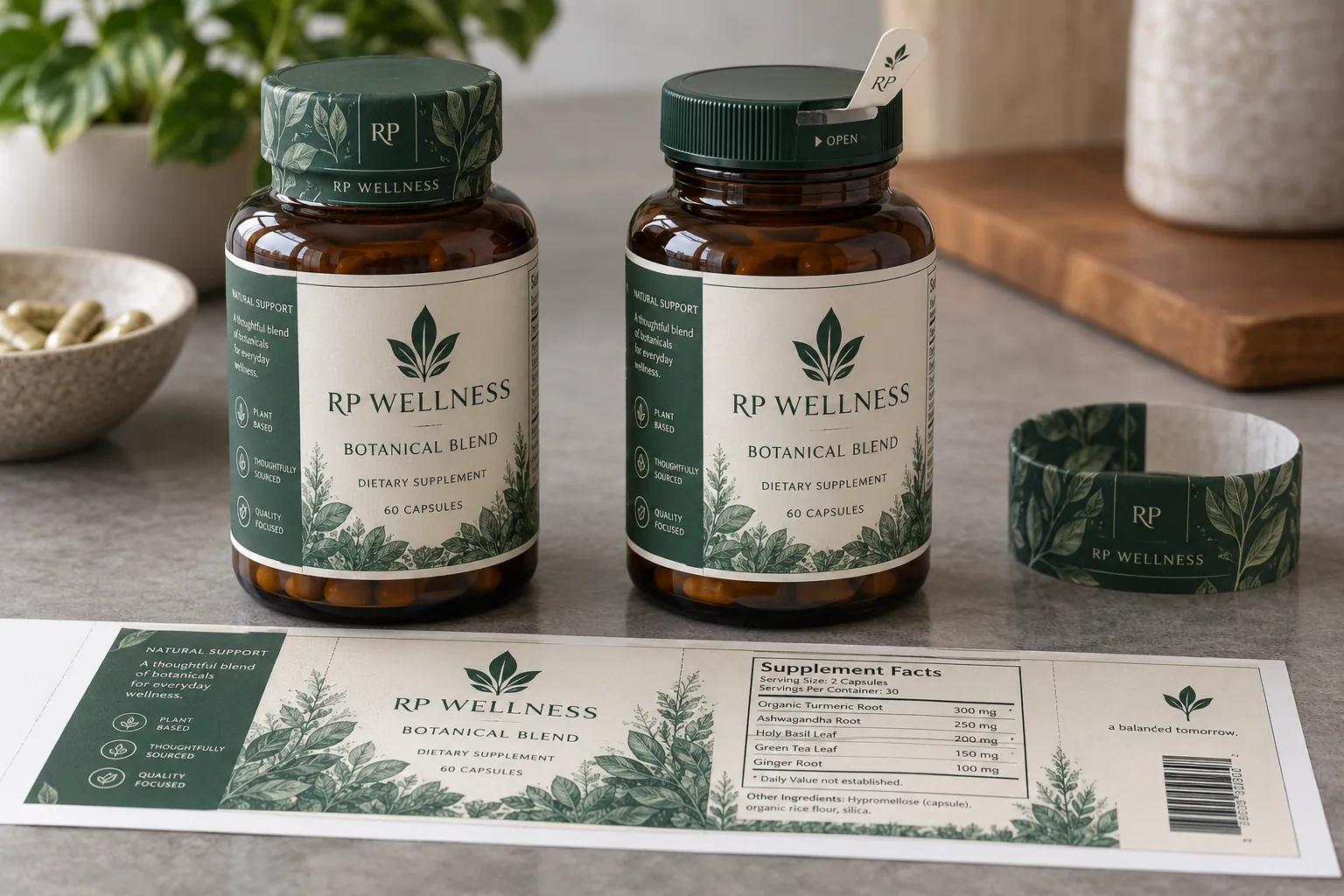
Give the side label its own information job
For a U.S. dietary supplement, the FDA's general labeling guide identifies required label statements and their usual panel placement. A narrow closure strip should not become an excuse to crowd the side label or make required information difficult to find. Approve the bottle-body artwork with the actual container circumference and a wrapped proof, then evaluate any opening feature as a second component.
Photographs of a closed pack can hide the problem: when the cap is unscrewed, will the band tear in a recognizable way, or will it simply slide upward? If the buyer wants an opening statement on the pack, have their regulatory reviewer approve its wording and placement for the relevant product and market. A custom print shop can propose constructions; it cannot certify a whole packaging system from a graphic file.
Choose the closure mechanism before its artwork
HERMA shows labels with a closure function as a real packaging format, but its example is for non-food products. Treat it as construction inspiration, not as a compliance precedent for dietary supplements. Avery Dennison's technical bulletin describes VOID-pattern polyester materials and notes that pressure-sensitive adhesive needs residence time to build bond strength. That is a reason to test the actual cap and bottle neck after realistic dwell, not a promise that every VOID stock will work on every cap.
A shrink band, a destructible strip and a VOID-transfer label leave different evidence and create different opening experiences. Ask the packer which equipment it can apply and whether the chosen feature interferes with torque, cap knurling or consumer grip. A side label that merely includes a printed lock icon does not become a security seal. Conversely, a seal may show opening yet still leave the product unidentified if the side label is missing.
Proof the complete pack in three states
Inspect an intact bottle, a deliberately opened bottle and a bottle after someone tries to reclose it. Photograph all three in ordinary light. The side label should remain readable in each state. The proposed indicator should behave as the buyer specified, and the distinction between intact and opened should be understandable to someone who did not attend the design meeting. Try the actual shipping carton too: abrasion or a divider can damage a bridge tab before purchase.
Set acceptance criteria before the trial. For example, decide what visible evidence counts as opening, whether an accidentally snagged corner is acceptable, and how many handling cycles the pack sees before sale. The criterion is customer-specific; no untested universal tamper claim belongs on the quote. If the feature is not reliable on the chosen bottle and cap, a separate proven closure format is better than forcing the side label to do a job it cannot do.
Quote two components, even when they share a design
Send the bottle and cap supplier details, cap diameter, neck geometry, existing seal, side-label dieline, opening sequence and packer equipment. Ask for a body-label proof and a closure-feature proof, each with its own material and application specification. When a future redesign changes cap shape, requalify the closure feature instead of assuming the old tab will still bridge the opening path.
The image above is AI-generated RP Wellness packaging. Its printed claims and Facts-style data are fictional; the illustrated band and tab were not physically tested. I would trust this purchase only after the product identity and the opening indication are both demonstrated on the actual bottle, as two separately judged jobs.
Sources and scope
Reviewed October 7, 2026. The primary references linked below support the identified technical points. Buying scenarios and inspection checklists are editorial guidance, not RP production records, certification, legal approval or universal acceptance standards. Demand layer: competitor and process pages linked here, including Avery, HERMA or OnlineLabels where cited, illustrate buyer language and process topics only. They do not supply RP minimum quantities, lead times, prices, certifications or materials. Authority layer: an RP number is backed only by a factory datasheet, a signed quote or proforma, confirmed product data, or a fact kept on the About page. The March 2026 proforma there is one production-run example, not a standing offer. RP shipping and planning pages describe what to confirm on a quote. Worked figures on this page are fictional unless an authority source is named for them.