A new supplement brand has one approved carton design and a set of single-serve sticks. Then someone asks whether the sticks can be handed out alone at an event or sold individually online. That small commercial change can turn a simple carton-and-insert brief into a different labeling question. I would settle it before a cutter or print run is booked.
The outer carton and each stick have different surfaces, opening paths and points of sale. A mockup that looks balanced on a screen does not tell you whether the inner pack is ever separated from the retail unit. Nor does it prove that the available print area can hold the required copy. The buyer needs the product's real distribution plan and regulatory review, not a generic "small pack exemption" passed around in a sales email.
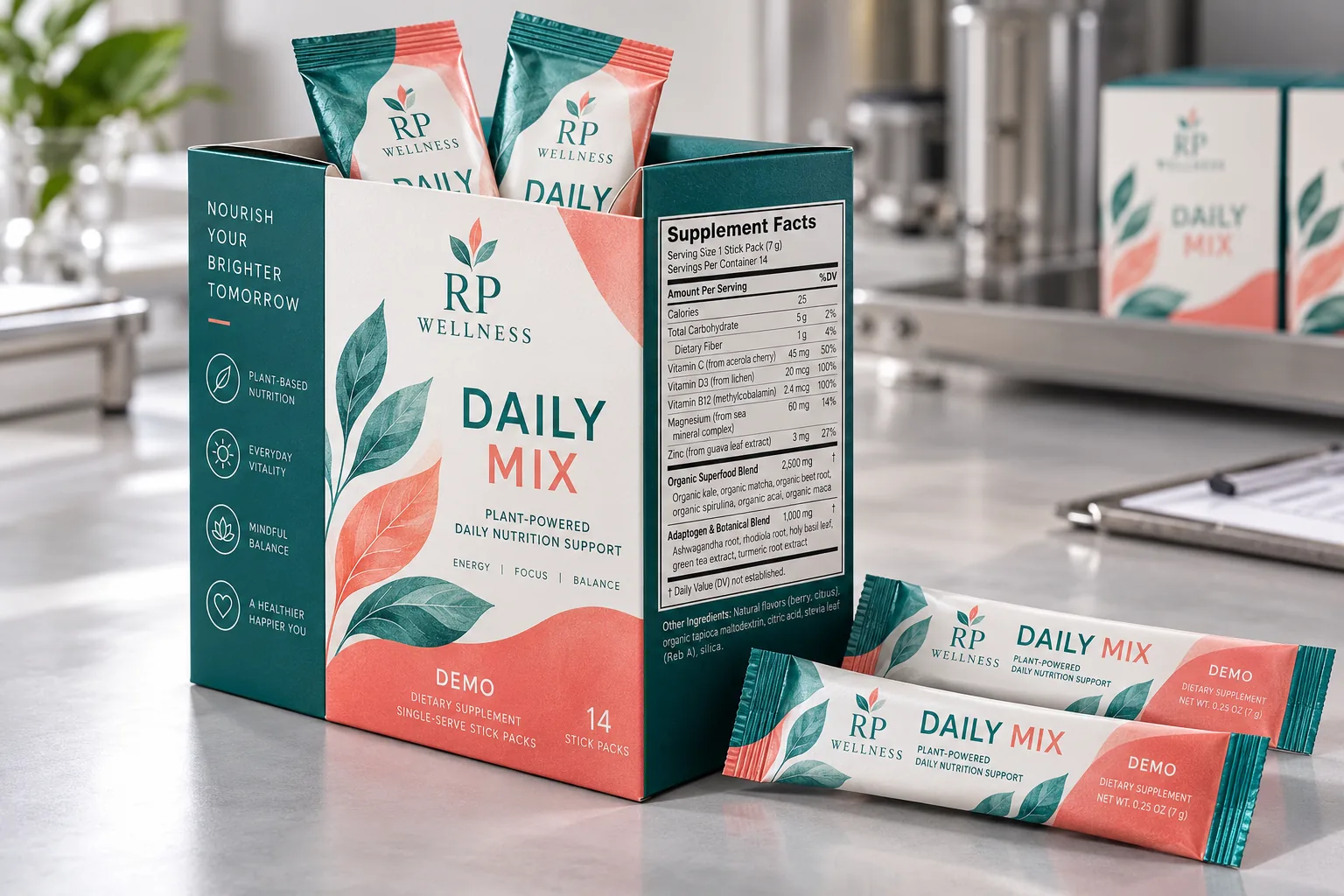
Define the unit the customer will buy
Start with three questions: Is the carton the only retail unit? Can a stick be sold or sampled alone? Will the same stick travel in a variety pack? Record the answer for each channel. The FDA's general dietary supplement labeling guide lists required label statements and explains the principal display and information panels. Its small-entity guidance notes special provisions for small and multiunit packages. The exact treatment depends on the finished product and sales arrangement; a printer should not decide it by shrinking the artwork.
For production planning, I would make a copy matrix with columns for the stick, carton and any secondary display. Mark who owns product identity, count, ingredient information, business information and variable lot data on each surface. Then have the brand's regulatory reviewer approve that matrix. This step keeps the artwork team from discovering too late that the carton has no room for a readable information panel.
Do not confuse a stick-pack graphic with a label substrate
Many sticks are printed flexible-film packs, not pressure-sensitive stickers applied to a finished pouch. An outer carton may be printed board, while a carton sticker or promotional overlabel is another component. Specify which physical component you are ordering. Ask whether the converter is quoting roll-stock film, finished sticks, pressure-sensitive labels, cartons or only artwork. A low quote for one component is not a complete packaging quote.
Put the stick's tear notch, crimp seal and registration marks on the dieline. Keep important text out of those areas. On the carton, mark the opening flap, glue seam and any area hidden when units are displayed. Build the proof around the assembled pack, not only separate flat files. If the stick might later be sold alone, do not promise that its current limited copy will remain usable in that new channel.
Proof the longest copy before the decorative version
The FDA's Supplement Facts guidance sets out detailed nutrition-label presentation rules. Bring the final reviewed text and realistic longest ingredient lines into the physical-size proof. If the side panel becomes too cramped, change the carton or information-panel plan before reducing type to something nobody can read. The formula figures in our RP Wellness illustration are fictional and must not be used as approved copy.
Ask for a folded carton and a filled sample stick. Check the front identity, bottom quantity statement, Facts panel, variable code location and opening path with the product in hand. Photograph the assembled pack from all sides for the approval record. The artwork can then be versioned so a later flavor or count change does not quietly reuse the wrong panel.
The purchasing decision
I would not order printed stick film and cartons from an attractive hero render alone. Get the sale-unit decision, component list, regulatory-reviewed copy, assembled dieline and physical proof in one brief. When those five agree, the creative work has room to be creative. When they do not, more colors will not solve the missing information panel.
Sources and scope
Reviewed October 5, 2026. The primary references linked below support the identified technical points. Buying scenarios and inspection checklists are editorial guidance, not RP production records, certification, legal approval or universal acceptance standards.