A hologram on a plastic-wrapped gift box and the same design directly across a paperboard carton flap can look almost identical in a sales photograph. They do not answer the same question. In the first case the label is attached to removable film. In the second it is attached to the package itself. I would ask which surface the customer expects to be damaged when someone opens the product.
Identify the first thing that opens
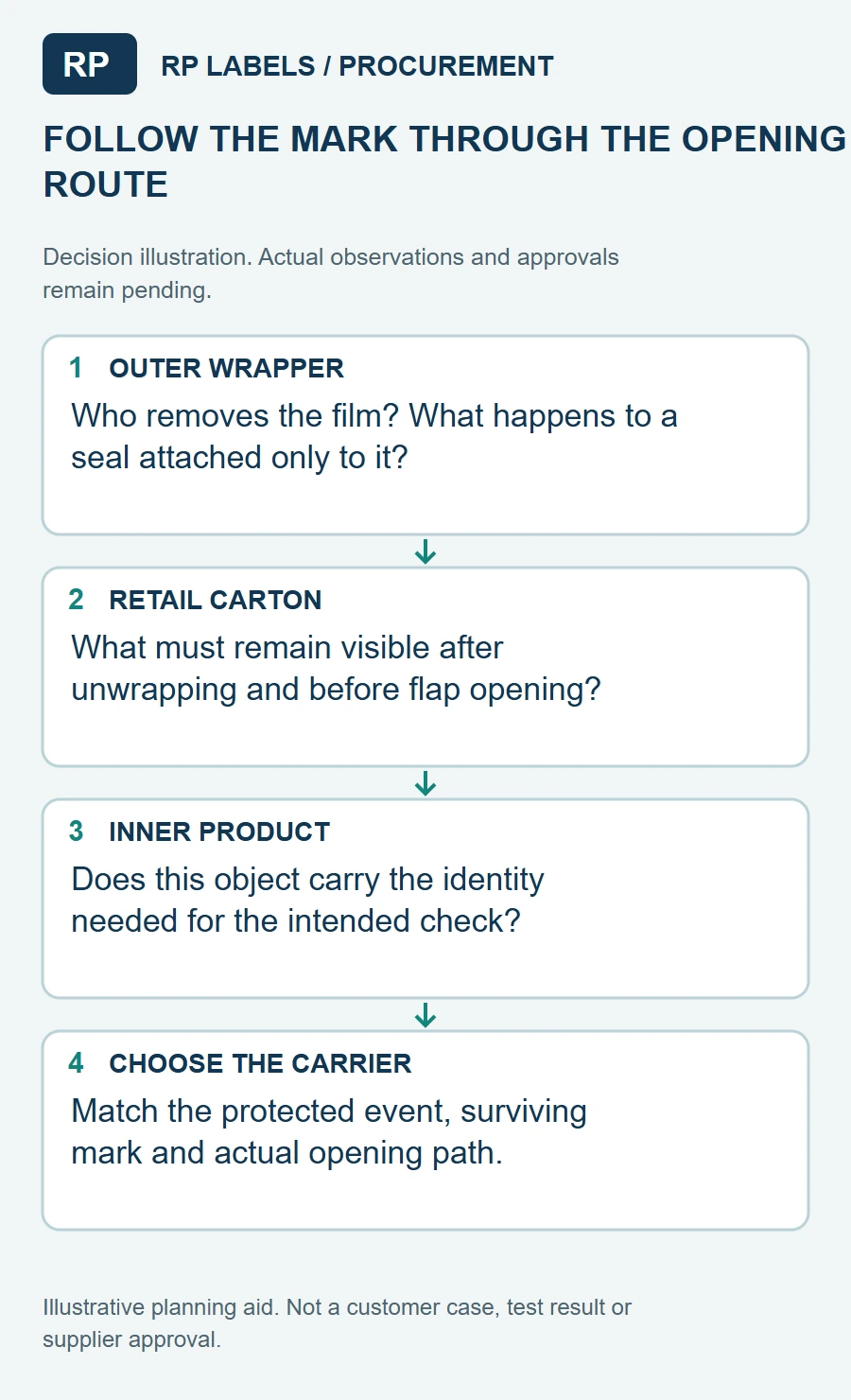
Draw the pack as a sequence: shipping carton, outer shrink film, retail carton, inner item. If the buyer removes the film before putting the carton on a shelf, a film-mounted hologram disappears with that wrapper. If the objective is a visible brand mark on the retail carton after unwrapping, the film is the wrong permanent home. If the objective is to show that the outer film was removed, a label on that film may help only after a proper sample test.
At the same time, do not assume a label on the carton crosses an opening. A front-panel sticker can be decorative while the flap opens untouched. Our shape guide distinguishes a flat brand marker from a true bridge across a joint. Mark the actual flap edges before selecting the die cut.
Film and paperboard need separate adhesion trials
Shrink film can be slick, stretched, wrinkled or under tension. Paperboard can be uncoated, glossy, laminated or textured. HERMA lists shrink film and boxes among surfaces that require suitable label materials and adhesives. That means a supplier can propose constructions for both; it does not mean one adhesive automatically works on both in this exact application.
Ask for the exact outer film and actual printed carton stock. Test samples after the customer's wrapping or sealing process, not just on loose flat film. Check for lifting over folds and at carton edges. If a label must bridge a seam, evaluate whether it tears, leaves a VOID message, or can be peeled and put back without obvious evidence. A metallic optical effect alone does not decide any of those outcomes.
Write the claim narrowly
HERMA's tamper-evident label overview distinguishes security perforations and special constructions for different packaging materials. Use such information to request an appropriate proof, not to claim an untested RP sticker has a specific security rating. State whether the label is meant for visual branding, opening indication, serialized tracking or a combination. Each purpose needs its own acceptance test.
If the buyer wants a public verification step, an intact hologram is not the same as an active database record. A QR or serial workflow is another project. I would keep the initial quote focused on the physical surface and the expected opening event, then discuss digital authentication separately.
Send two packages, not two screenshots
Provide one fully wrapped carton and one unwrapped carton, the actual film type, printed board finish, expected handling, proposed label position and opening sequence. Ask for a small set of printed samples on each substrate. After application, inspect them immediately, after normal dwell and after the expected storage and opening cycle. The carton tear-path guide offers a useful checklist when a bridge is required.
I would choose the film surface only when losing the seal with the outer wrapper matches the customer's goal. For evidence or branding that must stay with the carton, bond to the carton and prove the actual flap path. One attractive hologram cannot make those two jobs interchangeable.
Sources and scope
Reviewed October 9, 2026. The primary references linked below support the identified technical points. Buying scenarios and inspection checklists are editorial guidance, not RP production records, certification, legal approval or universal acceptance standards. Demand layer: competitor and process pages linked here, including Avery, HERMA or OnlineLabels where cited, illustrate buyer language and process topics only. They do not supply RP minimum quantities, lead times, prices, certifications or materials. Authority layer: an RP number is backed only by a factory datasheet, a signed quote or proforma, confirmed product data, or a fact kept on the About page. The March 2026 proforma there is one production-run example, not a standing offer. RP shipping and planning pages describe what to confirm on a quote. Worked figures on this page are fictional unless an authority source is named for them.