A hologram seal looks strong under studio lighting. I ask to see the carton it will actually close. A smooth coated board and an uncoated kraft carton can ask very different things of the adhesive. Approval based only on the reflected color leaves out the fiber surface, fold pressure and opening path.
Specify the exact board finish and seam
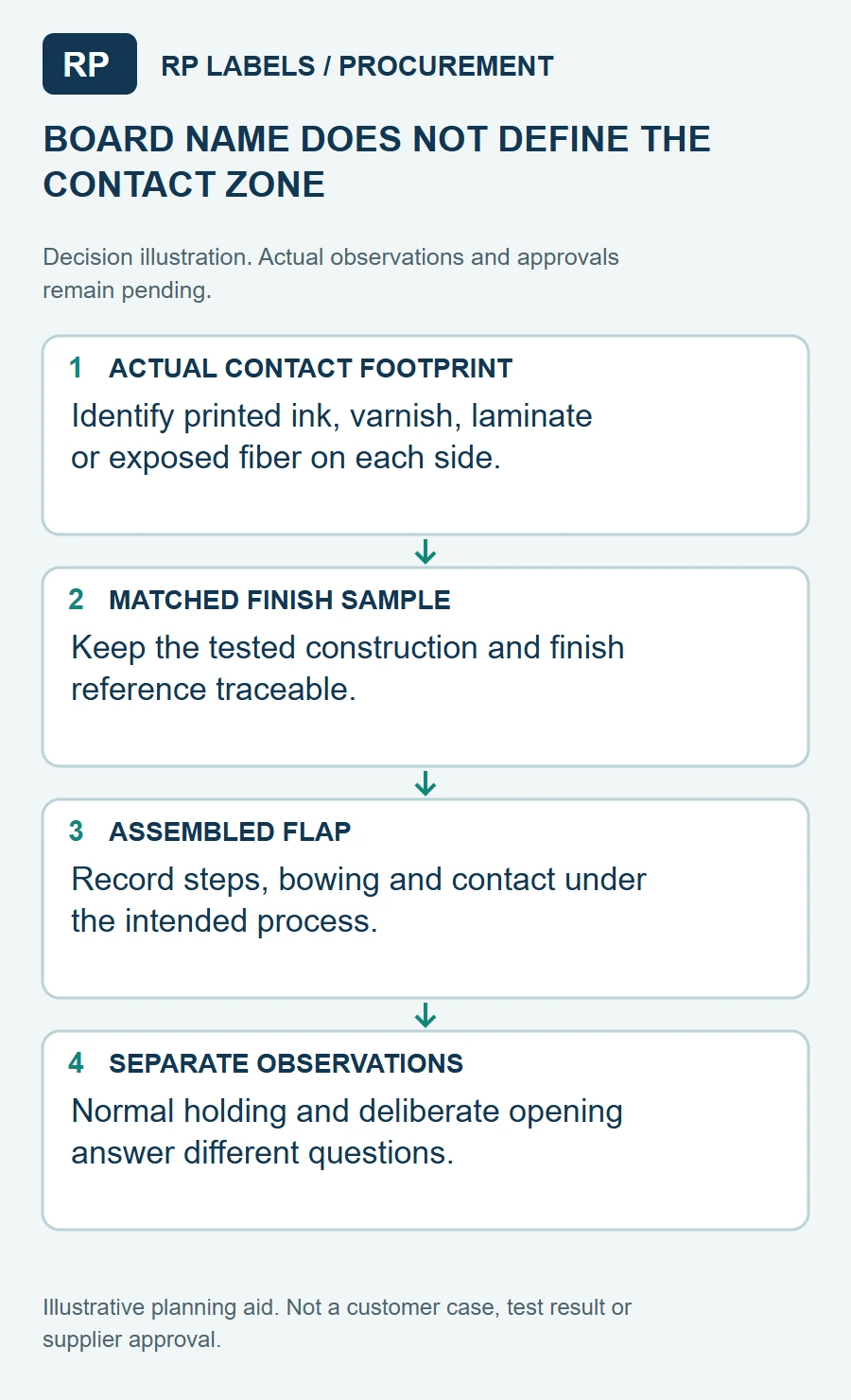
Send the production carton, not just a rendered dieline. Identify coated, varnished, laminated and uncoated areas, and mark any area with dust, recycled fiber texture or heavy ink coverage. If the seal bridges a tuck flap, record the flap overlap and whether the box bows outward after filling. A label can adhere well on a flat test panel and lift where it is forced over a step.
HERMA's guidance for rough cartons explains why a fibrous, uneven surface may require a suitable adhesive construction. That does not mean every kraft box needs the same material. Coatings and varnishes can introduce different adhesion questions. Ask the label supplier to name the proposed face stock and adhesive, then test on the actual printed carton.
Design for opening evidence, not shine alone
Decide what the seal is supposed to show when the customer opens the box. Should it tear, delaminate, leave a visible mark, or simply bridge the flap as a visual cue? HERMA's tamper-evident construction overview distinguishes several mechanisms. A generic holographic finish is not the same as a verified tamper-evident structure. If a return-inspection team will use the seal, share an intact sample and an opened sample; the return-inspection guide covers that workflow.
Put the seal across the intended opening seam, with enough contact area on both sides. The placement guide is a starting point, but the actual carton should determine final dimensions. Avoid a placement that can be cut cleanly along the fold while leaving the seal visually intact, or one that lands on an area frequently rubbed by shipping cartons.
Request a small application trial on both finishes
Use the production board, final printing and any varnish or laminate. Apply samples with the planned hand or machine process. Record application temperature, pressure and dwell before shipping simulation or opening. Check edges, flap corners and the actual tear result. Photograph the intact and opened states under normal receiving light. If the kraft and coated cartons behave differently, order separate constructions or adjust the design rather than assuming one seal works everywhere.
The supply format also matters. Hand packing may prefer sheets, while a high-throughput line may require a roll with a specific unwind, liner and gap. The sheet-versus-roll guide can help settle that after the construction is proven on the carton.
What belongs in the custom quote
Include both carton samples, closure drawings, finished printing and coating specifications, seal size, target visual effect, expected opening signal, application method, quantities per design and destination handling route. Ask which properties have been verified on a physical sample and which remain supplier assumptions. Do not call a seal "tamper proof"; no sticker can establish that on its own.
I would approve the holographic artwork only after the carton test. The surface beneath the label is part of the product.
Sources and scope
Reviewed October 17, 2026. The primary references below support the cited technical or regulatory points. The illustrated buying scenarios are editorial guidance, not RP production records, certifications, legal approvals or universal acceptance standards. Demand layer: competitor and process pages linked here, including Avery, HERMA or OnlineLabels where cited, illustrate buyer language and process topics only. They do not supply RP minimum quantities, lead times, prices, certifications or materials. Authority layer: an RP number is backed only by a factory datasheet, a signed quote or proforma, confirmed product data, or a fact kept on the About page. The March 2026 proforma there is one production-run example, not a standing offer. RP shipping and planning pages describe what to confirm on a quote. Worked figures on this page are fictional unless an authority source is named for them.